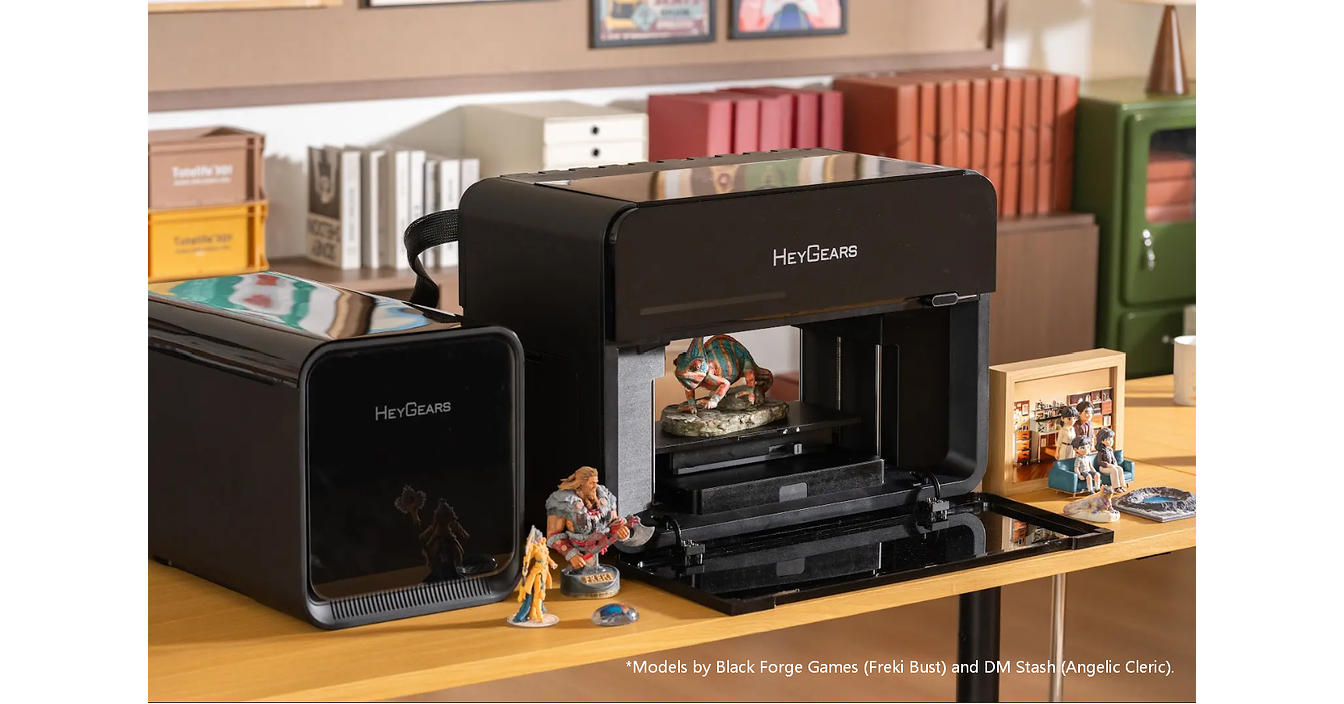
HeyGears launched the G1X, positioned as the first desktop full-color 3D and UV printer, combining CMYK+double white 3D printing with UV flatbed printing (up to 1440×2400 DPI) and 2D/3D texture outputs. The company claims up to 3X faster UV printing, an Epson I3200-U1HD industrial printhead for lower clogging risk, and AI features for text/image-to-3D creation with auto calibration in seconds. It’s set to go live on Kickstarter with early-bird pricing via deposit reservation, suggesting incremental product momentum rather than immediate financial impact.
This reads more like a demand-generation event than a fundamental catalyst. The investable question is not whether the device is clever, but whether it converts hobbyist excitement into repeatable, serviceable consumable revenue; without that, the launch is mostly marketing and the financial impact stays immaterial over the next 1-3 months.
If the product gains traction, the nearer-term beneficiaries are upstream component and workflow vendors, not the issuer: industrial printhead and ink ecosystems tend to monetize more reliably than hardware boxes. The larger second-order effect is competitive pressure on low-end UV flatbed and entry-level color-print workflows, where the real moat is software, calibration, and service, not the machine itself. Public comps like SSYS and DDD would only feel this if the launch catalyzes a broader consumer/prosumer upgrade cycle, which is a months-to-years story rather than a days-to-weeks one.
The contrarian view is that "first desktop full-color" is a weak moat unless throughput, defect rate, and consumable economics are demonstrably better than existing multi-step workflows. Kickstarter also introduces execution risk: shipping delays, high return rates, and support burden can turn a product demo into a margin drag. For public markets, this is best treated as a watch item until there is evidence of preorder conversion, repeat ink purchases, and stable unit economics.
AI-powered research, real-time alerts, and portfolio analytics for institutional investors.
Overall Sentiment
mildly positive
Sentiment Score
0.25
Ticker Sentiment
