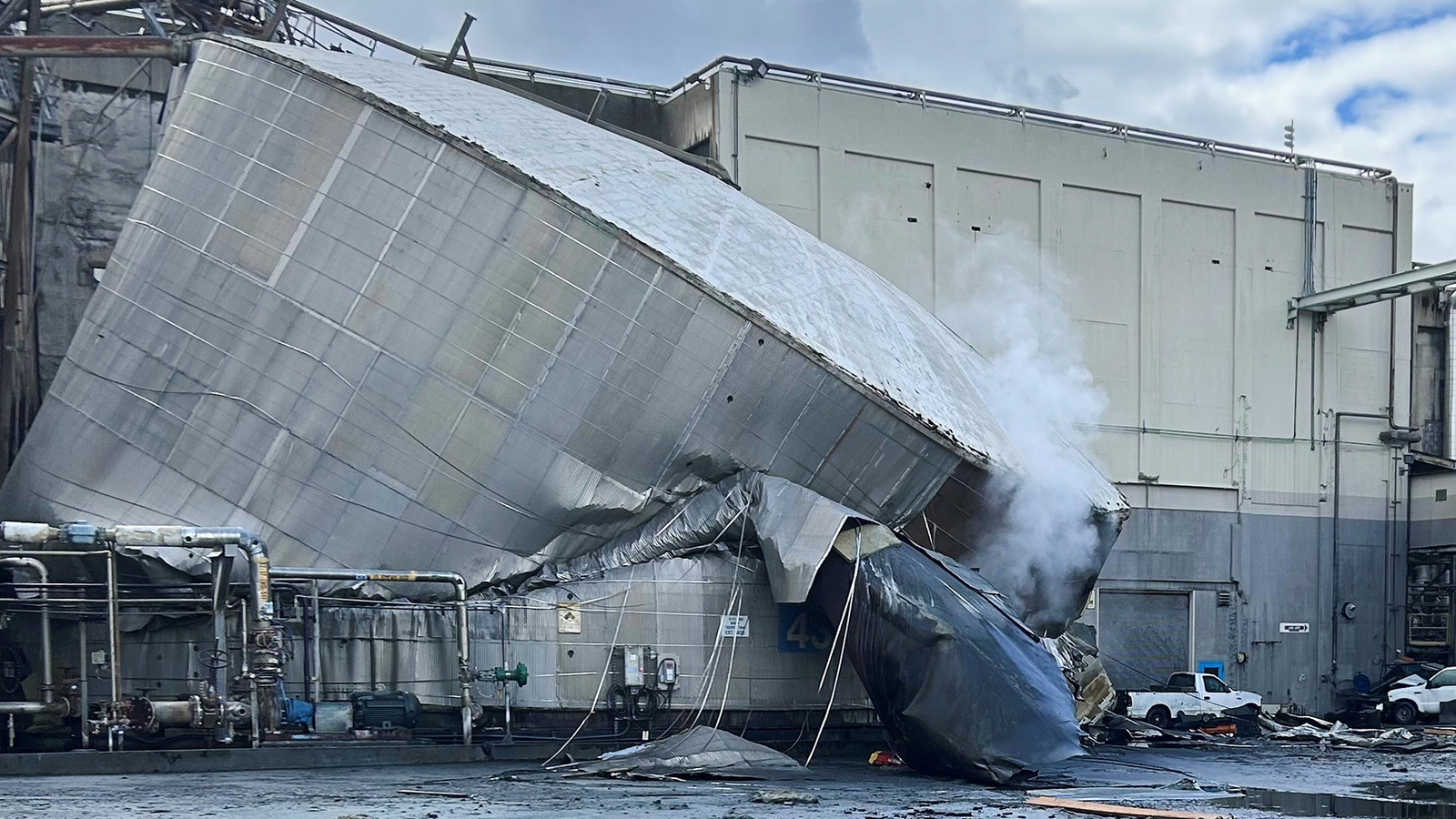
An implosion of an 80,000-gallon chemical tank at Nippon Dynawave Packaging’s Longview, Washington mill killed one person and left nine unaccounted for, with injuries ranging from minor to critical. The incident triggered a mass-casualty response, hazmat deployment, and ongoing recovery operations after white liquor spilled into a drainage ditch. While there was no immediate threat to the public, the event is a severe operational and reputational setback for the facility and could invite regulatory scrutiny.
This is a localized industrial accident, but the market impact is less about the immediate interruption and more about the hidden liabilities embedded in “routine” heavy-process manufacturing. A fatal chemical release at a site that sits inside a broader timber/paper/chemicals cluster raises the probability of a wider operational review, not just at this facility but across comparable mills that rely on older pressure vessels, corrosive inputs, and high-temperature recovery systems. The second-order effect is higher insurance, inspection, and remediation costs for the sector, especially where maintenance deferral has been used to protect margins.
The more important medium-term risk is supply-chain friction in specialty kraft and packaging inputs. Even if the physical outage is brief, customers that depend on just-in-time packaging materials will likely start dual-sourcing, which can shift volume toward larger or geographically diversified competitors with cleaner balance sheets and better ESG optics. That can persist for quarters, because procurement teams tend to overcorrect after a serious safety incident, especially when there is a worker fatality and a hazmat response.
On valuation, the incident is a reminder that ESG is not just headline risk; it can become a direct cost of capital issue. Names with elevated environmental or workplace safety profiles may face incremental covenant pressure, higher premiums, and slower permit timelines if regulators use this event to tighten standards around chemical storage and emergency response. The contrarian point is that the market may underprice the durability of the earnings hit: the obvious reaction is a short-lived sympathy selloff, but the real downside for weaker peers could emerge over 6-18 months through insurance repricing and capex creep rather than a one-day demand shock.
For the broader tape, the incident is mildly supportive for better-capitalized packaging and industrial alternatives that can absorb redirected orders without operational disruption. It is also a reminder that transport/logistics exposure can be asymmetric in industrial accidents: cleanup, detours, and precautionary shutdowns can create small but recurring costs for regional freight and chemical carriers even when the public safety risk is contained. This should keep analysts conservative on near-term margin assumptions for any company with concentrated mill, refinery, or chemical assets.
AI-powered research, real-time alerts, and portfolio analytics for institutional investors.
Request DemoOverall Sentiment
extremely negative
Sentiment Score
-0.86
