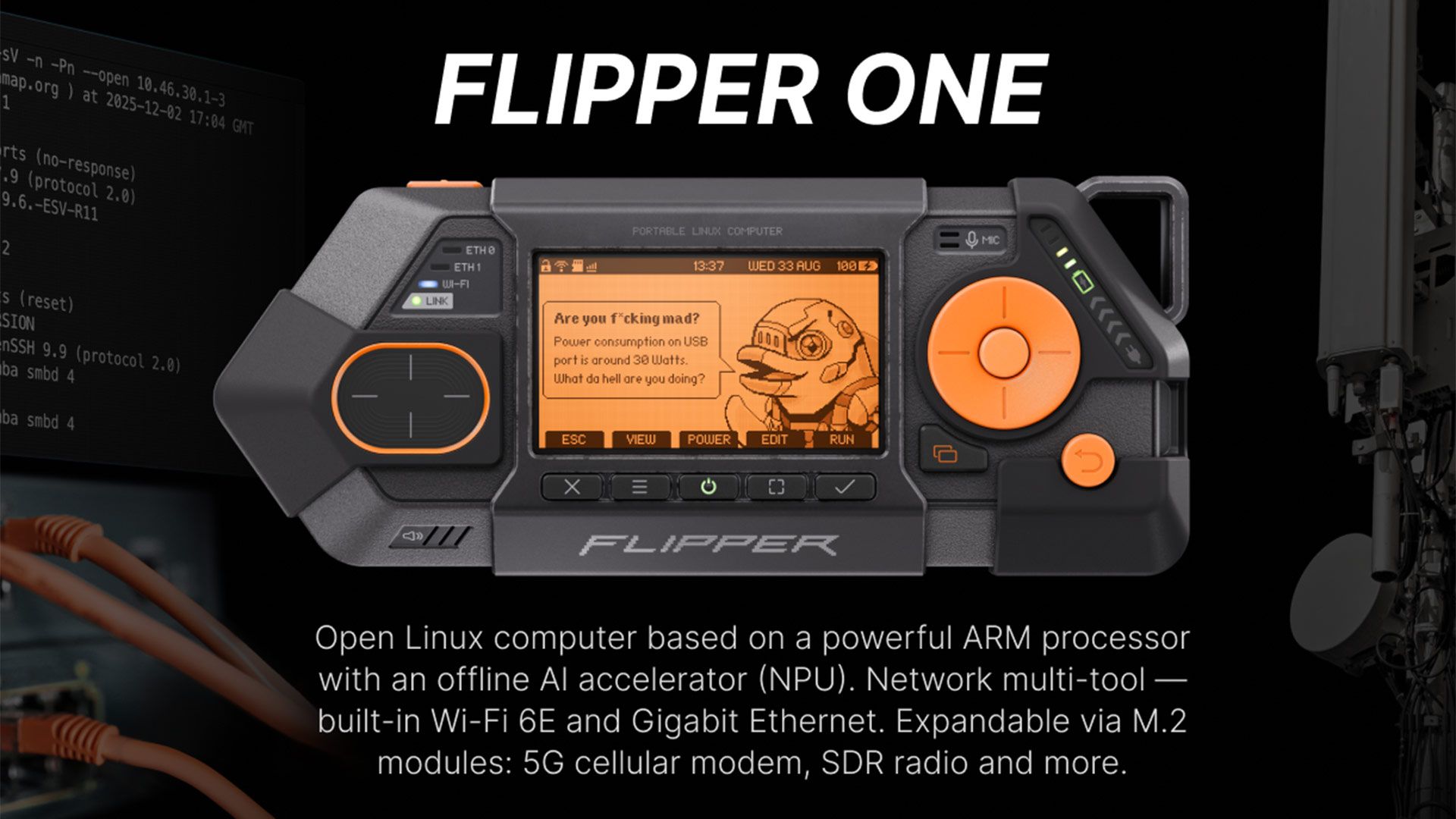
Flipper Devices announced Flipper One, a new open Arm Linux-based multitool with an octa-core Rockchip RK3576 SoC, 8GB RAM, M.2 expansion, GPIO, HDMI, and USB-C DisplayPort Alt Mode support. The company said the product is not market-ready yet and is seeking community contributors while it continues upstream Linux work, including power management and USB DP Alt-mode support. The device also includes an integrated NPU for local AI/LLM use, though that capability still has development hurdles.
This is less a product launch than a signal that the next wave of edge-compute devices will be judged on software enablement, not silicon specs. The likely near-term winners are upstream enablers of embedded Linux, board support packages, and developer tooling, while the device itself is still too early to underwrite commercially. The real option value sits in whether a community-driven hardware platform can create a sticky ecosystem before the major OEMs bundle similar functionality into mainstream rugged handhelds and SBCs.
The second-order implication is competitive pressure on low-cost maker hardware and niche handheld Linux devices: if Flipper One lands, it could compress demand for Raspberry Pi-class add-ons, HATs, USB debug dongles, and some specialty field-service tools by integrating them into one pocket form factor. But that thesis is fragile until the kernel, power management, and accelerator stack are upstreamed; delays of 6-12 months would likely shift the narrative from “platform” to “interesting prototype.” The open development model is a double-edged sword: it can accelerate adoption, but it also exposes execution gaps earlier and invites commodity substitution by faster-moving OEMs.
The most interesting market read is around AI branding versus actual local inference capability. If the NPU is only viable for narrow workloads, the “local AI” angle may be mostly marketing; the more durable upside is offline automation for field diagnostics, security, and network troubleshooting, which is a real use case but not a mass-market driver. Contrarian take: the market may be overestimating the addressable TAM from the headline feature set and underestimating how much of the value accrues to tools/software rather than hardware margins.
AI-powered research, real-time alerts, and portfolio analytics for institutional investors.
Request DemoOverall Sentiment
neutral
Sentiment Score
0.15
