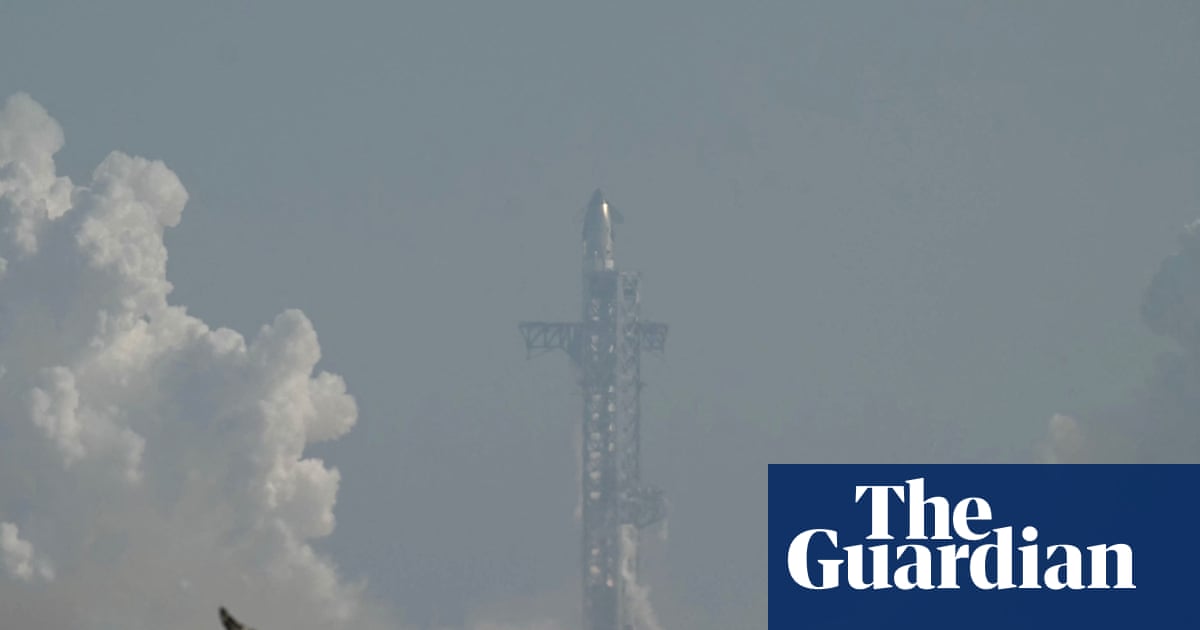
SpaceX launched its largest Starship yet on its 12th test flight, a 407-foot V3 version designed to support future lunar missions and ultimately Mars travel. The test carried 20 mock Starlink satellites and marked the debut of a new launchpad at Starbase, though no hardware was recovered and the flight ended with splashdowns in the Gulf of Mexico and Indian Ocean. The article is strategically positive for SpaceX and NASA’s Artemis timeline, but near-term market impact is limited.
The important incremental read-through is not the rocket itself but the sequencing effect: a visibly improving test cadence materially lowers the probability that NASA’s lunar timeline slips, which in turn shifts budget risk away from a single-point failure and toward a multi-vendor race. That is supportive for the industrial and defense supply chain around launch infrastructure, avionics, thermal systems, and range services even if the prime contractor remains private for now. The market is likely underestimating the second-order effect on companies that benefit from more frequent launches rather than from any one mission success.
Competitive dynamics are becoming asymmetric. SpaceX’s progress raises the hurdle for Blue Origin because NASA does not need both providers to be equally mature; it needs one lander ready on time and one credible backup. That means the real loser is schedule optionality for late entrants and any subcontractor exposure tied to a single architecture, while suppliers with content across multiple launch/space programs gain leverage as program managers hedge execution risk.
The contrarian point is that “success” here can still be bearish for some space-adjacent names if it accelerates consolidation of demand around the dominant platform. If the reusable heavy-lift path keeps compounding, smaller launch providers may see fewer strategic alternatives and lower pricing power. Conversely, the biggest near-term catalyst remains not the flight outcome itself but any signal that NASA re-prioritizes procurement, which would move the whole lunar supply chain over a 3-12 month horizon.
On balance, the setup favors a quality-over-beta expression: own the picks-and-shovels, fade weak standalone launch exposure, and use any post-test enthusiasm to source shorting opportunities in names that need flawless execution but lack schedule credibility. The trade is less about one launch and more about a multi-year capital reallocation toward proven infrastructure and away from aspirational incumbents.
AI-powered research, real-time alerts, and portfolio analytics for institutional investors.
Request DemoOverall Sentiment
mildly positive
Sentiment Score
0.20
Ticker Sentiment
