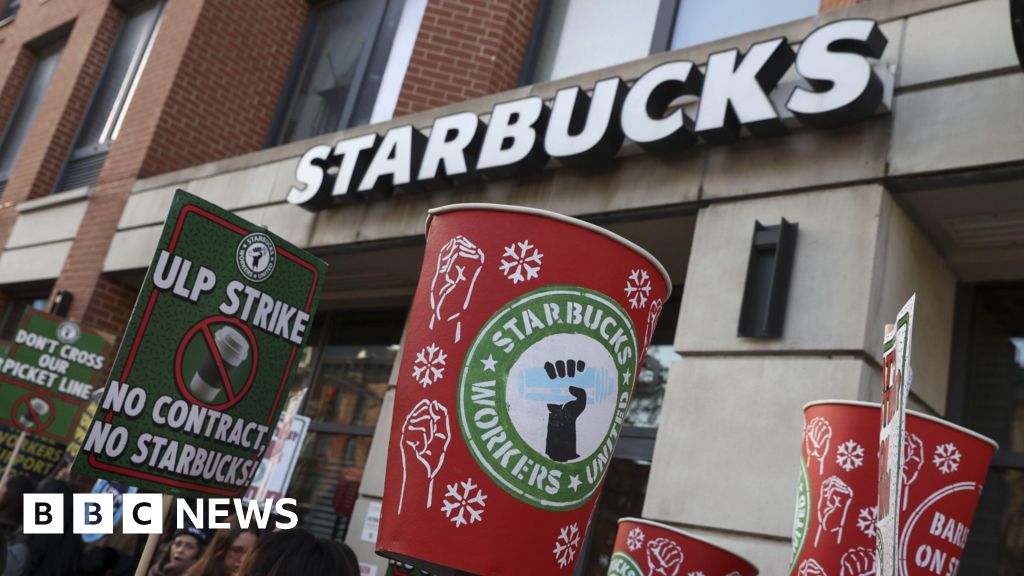
Starbucks Workers United said union members in England, Scotland and eight other countries will stage coordinated protests supporting a US strike that has grown to about 3,000 baristas in more than 100 cities seeking higher pay, better staffing and resolution of hundreds of unfair-labor-practice charges. Starbucks said the action has affected under 1% of its shops and has had "no impact" on overall business, and the international demonstrations are unlikely to dent finances directly, but they escalate pressure after contract talks stalled and risk distracting from CEO Brian Niccol’s turnaround—he has promised faster service, a return to coffeehouse basics, and more than $500m in staffing and training investments even as October comparable global sales rose just 1% and US sales were flat. The union, which has won elections at over 600 stores (about 5% of company-owned US locations), says progress stalled after Niccol’s arrival despite mediation in January, prolonging a labor fight that could impede the chain’s recovery.
Starbucks Workers United has coordinated international protests supporting a US strike that the union says now involves roughly 3,000 baristas across more than 100 US cities, with solidarity actions planned in England, Scotland and at least eight other countries. Starbucks reports the strike has affected under 1% of its stores and said there has been "no impact" on overall business, signalling the current operational disruption is limited in scale.
The labour dispute has persisted since the union launched four years ago and the union reports victories at over 600 stores (about 5% of company-owned US locations); talks stalled after Brian Niccol became CEO last September and, despite agreeing to a mediator in January, parties remain at odds over pay, staffing and hundreds of alleged unfair-labour-practice charges. That sustained impasse increases the probability of recurring headlines and targeted local disruptions even if direct financial effects remain muted today.
Operationally and financially, Starbucks is pursuing a turnaround under Niccol with promises of faster service, a return to coffeehouse basics and a planned investment of more than $500m in staffing and training; the company reported a 1% increase in global same-store sales in October while US comps were flat. Sentiment signals in the coverage are mildly negative and market-impact scoring is modest (0.3), implying headline risk may weigh on sentiment more than fundamentals unless strikes materially escalate.
Key risks for investors are higher recurring labour costs if contracts reset, potential reputational damage that could slow traffic recovery amid pricing and competitive pressures, and the unresolved unfair-labour-practice charges; conversely the small current operational footprint of the strike limits immediate balance-sheet downside but warrants monitoring of mediation outcomes and union traction across company-owned stores.
AI-powered research, real-time alerts, and portfolio analytics for institutional investors.
Request DemoOverall Sentiment
mildly negative
Sentiment Score
-0.25
Ticker Sentiment
