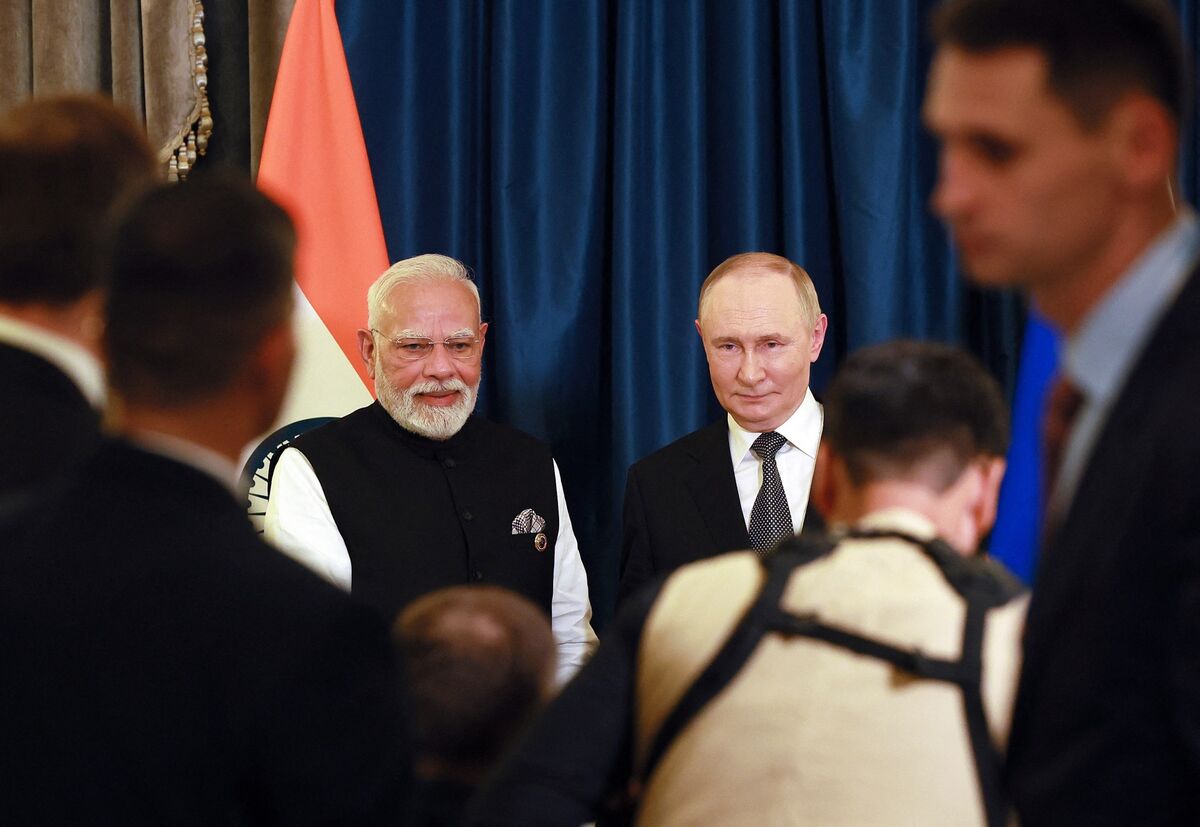
Russian President Vladimir Putin engaged in 'limo diplomacy' by hosting Indian Prime Minister Narendra Modi in a Russian-made Aurus limousine in China. This informal engagement, a continuation of a tactic previously seen with Donald Trump, highlights Putin's strategy of fostering closer ties with key global leaders and subtly promoting Russian prestige through such symbolic gestures.
The reported 'limo diplomacy' involving Russian President Vladimir Putin and Indian Prime Minister Narendra Modi in China represents a continuation of a soft-power strategy recently observed with former U.S. President Donald Trump. This tactic serves a dual purpose: it fosters personal rapport with key global leaders in informal settings and simultaneously promotes Russian industrial prestige through the showcasing of the Russian-made Aurus limousine. The engagement highlights Russia's ongoing effort to strengthen its geopolitical ties, particularly with major non-Western powers like India, within a strategic location like China. While the event itself has a neutral immediate market impact, it is a data point in the broader trend of Russia cultivating a multi-polar world order and signaling its industrial self-sufficiency.
AI-powered research, real-time alerts, and portfolio analytics for institutional investors.
Request DemoOverall Sentiment
neutral
Sentiment Score
0.00
