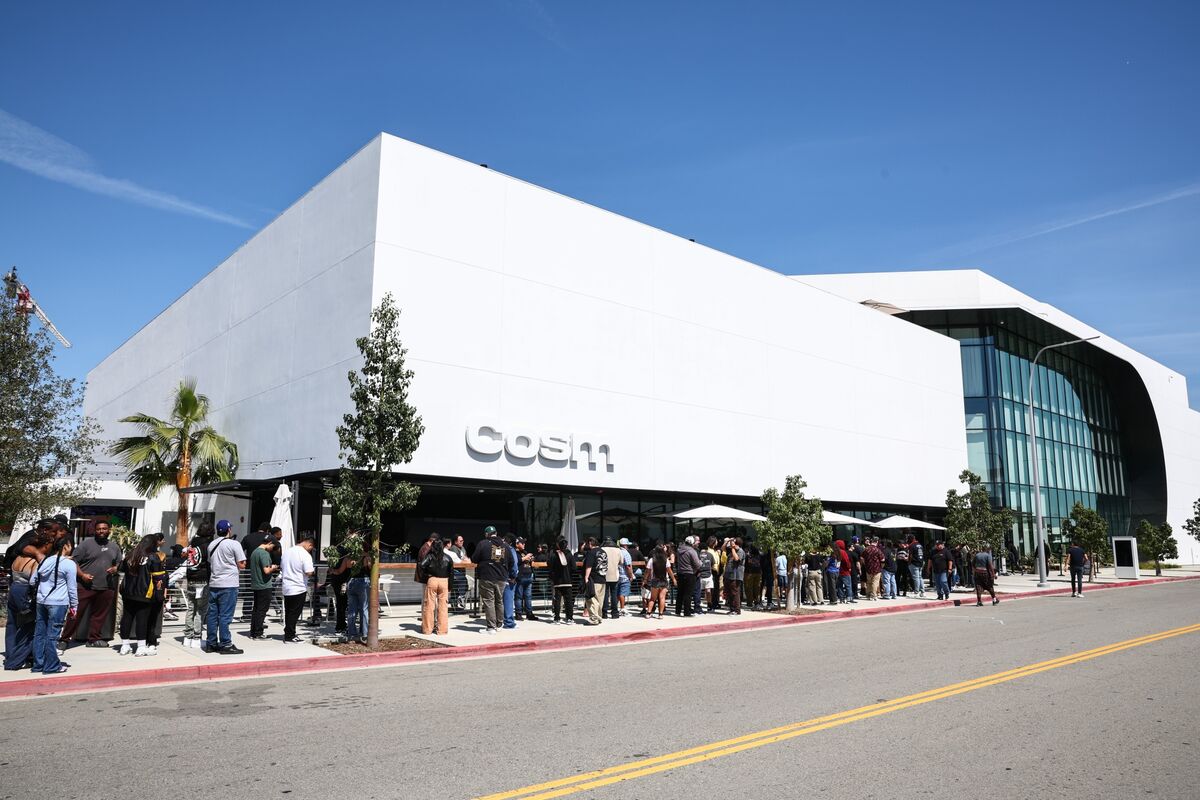
Sony Pictures Entertainment is investing $100 million in Cosm, a giant-screen theater operator, and CEO Ravi Ahuja will join Cosm’s board. The deal signals strategic backing for immersive film and sports exhibition formats, with the investment size indicating meaningful confidence in the business. Market impact is likely limited to the involved companies and the media-entertainment niche.
This is less a single-company funding event than a validation trade for the broader “premium out-of-home entertainment” stack. A strategic anchor from a major content owner lowers Cosm’s financing and content-risk premium, which should tighten terms for similar immersive/experience-led media concepts and improve the odds that landlords, sports-rights holders, and production partners treat the category as durable rather than experimental. The second-order winner is any venue-tech, display, projection, audio, and experiential-adjacent supplier that can monetize a higher installed-base thesis if Cosm uses the fresh capital to open more sites.
The biggest near-term loser is the incumbent cinema chain complex, but mostly at the margin: this does not destroy theatrical demand, it fragments the premium bucket that studios and sports leagues care most about. If Cosm can demonstrate higher per-capita spend and better event utilization, it may siphon off a subset of “occasion” traffic that traditional theaters rely on for pricing power, especially in urban cores over the next 12-24 months. The more important competitive effect is on content economics: if this model works, rights holders will demand richer revenue-share structures from both theaters and streaming platforms, pressuring margins across distribution.
The key risk is execution velocity versus capital intensity. A large check can mask a weak unit-economics story for 2-3 quarters, but if utilization, repeat visit rate, or content cadence disappoints, the market will re-rate this as a branding expense rather than a growth inflection. The contrarian view is that the move may be slightly over-read as proof of product-market fit; strategic money often buys option value and board influence, not certainty, so the signal is stronger for the ecosystem than for immediate near-term earnings power.
AI-powered research, real-time alerts, and portfolio analytics for institutional investors.
Request DemoOverall Sentiment
mildly positive
Sentiment Score
0.45
Ticker Sentiment
