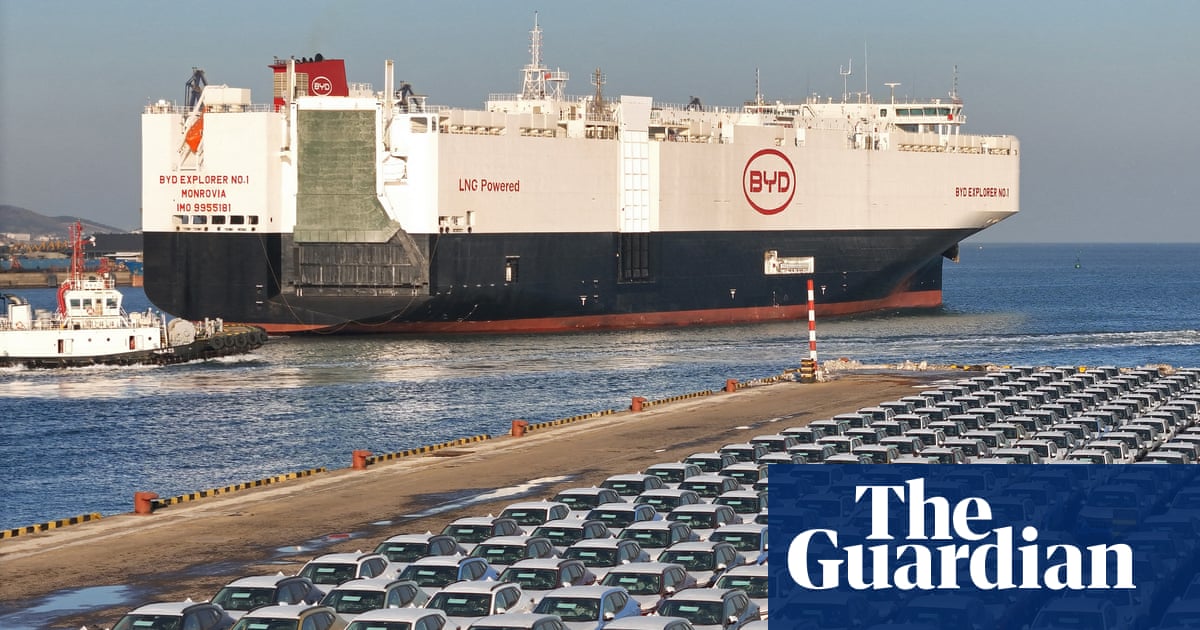
EU commissioners will meet Friday to discuss new restrictions on Chinese imports amid concerns that China is creating 'China Shock 2.0' conditions in Europe. Potential measures include quotas and tariff-rate quotas on Chinese goods such as hybrid cars and chemical components, with longer-term options including anti-coercion and procurement restrictions. No decisions are expected Friday, but the talks signal rising EU willingness to curb China trade exposure, which could affect autos, industrials and supply chains.
The market is underpricing how quickly Brussels can move from rhetoric to asymmetric friction. Quotas and tariff-rate quotas matter more than headline tariffs here because they can be implemented faster, are easier to target at narrow product categories, and create immediate inventory distortions: importers front-load before implementation, then local prices reprice higher even if the direct duty burden is modest. That argues for a near-term squeeze in EU distributors and assemblers that rely on Chinese inputs, while domestic manufacturers with protected capacity should see margin support first.
The second-order effect is that this is not just an EV story; it is a broad industrial policy shock. The biggest vulnerability is for firms that have optimized for lowest-cost Chinese subcomponents across multiple layers of the supply chain, because even a small restriction can force qualification changes, lead-time extension, and working-capital drag. In practice, that favors higher-quality European producers with pricing power and hurts midstream European industrials, medical-tech, and machine-tool names that look locally diversified but are still dependent on Chinese parts.
The risk/reward is skewed to the downside over the next 1-3 months if Friday’s meeting produces even a partial consensus, because markets will start discounting retaliation before any formal action is taken. The main reversal catalyst is political watering-down: if member states split over agriculture, EVs, and healthcare exposure, the package may stay broad but toothless, which would support a relief rally in European cyclicals and China-exposed importers. Over 6-12 months, China can also blunt the effect by rerouting via third countries, so the most durable winners are not pure tariff beneficiaries but firms with real non-China supply-chain redundancy.
The contrarian miss is that this may be more about bargaining leverage than a full decoupling regime. If Brussels uses a few high-visibility safeguards to extract concessions, the selloff in China-exposed European equities could reverse quickly, especially in names where earnings are already depressed and multiples are compressed. So the best expression is not a blanket short Europe-China exposure, but a pair trade that isolates genuine supply-chain fragility versus domestic substitution beneficiaries.
AI-powered research, real-time alerts, and portfolio analytics for institutional investors.
Request TrialOverall Sentiment
moderately negative
Sentiment Score
-0.35
