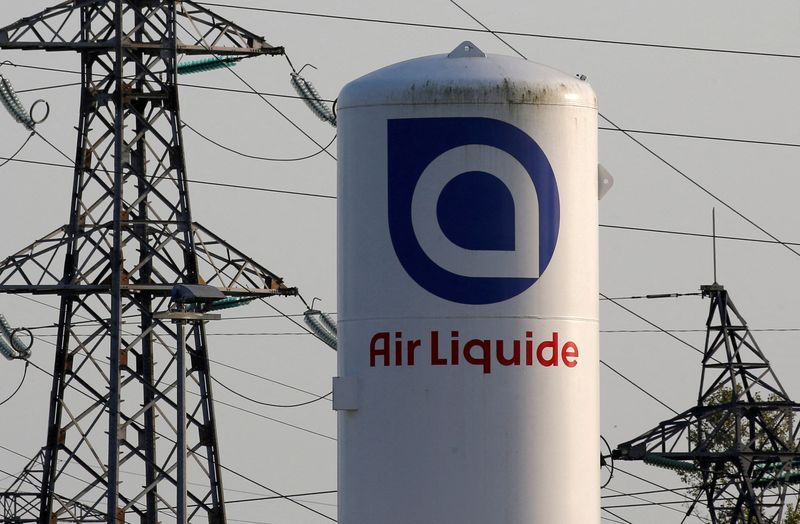
Air Liquide reported Q1 revenue of €6.79 billion, slightly below the €6.83 billion consensus, with comparable growth of 1.9% versus 2.0% expected. Performance was mixed across regions: the Americas grew 5.5% while EMEA and Asia-Pacific declined slightly, and currency headwinds and energy costs weighed on results. The company’s investment backlog rose 12% to €5.5 billion, and it reiterated a target of 100 bps of margin improvement in both 2026 and 2027.
The key signal is not the modest headline miss; it is that Air Liquide is still seeing end-market breadth weaken just as currency and input-cost volatility remains elevated. That combination tends to compress visibility for industrial gas peers because pricing power usually lags cost inflation by a quarter or two, so margin repair depends more on mix and utilization than on simple inflation pass-through. The Americas strength versus EMEA/APAC softness suggests regional dispersion is becoming the dominant driver, which favors operators with heavier exposure to North American healthcare, electronics, and on-site supply contracts.
The backlog step-up is the more important forward indicator because it implies capex conversion is improving even as current demand is mixed. That is usually bullish for equipment suppliers and engineering/construction pockets tied to industrial gas plants, but it also raises execution risk: a bigger backlog with flat cash generation can pressure free-cash-flow conversion if project timing slips or if energy costs stay sticky. The company’s margin target remains credible only if power costs normalize or if the mix keeps shifting toward higher-value segments; otherwise, the target likely gets pushed out rather than missed outright, which often creates a slow-burn de-rating rather than a one-day event.
The consensus is probably underestimating second-order benefits to competitors with more elastic cost structures and greater Americas exposure. If Air Liquide is forced to spend through the cycle to defend margins, smaller regional players and contract manufacturers can gain share by underbidding on large industrial and merchant volumes. The contrarian angle is that the stock may not be a short on the miss itself; the better short is any adjacent supplier whose earnings are levered to backlog conversion but lacks Air Liquide’s balance-sheet resilience.
Over the next 1-3 months, the catalyst set is mainly FX and energy, not demand. A stronger euro or another energy spike would quickly expose how much of the margin plan is dependent on exogenous help rather than operating leverage, while stabilization in both would likely support a relief rally. The trade is therefore about timing the revision cycle: wait for either a second soft print or a commentary shift on capex discipline before pressing bearish exposure.
AI-powered research, real-time alerts, and portfolio analytics for institutional investors.
Request DemoOverall Sentiment
mildly negative
Sentiment Score
-0.15
