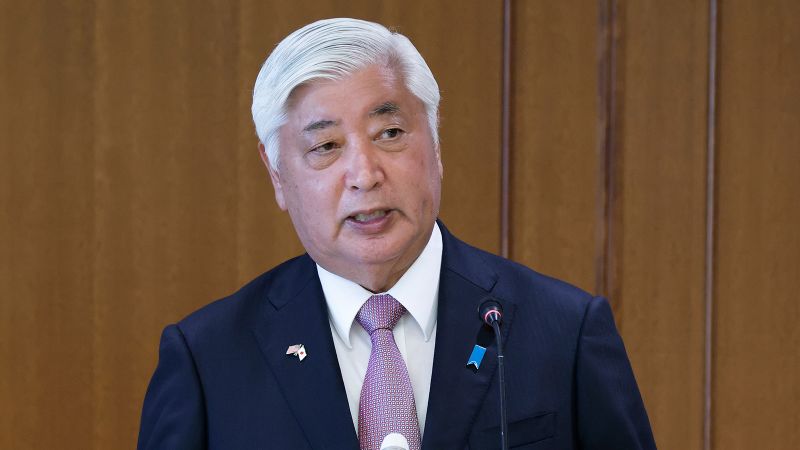
Japan's new defense white paper asserts the nation faces its most severe security environment since WWII, primarily due to China's "unprecedented" military expansion and intensified regional activities, including around the Senkaku Islands, Taiwan, and the South China Sea. The report also highlights escalating threats from North Korea's nuclear program and increased Sino-Russian military cooperation, evidenced by 704 Japanese fighter scrambles last year. This assessment signals a dramatic shift in the global balance of power and intensifying US-China rivalry, presenting significant geopolitical risk for the Indo-Pacific and potential implications for regional stability, supply chains, and defense sector outlooks for institutional investors.
Japan's latest defense white paper signals a significant escalation in perceived regional threats, characterizing the current security environment as the most severe since World War II. The report explicitly identifies China as the "greatest strategic challenge," citing its rapid quantitative and qualitative military expansion and intensified activities near the Senkaku Islands, around Taiwan, and through critical South China Sea shipping lanes. This heightened tension is quantified by the 704 Japanese fighter scrambles in the last fiscal year, with 464 in response to Chinese aircraft and 237 for Russian aircraft. The threat landscape is further complicated by increasing Sino-Russian military cooperation, including joint bomber flights near Japan, and North Korea's advancing nuclear and ballistic missile capabilities, which are now deemed a "grave and imminent threat." The document frames these developments within the context of a dramatic shift in the global balance of power and an intensifying US-China rivalry, an assessment corroborated by senior US military leadership, suggesting a high probability of increased regional defense spending and a more assertive Japanese security policy.
AI-powered research, real-time alerts, and portfolio analytics for institutional investors.
Request DemoOverall Sentiment
strongly negative
Sentiment Score
-0.75
