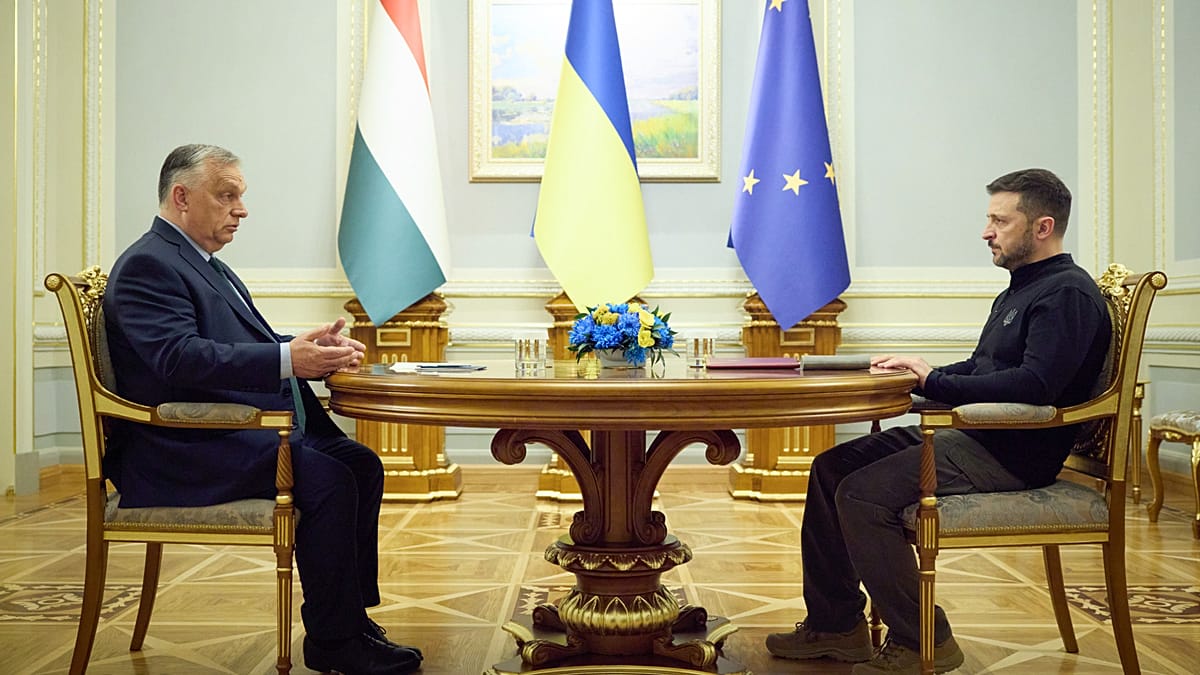
A standoff between Hungary and Ukraine over the damaged Druzhba pipeline has escalated: Prime Minister Viktor Orbán threatened to forcibly restore Russian crude transit while Hungary (and Slovakia) veto ongoing EU sanctions and a €90 billion loan tranche for Kyiv, injecting acute political risk ahead of Hungary’s April elections. Simultaneously, the Middle East conflict has intensified — with drone/missile strikes and a US 30‑day waiver allowing India to buy Russian oil — and Ukraine pledged technical support for US drone interception, raising the prospect of near‑term oil-price volatility and greater EU political fragmentation that could affect energy, sovereign and regional asset prices.
Market structure: Energy flows and European political cohesion are the immediate winners/losers — countries dependent on the Druzhba pipeline (HU, SK) and refineries configured for Russia-grade Urals crude face acute supply pressure while Russian exporters gain alternate demand outlets (India, Turkey). Expect regional oil price sensitivity: a 5–10% upside move in Brent on a multi-week disruption is plausible; European refiners with flexibility to process heavier crudes (SHEL.L, BP.L) gain pricing power.
Risk assessment: Tail risks include an escalatory Russia-EU energy squeeze or a Hungary veto of EU military/financial support that triggers broader market fragmentation; low-probability but high-impact scenarios could push Brent >$100 and deepen EUR/HUF stress (>10% move). Near term (days–weeks) headline volatility will dominate; medium-term (1–3 months) the Hungarian election (early April) and EU Council votes are primary catalysts; long-term (quarters) pipeline repair decisions and sanction policy will determine permanent flows.
Trade implications: Cross-asset impacts: higher oil -> wider credit spreads for Hungarian sovereigns and banks, EM FX weakness (HUF, PLN vulnerability), and safe-haven bid for USD, JPY, gold and sovereign bonds. Tactical plays: long Brent exposure and selective long integrated oil majors; hedge equity exposure with VIX calls or short HUF FX — size to risk budget and unwind on concrete EU decisions.
Contrarian angles: Market may underprice the probability that a political resolution (compensated rerouting, EU mediation) arrives within 6–12 weeks, capping oil upside and reversing HUF losses. Conversely, consensus may understate resilience of India/Russia oil trade (US 30‑day waiver), which mutes long-term Brent rallies. Opportunities exist where headline fear has already punished liquid Hungarian assets but not priced EU mediation outcomes.
AI-powered research, real-time alerts, and portfolio analytics for institutional investors.
Request TrialOverall Sentiment
moderately negative
Sentiment Score
-0.50
