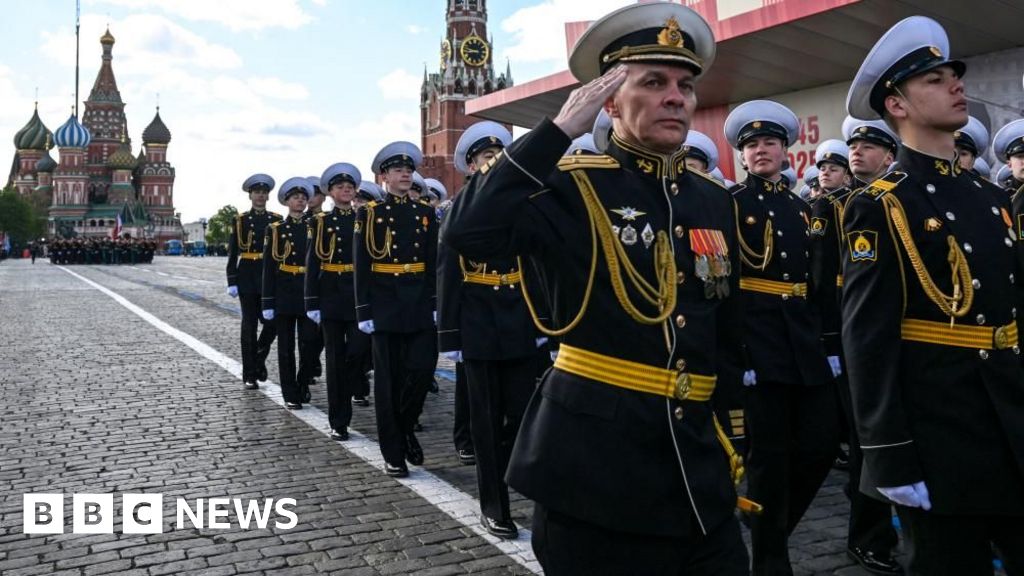
Russia is scaling back its 9 May Victory Day parade in Moscow, with no military vehicles or cadets participating because of what the Kremlin calls a Ukrainian terrorist threat. The move underscores escalating cross-border attacks, including drone strikes near Perm and repeated hits on the Tuapse oil refinery and other energy facilities deep inside Russia. While largely symbolic, the change highlights heightened geopolitical risk and security concerns in Moscow ahead of a major state event.
The scale-back is a signal of asymmetric insecurity in the Russian core, not just a one-day protocol change. That matters because the parade is a regime-confidence broadcast; if the Kremlin is visibly trading symbolism for survivability, it implies elevated domestic air-defense diversion, communications friction, and a higher probability of misallocation of scarce interceptors around Moscow at the expense of refinery, rail, and depot protection elsewhere.
The second-order market effect is more interesting than the headline: Ukraine is forcing Russia to spend more on passive defense and internal security while also raising the perceived hit rate on deep logistics nodes. That increases the strategic value of distributed, redundant, and repair-capable infrastructure — a tailwind for firms with domestic maintenance, electronic warfare, counter-UAS, and mobile power/communications exposure, while worsening the economics for concentrated assets with long repair cycles and limited redundancy.
For energy, the issue is not just short-term outage risk; it is the compounding effect of repeated strikes on refining and pumping infrastructure, which can distort product balances faster than crude balances. Even if crude export volumes hold up, sustained damage to refining throughput would tighten diesel/gasoline markets regionally, lift inland differentials, and force Russia to export more unprocessed barrels at a discount while importing more refined products through indirect channels.
Contrarian take: the market may underweight how much this benefits the Kremlin domestically if the reduced parade is framed as prudent wartime discipline rather than fear. But if mobile disruptions and security lockdowns become routine around major state events, that is a warning that urban stress is rising faster than official messaging can absorb. The near-term catalyst window is days to weeks around the holiday; the medium-term risk is a step-up in Ukrainian strike cadence that converts isolated incidents into structural logistics degradation.
AI-powered research, real-time alerts, and portfolio analytics for institutional investors.
Request DemoOverall Sentiment
moderately negative
Sentiment Score
-0.35
