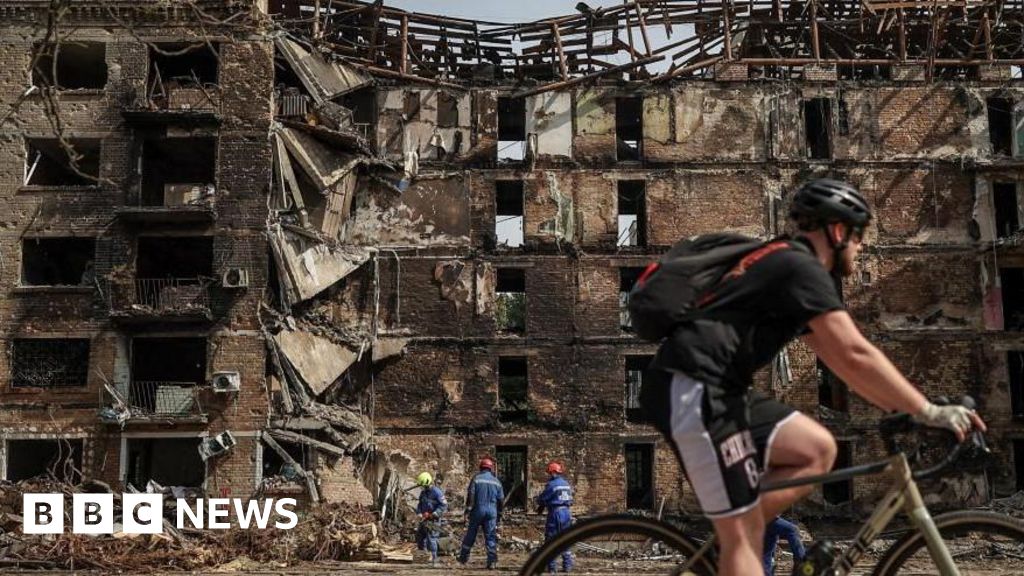
Russia threatened fresh "systematic strikes" against Kyiv, including decision-making centres, command posts and drone manufacturing facilities, after one of its largest attacks on the city since the war began. Saturday night's barrage killed 4 people and injured about 100, with dozens of missiles and hundreds of drones also damaging civilian sites in Kyiv. The escalation raises geopolitical risk and reinforces pressure on Ukrainian air defenses and regional risk sentiment.
The immediate market read-through is not “more war” so much as a higher probability of repeated air-defense saturation across Eastern Europe. That is a subtle but important distinction: the marginal buyer is not just Ukrainian sovereign risk hedging, but any asset sensitive to supply-chain interruptions, energy-transit anxiety, and defense procurement acceleration. The biggest second-order effect is on missile/interceptor inventories: every prolonged strike cycle raises the value of layered air defense, where the bottleneck is not launchers but interceptors, radar, and C2 integration.
For Europe, the risk is less about direct economic damage in Kyiv and more about the premium this adds to regional risk assets, the hryvnia, and the wider EM complex if markets start pricing a longer conflict with periodic escalation spikes. If strikes continue to hit symbolic and civilian infrastructure, expect a fresh impulse into hard-asset stores of value and dollar liquidity preference, while local reconstruction names may become tradable only on violent headline dips rather than a steady trend. The key timing window is days-to-weeks for volatility, but months for procurement and fiscal spillovers.
The contrarian view is that escalation warnings are increasingly priced as background noise, while actual battlefield economics still favor the side with deeper stockpiles and industrial throughput. If the next wave is more psychological than materially damaging, risk assets could snap back quickly once air-defense interception numbers remain high and front-line operations appear unchanged. The real tail risk is not the headline strike itself; it is a structural depletion of Western interceptor inventories that forces governments to ration coverage, which would be a multi-quarter problem rather than a one-night event.
AI-powered research, real-time alerts, and portfolio analytics for institutional investors.
Request DemoOverall Sentiment
strongly negative
Sentiment Score
-0.70
