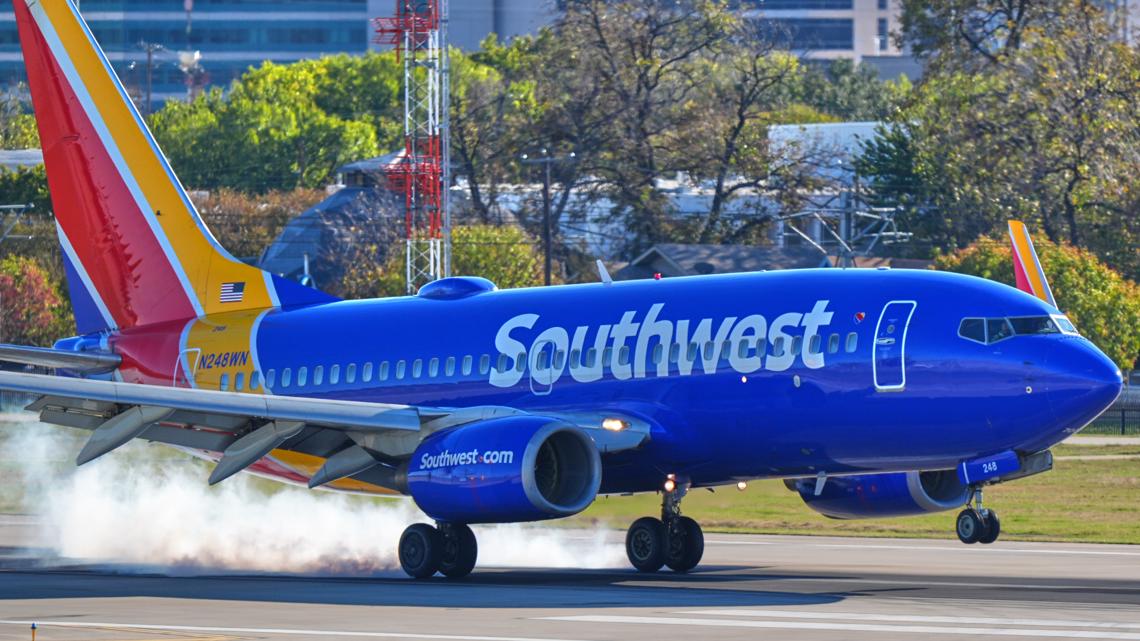
Southwest Airlines updated its plus-sized traveler policy to allow gate agents to provide an additional seat free of charge when adjacent seats are available. If no adjacent seat is open, the airline says it will rebook the customer on a later flight. The change partially reverses tighter January rules but remains an operational policy update with limited near-term financial impact.
This is less a demand signal than a yield-management adjustment that should have limited direct P&L impact on LUV, but it does matter operationally. The real economic cost is not the extra seat itself; it is irregular operations friction from last-minute rebooking, which can ripple through load factors, customer satisfaction, and gate-agent decision consistency. In the near term, the policy looks like a reputational de-escalation move after a prior tightening created avoidable social-media and customer-service risk.
Second-order, the change slightly favors carriers with more flexible same-day inventory and denser networks, because they can absorb displaced passengers more easily. Southwest’s open-seating legacy and point-to-point schedule make this issue more visible than for legacy carriers, so the headline risk is asymmetric even if the revenue math is trivial. If the company can reduce customer churn from this segment without meaningfully lowering effective seat utilization, that is a modest positive for long-term brand value; if not, it becomes another sign that operational simplicity is being traded for policy complexity.
The market should not overread this as a demand headwind or margin event. The meaningful catalyst is whether the softer policy reduces negative press and complaint volume over the next 1-2 quarters; if it does, the issue fades into a governance footnote. If it fails, expect renewed scrutiny around Southwest’s execution discipline, which would matter more for multiple than for earnings.
Contrarian view: consensus may be too focused on the optics of accommodation and not enough on the fact that policy volatility itself is the real problem. A carrier that repeatedly adjusts customer rules in short windows signals weak process control, and that can quietly pressure loyalty over time even when quarterly unit revenue looks fine. The best trade is to treat this as a sentiment catalyst, not a fundamental earnings event.
AI-powered research, real-time alerts, and portfolio analytics for institutional investors.
Request DemoOverall Sentiment
neutral
Sentiment Score
0.00
Ticker Sentiment
