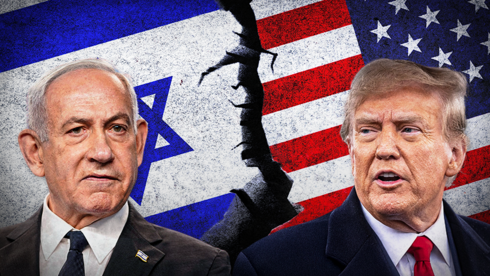
The article argues that an alleged DIA leak labeling Israel a "critical" espionage threat is being used to undermine Section 224 of the FY2027 NDAA, which would expand U.S.-Israel defense technology cooperation in areas like AI, cyber, counter-drone systems and missile defense. It frames the leak as part of a broader isolationist campaign inside the U.S. political and intelligence establishment to pressure the president and widen U.S.-Israel tensions. The piece is politically charged and speculative rather than a direct market event, but it highlights potential headwinds for defense-related U.S.-Israel cooperation and legislation.
This reads less like a one-off policy leak and more like an information-operation aimed at increasing the political cost of U.S.-Israel cooperation. The immediate market impact is not in defense primes per se, but in the probability distribution around procurement timing: even a small delay in legislation or interagency coordination can push budget authority, contracting decisions, and program management out by 1-2 quarters, which matters for firms dependent on government timing rather than just topline demand.
The second-order winner is any supplier already embedded in U.S. programs that can benefit from a broader “sovereign capability” push if cooperation with Israel becomes politically fraught. That favors domestic counter-drone, EW, cyber, and missile-defense vendors with U.S.-only manufacturing footprints, because policymakers may seek to offset headline risk by accelerating onshore procurement and reducing foreign data-sharing sensitivity. The loser set is broader joint-development ecosystems, especially smaller integrators and software vendors whose value proposition depends on cross-border data access, test ranges, or co-developed IP.
The bigger risk is that this becomes a recurring headline cycle rather than a durable policy shift. Over days, the trade is about sentiment and legislative friction; over months, the relevant catalyst is whether Section 224 survives committee and floor scrutiny with watered-down language on data exchange or senior-level oversight. If the bill is trimmed rather than killed, the market likely rerates back toward fundamentals, which argues against overreacting to the leak alone.
The contrarian read is that the alarmism itself may be creating a buying opportunity in defense-cyber names: if cooperation is constrained, U.S. agencies may double down on non-Israel-dependent capabilities, and the absolute defense budget envelope is still rising. The more severe downside is reputational and regulatory for firms perceived as intermediaries in sensitive data flows, not for pure-play hardware contractors. That asymmetry suggests avoiding broad defense shorts and instead targeting names with the highest cross-border program exposure.
AI-powered research, real-time alerts, and portfolio analytics for institutional investors.
Request DemoOverall Sentiment
mildly negative
Sentiment Score
-0.25
