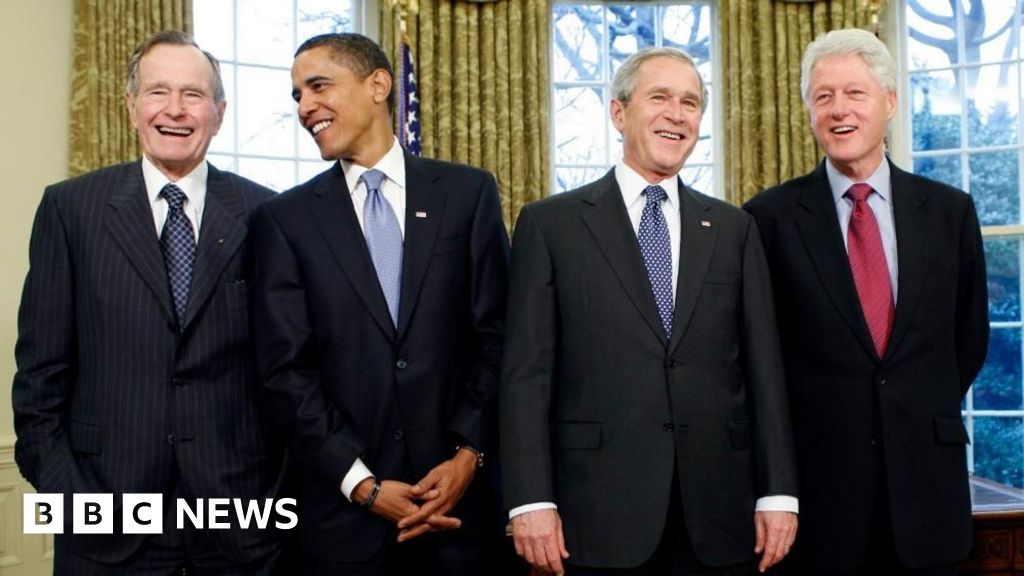
The article centers on a 60-day War Powers Act deadline tied to U.S. military action in Iran, with the Trump administration arguing the clock paused during the ceasefire. It contrasts Trump’s claim that presidents have ignored the law with examples of both compliance and circumvention by Reagan, George H.W. Bush, George W. Bush, Clinton, and Obama. The issue raises a material constitutional and policy dispute over presidential war powers, with potential market relevance given the ongoing U.S.-Iran conflict and Strait of Hormuz risk.
The market implication is not the headline legality debate; it is the increasing probability of a discretionary, semi-open-ended Middle East commitment that is not yet priced like a true escalation regime. That matters because the first-order move in defense and energy is obvious, but the second-order effect is a widening of the geopolitical risk premium across shipping, insurance, airlines, and rates volatility as the market starts to price a longer tail of intermittent strikes rather than a clean one-off event.
The most vulnerable assets are those with operating leverage to a stable Strait of Hormuz and low tolerance for fuel or freight shocks. Airlines, refiners with Middle East feedstock exposure, and global industrials with just-in-time inventory chains can all see margin compression before crude itself fully reprices, especially if the conflict persists in a stop-start format over weeks rather than days. Conversely, large defense primes benefit less from the conflict itself than from the institutional lesson: once Congress is sidelined, appropriations risk becomes less about one theater and more about a higher baseline for munitions procurement and readiness spending into the next budget cycle.
The key catalyst is not further rhetoric but any evidence of interference with shipping, mines, or insurance rates around Hormuz, because that is what turns a legal dispute into a broader commodity-and-logistics shock. A ceasefire that holds for several trading days would likely compress the premium quickly; a renewed strike cycle or expansion to tanker disruptions could extend the move for months. The contrarian miss is that investors may be overpricing the duration of the military conflict while underpricing the persistence of elevated volatility, which can be monetized even if the kinetic phase remains limited.
AI-powered research, real-time alerts, and portfolio analytics for institutional investors.
Request DemoOverall Sentiment
neutral
Sentiment Score
-0.05
