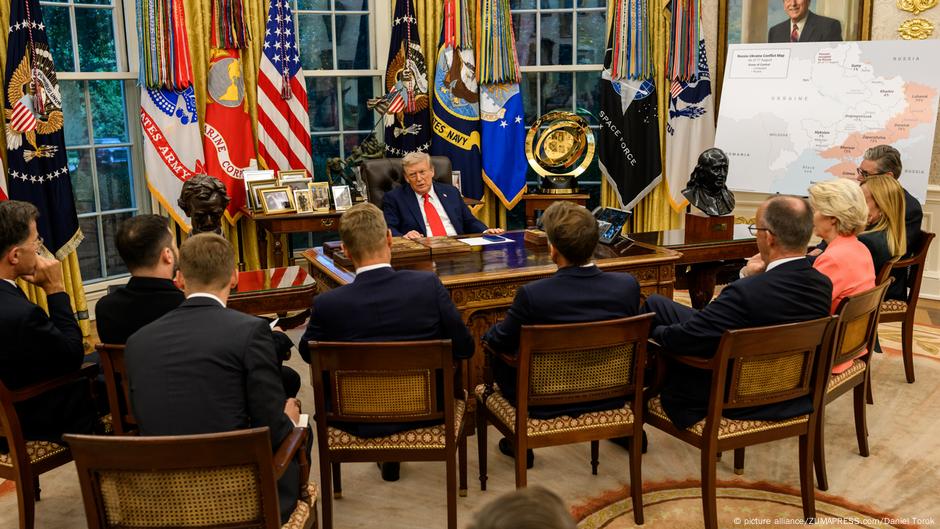
Nearly €300 billion of Russian assets frozen since 2022 are at the center of a transatlantic dispute after President Trump’s 28-point plan would divert $100bn (≈€86bn) of Europe-held frozen assets for US-led reconstruction and propose a joint US‑Russian investment vehicle for the remainder. Euroclear in Brussels holds roughly €180bn, and EU powers (Germany, France, UK) counter that frozen Russian sovereign funds should remain immobilized until Russia compensates Ukraine, while Belgium fears legal liability. The outcome matters for sovereign-asset governance, legal precedent and fiscal exposure — with potential implications for European depositor/sovereign risk and investor sentiment if control of these assets is contested or reallocated.
Market structure: A European seizure of frozen Russian assets would be a windfall for EU fiscal capacity and firms tied to reconstruction (construction, defense, engineering) and a near-term revenue cutoff for Russian counterparties. Winners: European defense contractors (Rheinmetall RHM.DE, Leonardo LDO.MI), infrastructure firms and sovereign issuers that can front Ukraine financing; losers: European banks with legal/operational exposure and any US firms expecting preferential access under the Trump plan. Cross-asset: expect upward pressure on Eurozone sovereign yields (funding +€50–200bn issuance), firmer EUR if policy is cohesive but higher risk premia and commodity upside (Brent) on Russian retaliation.
Risk assessment: Tail risks include multi-year litigation that returns assets (legal reversal), decisive Russian energy retaliation that spikes Brent >$100/bbl, or a US–EU diplomatic rupture that reroutes capital — each has >5% chance but >$100bn economic impact. Time horizons: immediate (days–weeks) political volatility around the mid-December EU summit; short-term (1–6 months) credit spreads and defense order flow; long-term (1–3 years) structural reallocation of defense supply chains and sovereign balance sheets. Hidden dependencies: Belgium’s liability stance, Euroclear’s custody rules, ECJ rulings and bilateral US–EU politics.
Trade implications: Direct plays — long selected defense (RHM.DE, LDO.MI; US: LMT, RTX) with 6–18 month horizons sized 1–3% each and use call spreads to cap premium; short Europe bank ETF EUFN or specific names (BNP.PA, ING.AS) if seizure probability >40% or 10y German bund yield jumps >25bps. Options — buy 12–24 month call spreads on LMT/RTX (target 20–40% upside) and buy puts on EUFN to express legal/liability tail risk. Commodities/FX — 1–2% allocation to Brent (BNO) as insurance and size EUR/USD short (or one‑month put) if summit outcome is fractious.
Contrarian angles: Markets assume fast seizure => quick capital for Ukraine; legal reality suggests multi-year wrangling, so defense upside may be front‑loaded and then mean‑revert once politics cools. The panic short on EU banks may be overdone if the EU agrees a shared liability backstop; historical parallels (post‑sanction asset freezes) show long legal timelines and reputational fallout that can favor large systemically important banks rather than destroy them. Hedge trades across sectors: pair long defense with short-bank protection to capture policy bifurcation while limiting naked directional risk.
AI-powered research, real-time alerts, and portfolio analytics for institutional investors.
Request DemoOverall Sentiment
moderately negative
Sentiment Score
-0.40
