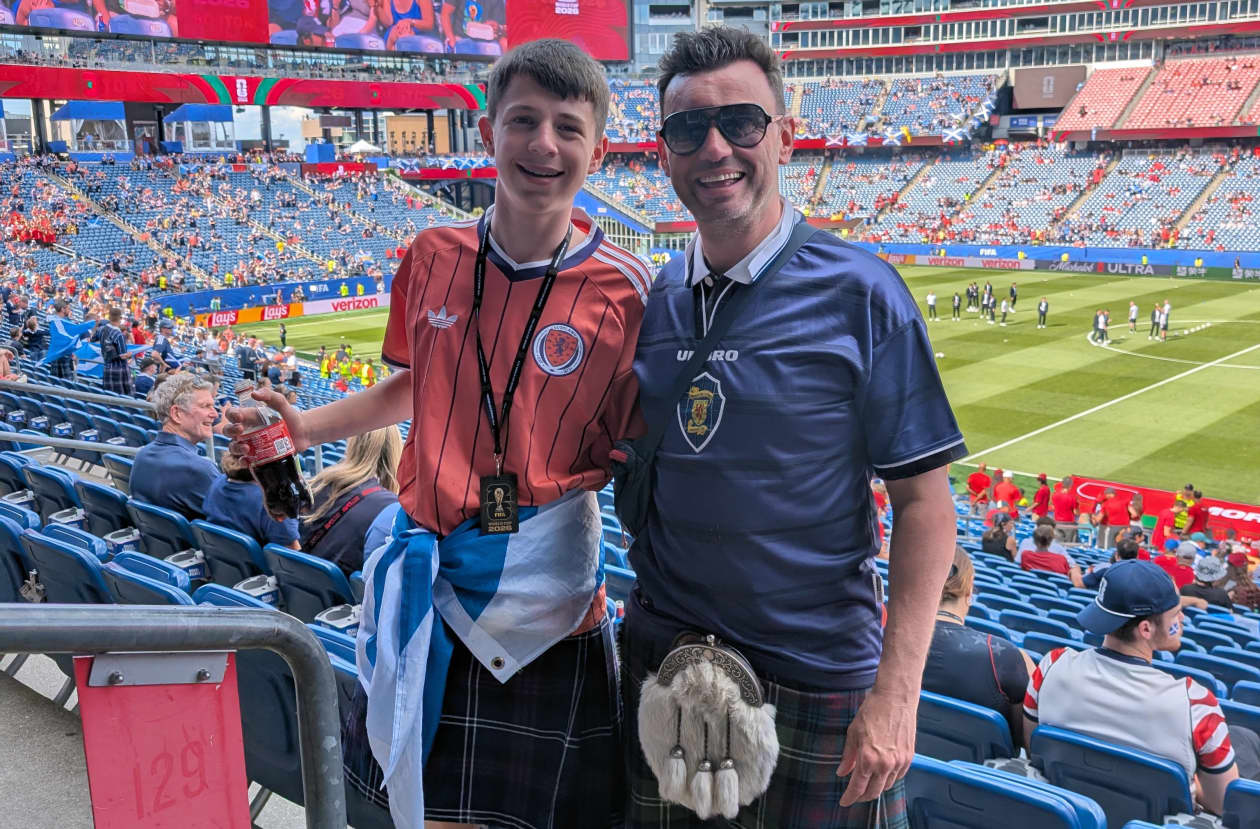
A Scotland fan spent about £1,000 selling Aberdeen F.C. memorabilia to help fund a five-night trip to the U.S. for the 2026 FIFA World Cup, covering flights for himself and his 15-year-old son. The article highlights how devoted fans are stretching finances for a once-in-a-lifetime travel experience, even when ticket access is limited and family members cannot all attend.
This is less about one football trip and more about the elasticity of discretionary “experience” spending when the product is culturally non-fungible. The key second-order effect is that demand for destination events can remain intact even when attendees are financially constrained, but the funding mix shifts toward asset liquidation, family trade-offs, and shorter trip durations. That supports a broader thesis that premium travel demand can stay resilient at the top end while middle-income participation gets increasingly bifurcated.
The beneficiaries are not the airlines or hotels broadly, but the highest-yield segments: premium transatlantic carriers, short-stay urban lodging, and secondary-market travel intermediaries that monetize urgency. The loser is the family-sized package: every incremental cost shock compresses length of stay, ancillary spend, and party size, which is negative for local restaurants, attractions, and ground transport more than for headline room nights. If this pattern repeats across the tournament, we should expect a “fewer people, more spend per head” distribution that favors luxury inventory and compresses value-chain volume.
FX matters here because the trip economics are being framed in sterling against dollar-denominated costs. If GBP weakens into event windows, the affordability gap widens quickly and can suppress marginal demand from UK/Europe fans; conversely, a stable or stronger pound can unlock late bookings. The real catalyst is not ticket availability but the total trip budget, so the market should watch currency moves, airfare capacity, and hotel pricing into the 6-9 months ahead of the event rather than the event itself.
The contrarian view is that the market may overestimate broad travel lift and underestimate substitution away from full-package trips toward one-game, one-city itineraries. That means the winner set is narrower than a generic “sports tourism” rally implies. Unless pricing power extends beyond the premium tier, the volume uplift can be disappointingly small even when the cultural buzz is enormous.
AI-powered research, real-time alerts, and portfolio analytics for institutional investors.
Request DemoOverall Sentiment
neutral
Sentiment Score
0.00
