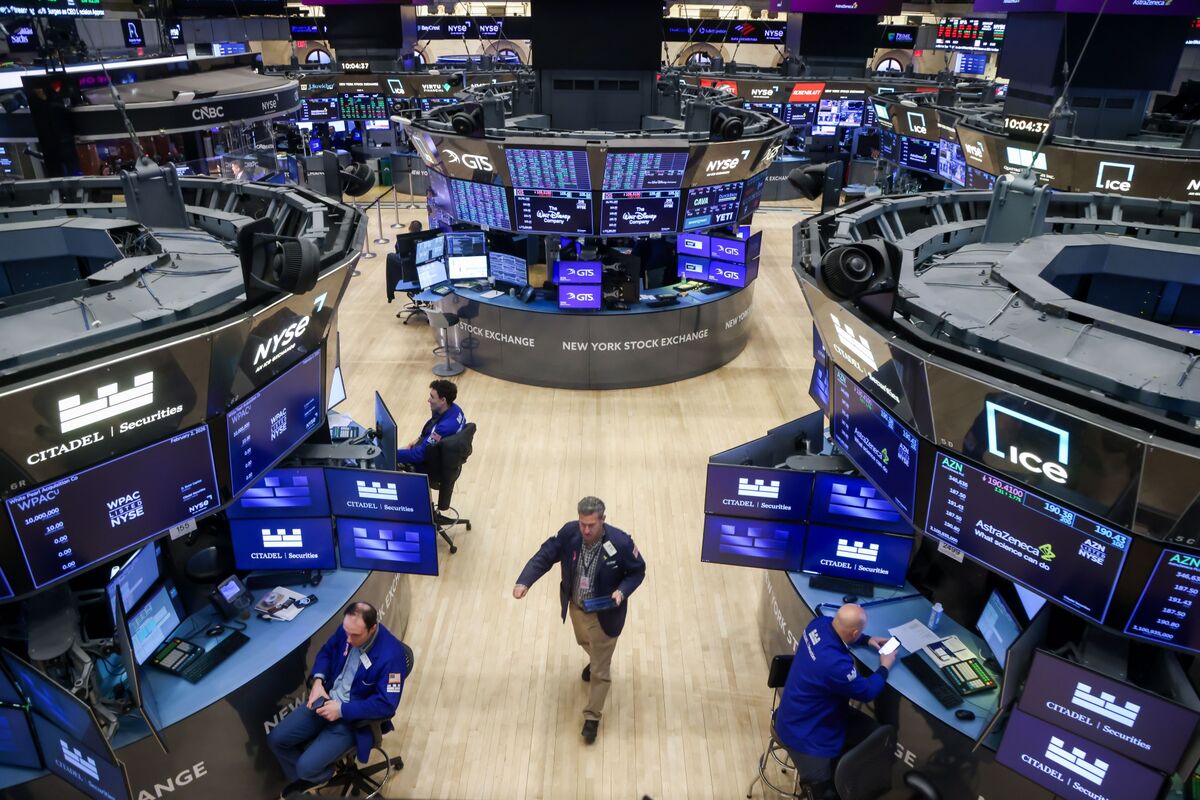
The S&P 500 is nearing fresh records as momentum buyers pile into high-flying technology and AI names, with semiconductor stocks up in 21 of the last 23 trading sessions. The rally has been fueled in part by speculation that the worst of the war in Iran is over, but Wall Street is warning the move may be a short-lived "melt-up" driven by sentiment rather than fundamentals. The piece is a market-structure and positioning warning rather than a company-specific catalyst.
This looks less like a clean fundamental re-rating and more like a reflexive positioning event: when a narrow leadership group keeps printing higher highs, systematic and discretionary money both end up buying the same names for different reasons. The second-order effect is that the move can broaden internally even while breadth remains poor, because dealers hedge short-dated upside through the same large-cap semis and AI proxies, amplifying the tape until realized volatility catches up.
AVGO is especially interesting because it sits at the intersection of AI capex, index flows, and high options gamma. If this is a true melt-up, the marginal buyer is not long-only fundamental capital but under-hedged momentum and overwriting strategies forced to chase; that tends to support the stock for days to weeks, but it also makes the first volatility shock disproportionately violent as crowded call structures unwind. The supply chain read-through is positive for adjacent compute, networking, and foundry names, but less so for businesses with slower AI monetization, since relative performance gets punished even when the absolute tape is strong.
The contrarian miss is that “good enough” geopolitics plus easing fear can be a short-lived fuel source when positioning is already extended. If the market is pricing in a lower tail-risk regime, any stabilization in war headlines may be fully discounted within a few sessions, leaving the rally dependent on earnings revisions rather than sentiment—an abrupt shift from catalyst-driven to valuation-driven trading. That transition usually happens faster than consensus expects, especially in semis, where 1-2 weeks of flat price action can break momentum and force systematic de-risking.
From a risk/reward standpoint, the highest-probability setup is not outright shorting the strongest names immediately, but fading convexity via options while the market is still bid for upside. The key tell is whether upside volume can continue without a spike in implied volatility; if IV stops compressing and call buying persists, the melt-up can extend another 5-10 trading sessions before exhaustion. If instead semis stop outperforming while the broad index lags, that is often the first sign that the rally is becoming too dependent on a small cluster of crowded leaders.
AI-powered research, real-time alerts, and portfolio analytics for institutional investors.
Request DemoOverall Sentiment
neutral
Sentiment Score
0.15
Ticker Sentiment
