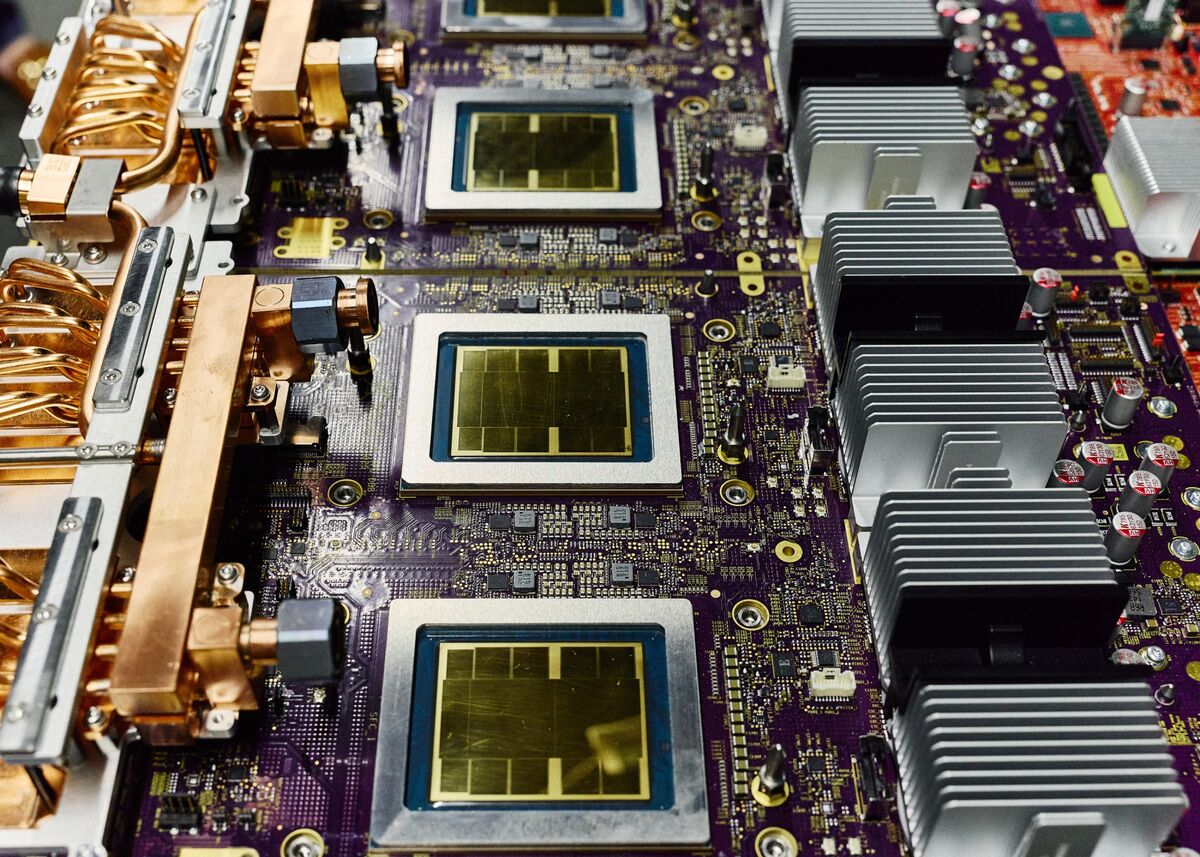
Google is preparing new AI inference chips to build on recent momentum after striking deals with Meta and Anthropic. The move could strengthen Alphabet’s position in the fast-growing AI semiconductor market and further challenge Nvidia in a key category tied to AI software adoption. The article is strategic and directional rather than data-heavy, but it signals continued competitive pressure in AI infrastructure.
Google’s inference push matters less as a one-off product event than as a proof point that AI capex is bifurcating into training and deployment. The real economic prize is in inference unit cost: if Google can consistently undercut incumbent silicon on latency per dollar, it can turn its cloud stack into the default distribution channel for model serving and quietly pull workload share from Nvidia over the next 6-18 months. That creates a second-order benefit for Google’s own platform economics because cheaper inference expands addressable usage, which should lift cloud attach and monetization even if headline chip margins start thin.
For Nvidia, the risk is not an immediate share collapse but a gradual mix shift in the highest-volume, most price-sensitive workloads. The market still prices NVDA as if inference demand remains elastic only to Nvidia’s roadmap, but a credible in-house alternative from a hyperscaler compresses bargaining power across the ecosystem and can slow pricing power in the back half of this cycle. The main beneficiaries outside the obvious names are adjacent networking and memory suppliers tied to broader AI deployment, though the stock-level impulse should favor companies that sell the picks-and-shovels of serving at scale rather than pure accelerator exposure.
Meta’s relevance is strategic: its willingness to dual-source suggests hyperscalers are moving from “best chip wins” to “good enough + cheaper + available.” That dynamic tends to reduce vendor lock-in and increases procurement optionality, which is bearish for Nvidia’s long-duration multiple even if near-term revenue remains intact. The contrarian miss is that the market may overestimate how quickly custom silicon can replace a mature GPU software stack; if Google’s chips require significant tooling migration, Nvidia can still defend the install base for several quarters and use software moat plus ecosystem inertia to blunt the share shift.
Key risks are execution and time. A delayed ramp, performance gap, or poor developer adoption would push this into a 12-24 month story instead of a 2-4 quarter catalyst, while any evidence of constrained supply or slower-than-expected inference demand would reduce the urgency of the move. Antitrust is a secondary overhang for Google: deeper vertical integration in AI infrastructure can invite scrutiny if regulators view chip, cloud, and model distribution as an exclusionary stack.
AI-powered research, real-time alerts, and portfolio analytics for institutional investors.
Request DemoOverall Sentiment
mildly positive
Sentiment Score
0.35
Ticker Sentiment
