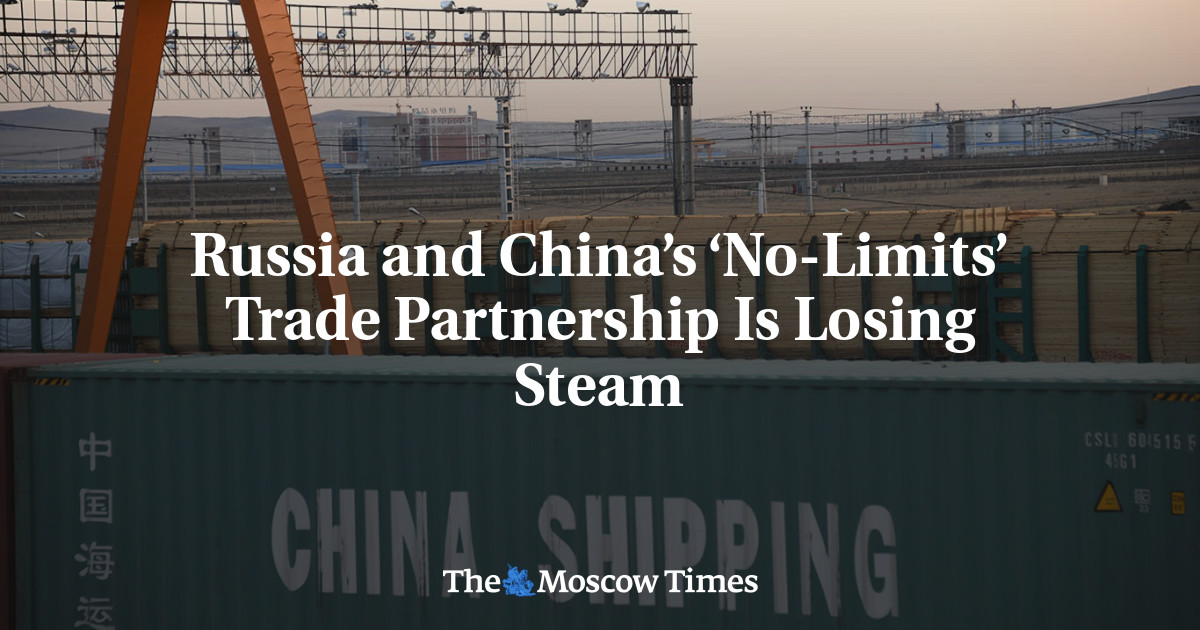
Russia-China trade fell 7% to $227.6 billion in 2025, the first annual decline since 2020, as Russian exports dropped 3.9% and Chinese shipments fell 10.4%. Key categories weakened sharply: Russian oil exports to China fell 20%, petroleum products 33%, coal 27%, while Chinese passenger car exports to Russia dropped 44% and trucks 67%. January-April 2026 trade rebounded 20% year-on-year to $85.24 billion, but analysts expect growth to slow as energy demand normalizes, oil prices ease, and Russia’s market saturates for Chinese goods.
The key takeaway is that the Russia-China trade relationship is shifting from growth engine to managed dependency. China has already captured the easy gains: replacing European suppliers, monetizing discounted Russian energy, and exporting finished goods into a captive market. That leaves a less attractive second phase where Russia’s policy response is to force localization, which structurally compresses Chinese export volumes and margin mix while reducing the need for cross-border shipments over time.
The more important second-order effect is on commodity flows, not headline trade. If Russian energy to China is already hitting infrastructure and diversification constraints, then any rebound in bilateral trade is increasingly a function of oil prices and geopolitical disruption rather than underlying demand. That makes Russia-China trade more cyclical and less elastic than the market may assume; the next leg higher needs either sustained energy scarcity or a durable new pipeline/rail bottleneck workaround, neither of which is imminent.
The contrarian read is that the market may be overestimating the strategic value of the relationship for China and underestimating saturation inside Russia. Russia is becoming a price-taker for Chinese industrial goods while China is actively limiting single-source energy dependence. That implies a medium-term ceiling on Chinese exporters’ unit growth into Russia and a floor on Russian export growth unless oil spikes again. In other words, the trade corridor is turning from a broad-based growth story into a narrow energy arb and policy-managed industrial substitution story.
For markets, the clean expression is not directional Russia exposure but relative-value across China-linked industrials and energy logistics. The best trade is likely in names leveraged to cross-border truck/car/computer shipments or Eurasian freight demand, versus beneficiaries of higher crude volatility. The risk window is months, not days: if Middle East disruptions persist, the trade can look better through summer; if crude normalizes, the slowdown in Russia-China volumes should show up quickly in third-quarter data.
AI-powered research, real-time alerts, and portfolio analytics for institutional investors.
Request DemoOverall Sentiment
mildly negative
Sentiment Score
-0.15
