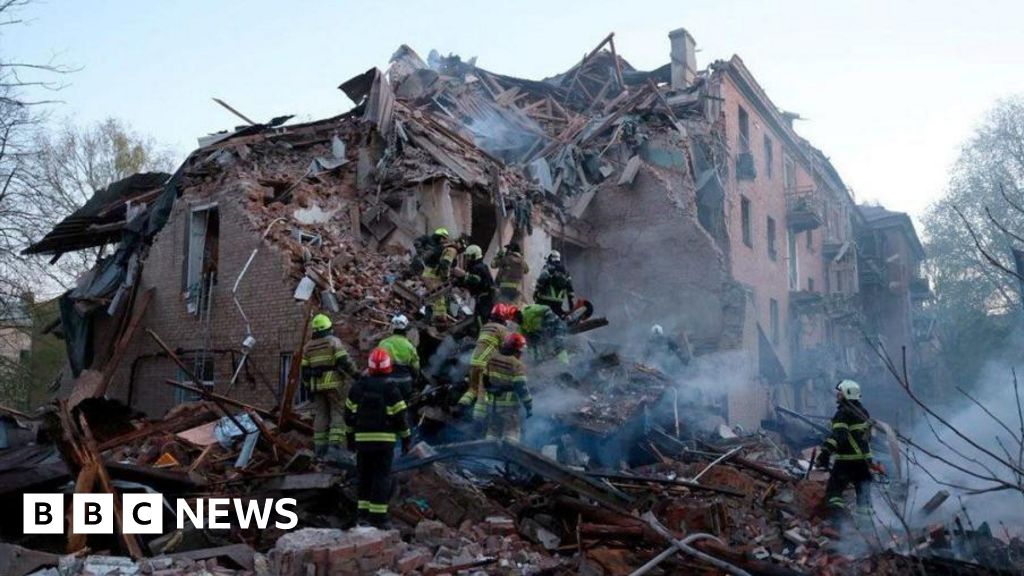
At least seven people were killed in overnight Russian strikes across Ukraine, including five in Dnipro and two in Chernihiv, while Ukraine said it repelled more than 600 Russian drones in what appeared to be the largest attack in several days. The assault also triggered British jets to scramble from Romania amid drone activity near the border, and Ukraine responded with long-range drone strikes deep inside Russia, injuring six in Yekaterinburg. The escalation underscores persistent wartime risk for regional security and defense assets.
This reads as an escalation in both intensity and geographic breadth rather than a one-off spike, which matters for markets because the marginal damage is shifting from front-line military assets to civilian infrastructure and energy logistics. That raises the probability of recurring repair cycles, higher insurance premia, and a slower normalization of Ukrainian power and transport networks, all of which extend the war’s drag on regional risk assets and keep EM duration risk elevated. The fact that drones are now reaching deep into Russian industrial territory also implies the conflict is becoming more symmetric in terms of economic disruption, increasing the odds of retaliatory escalation rather than negotiation.
The near-term beneficiary is defense and air-defense supply chains, but the second-order winners are in radar, counter-UAS, munitions, and European electrification/backup power infrastructure rather than prime contractors alone. If attacks continue at this cadence, expect faster procurement decisions from NATO-border states, which should support revenues for companies exposed to integrated air defense, electronic warfare, and drone interception. Conversely, industrials with meaningful Central/Eastern Europe revenue exposure face a mild but real margin risk from energy unreliability, transport interruptions, and higher working-capital needs.
The contrarian view is that markets may already be pricing a generic "more war" premium while underpricing the specific beneficiary mix: not broad defense beta, but niche suppliers with constrained capacity and pricing power. Another underappreciated angle is that repeated large drone salvos can become a cost-imposition strategy for the attacker, forcing expensive air-defense expenditures and accelerating procurement outside the U.S., especially in Europe and Gulf states. Over a 3-12 month horizon, the key catalyst is whether this evolves into sustained strikes on energy and industrial nodes, which would shift the trade from headline risk to earnings revisions.
AI-powered research, real-time alerts, and portfolio analytics for institutional investors.
Request DemoOverall Sentiment
strongly negative
Sentiment Score
-0.82
