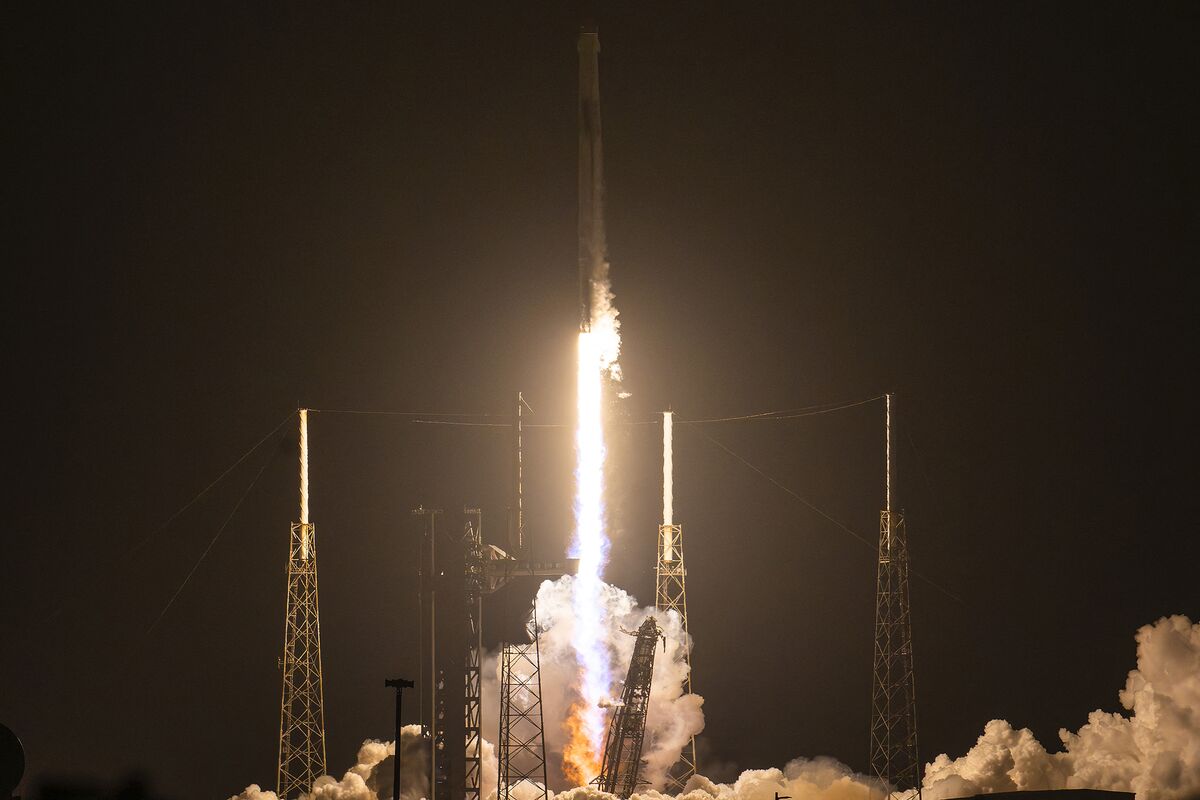
SpaceX is targeting a record-setting IPO in June, aiming to raise as much as $75 billion at a valuation of at least $1.8 trillion. The listing would be the largest stock-market debut in history and give investors exposure to Elon Musk’s long-term space-and-AI expansion plans, including data centers in space. The opportunity is sizable, but the article stresses that execution risk, high costs, and a multi-year timeline remain significant.
The IPO is less about one company’s capital raise than about a new pricing reference for the entire private-space/AI complex. If the deal clears near the top of the range, it will reset expectations for late-stage private valuations, making adjacent names with similar “deep tech + compute” narratives more expensive in the near term, even if they are years from monetization. The first-order winner is the liquidity stack around the offering — underwriters, secondary sellers, and late-stage venture funds marking portfolios higher — while the second-order winners are suppliers with contractual exposure to launch cadence, chip/optics/rack infrastructure, and thermal/power management rather than pure software names.
The bigger market implication is that the AI story is being extended from cloud and semis into infrastructure localization in space, which is much more capex-intensive and far less cyclical in revenue conversion. That creates a near-term mismatch: enthusiasm can inflate multiples quickly, but the operational reality likely forces repeated financing rounds, vendor financing, and long-dated dilution. In other words, the market may reward the narrative immediately while underestimating the drag on free cash flow and the probability of schedule slippage once the project enters execution.
The main risk is a sentiment air-pocket after the listing event: if the IPO trades up aggressively and then stalls, investors may re-rate the entire “AI moonshot” basket lower because the asset lacks a near-term earnings bridge. A second risk is regulatory and procurement friction — any delay in launch approvals, spectrum allocations, or government contract timing pushes out the revenue curve by quarters to years. Conversely, if the deal is tightly priced or partially pre-allocated to strategic holders, the float could be scarce enough to create a short-lived squeeze, but that would likely be a trading event rather than a durable fundamental rerating.
Contrarian view: the market is likely overvaluing optionality and undervaluing execution complexity. The real edge may not be owning the headline asset, but shorting the most expensive adjacent beneficiaries that are already pricing in a flawless space-AI buildout, while owning lower-beta picks-and-shovels with actual revenue now. The setup favors relative-value trades over outright longs because the best-case outcome is distant, while the financing and operational burdens begin immediately.
AI-powered research, real-time alerts, and portfolio analytics for institutional investors.
Request DemoOverall Sentiment
mildly positive
Sentiment Score
0.35
