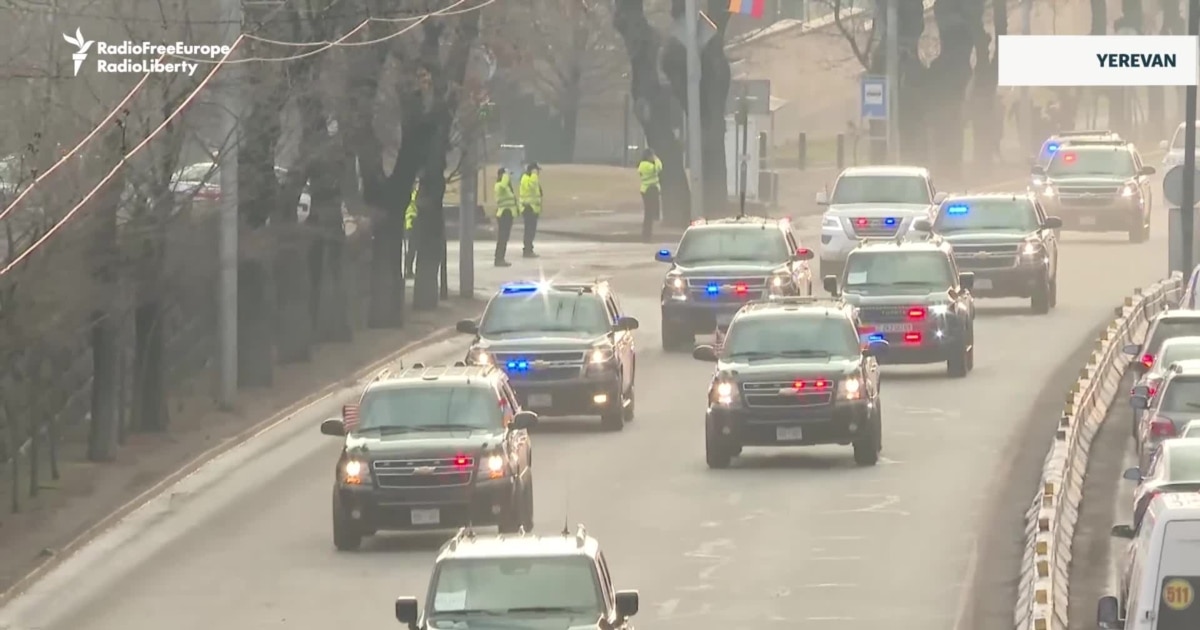
U.S. Vice President JD Vance began a four-day visit to Armenia on Feb. 9, meeting Prime Minister Nikol Pashinian before traveling to Baku on Feb. 10-11 to advance a U.S.-brokered peace deal and a proposed 43-kilometer ‘Trump Route for International Peace and Prosperity’ (TRIPP) corridor that would link Azerbaijan to its Nakhchivan exclave via southern Armenia. The agreement grants the U.S. leasing rights to develop a transit corridor expected to include road, rail, oil and gas pipelines and fiber optic lines, creating an East-West artery that could bypass Russia and Iran and reshape regional trade and energy routes; the visit also faces domestic friction as Armenian groups press for the release of detainees held in Azerbaijan.
Market structure: The US‑brokered TRIPP corridor creates clear winners in U.S. security, construction and specialized logistics providers (defense contractors, KBR, rail/wagon makers) that can capture initial build, security and ops contracts; European majors with Azerbaijani assets (BP, Shell) are secondary beneficiaries via smoother export routes. Losers include Russian/Iranian transit incumbents and regional firms that earn transit rents; expect a regional share shift of low-single-digit % of Caspian overland cargo within 2–5 years, not a sudden global reordering.
Risk assessment: Tail risks are material — renewed Armenia‑Azerbaijan hostilities, Russian interference, or legal challenges to U.S. lease rights carry ~10–25% probability within 12 months and would wipe out early contractors’ upside. Short term (0–3 months) market moves will be muted; medium (3–12 months) will reprice contractors on visible award pipelines; long term (1–5 years) the corridor could lower European gas transit risk premium by several hundred basis points if scaled with pipelines.
Trade implications: Favor small, staged exposure to U.S. defense/construction names and energy majors with Azerbaijani exposure while hedging geopolitical tail risk; prefer options to control downside. Also position to benefit from lower European gas risk premium (short TTF exposure via futures/puts) over the next 3–12 months, size limited to 1–3% of risk capital.
Contrarian angles: Consensus assumes fast build; historical parallels (Balkan and Caucasus projects) show 12–36 month slippage is common — current positive headlines likely underprice schedule and security risk. If peace holds and lease terms exceed 10 years, winners could re‑rate 15–30%; if not, rapid derating and political risk premia will spike, presenting distressed entry points in 6–12 months.
AI-powered research, real-time alerts, and portfolio analytics for institutional investors.
Request DemoOverall Sentiment
neutral
Sentiment Score
0.10
