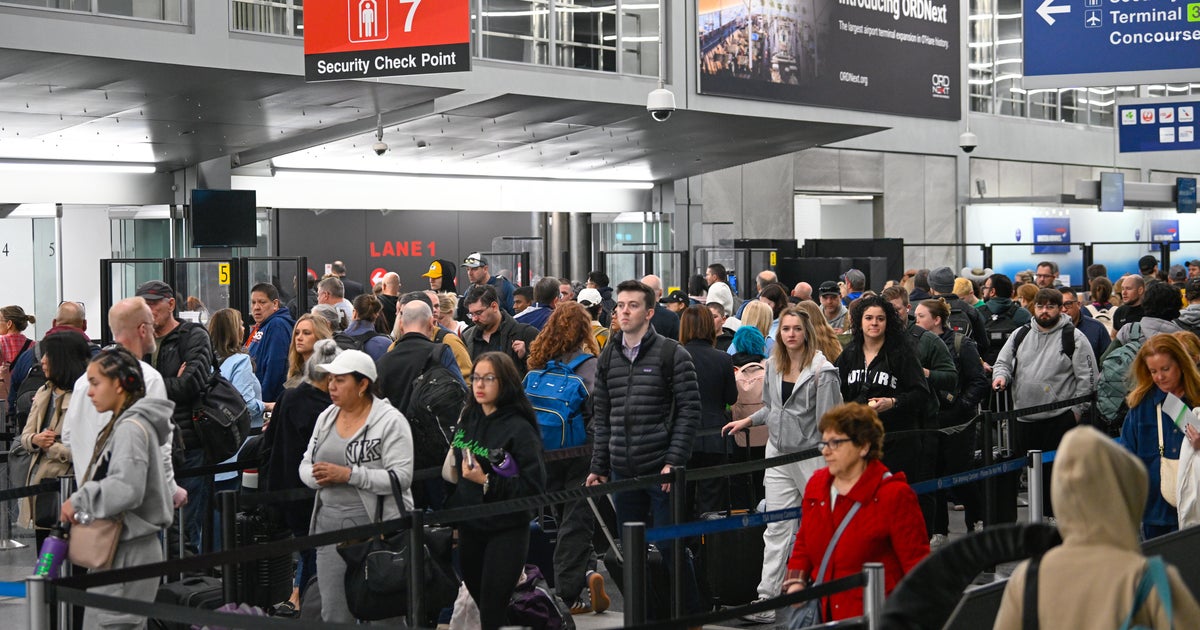
6% average unscheduled TSA absence rate during the DHS shutdown vs ~2% pre-shutdown, with single-day national peaks of 9% (Feb 23) and 305 employee separations between Feb 14–Mar 9. Major airports experienced far higher callouts (JFK averaged 21%; Houston Hobby hit 53% on Mar 8), and operational 'hotspots' peaked at 87 on Mar 8, forcing checkpoint consolidations, lane closures and multi-hour security waits. First full missed paychecks are imminent, increasing the risk of further callouts and attrition that could materially disrupt airport operations and airline travel demand over spring break.
This is an operational shock morphing into a multi-horizon problem: an immediate cadence of delays and checkpoint consolidations in the next 2–6 weeks and a structural workforce drain that plays out over 3–12 months because replacing and certifying screeners is slow and costly. The near-term mechanism is throughput compression (fewer lanes open), which reduces available seat capacity and elevates cancellation risk during peak travel windows, while the medium-term mechanism is higher unit labor cost and recruiting/retention deficits that raise baseline operating expense for airports and carriers.
Second-order winners include vendors that can reduce headcount dependency via automation or pay-for-priority services; these firms can monetize airport urgency and accelerate pilots into paid rollouts. Losers are carriers and airport concession ecosystems concentrated in the hardest-hit hubs — disruption hurts same-day connecting passengers, kills marginal bookings, and creates asymmetric reputational damage that disproportionately hits leisure carriers with thin margins.
Key catalysts: a bipartisan short-term funding fix would materially de-risk the next 2–4 weeks and likely unwind some price dislocations; conversely, an extended impasse beyond one month makes attrition-driven capacity removals more likely and boosts demand for tech substitutes and private security. Tail risks include adverse national-security narratives that force conservative capacity cuts or government emergency contracting that benefits a narrow set of defense/security suppliers.
Time-sliced strategy: treat this as a liquidity/operational event for the next month (trade structure and options focus) and as a structural reallocation into automation/security vendors and airport-adjacent services if separations continue past the 90-day training horizon (direct equity positions).
AI-powered research, real-time alerts, and portfolio analytics for institutional investors.
Request DemoOverall Sentiment
strongly negative
Sentiment Score
-0.60
