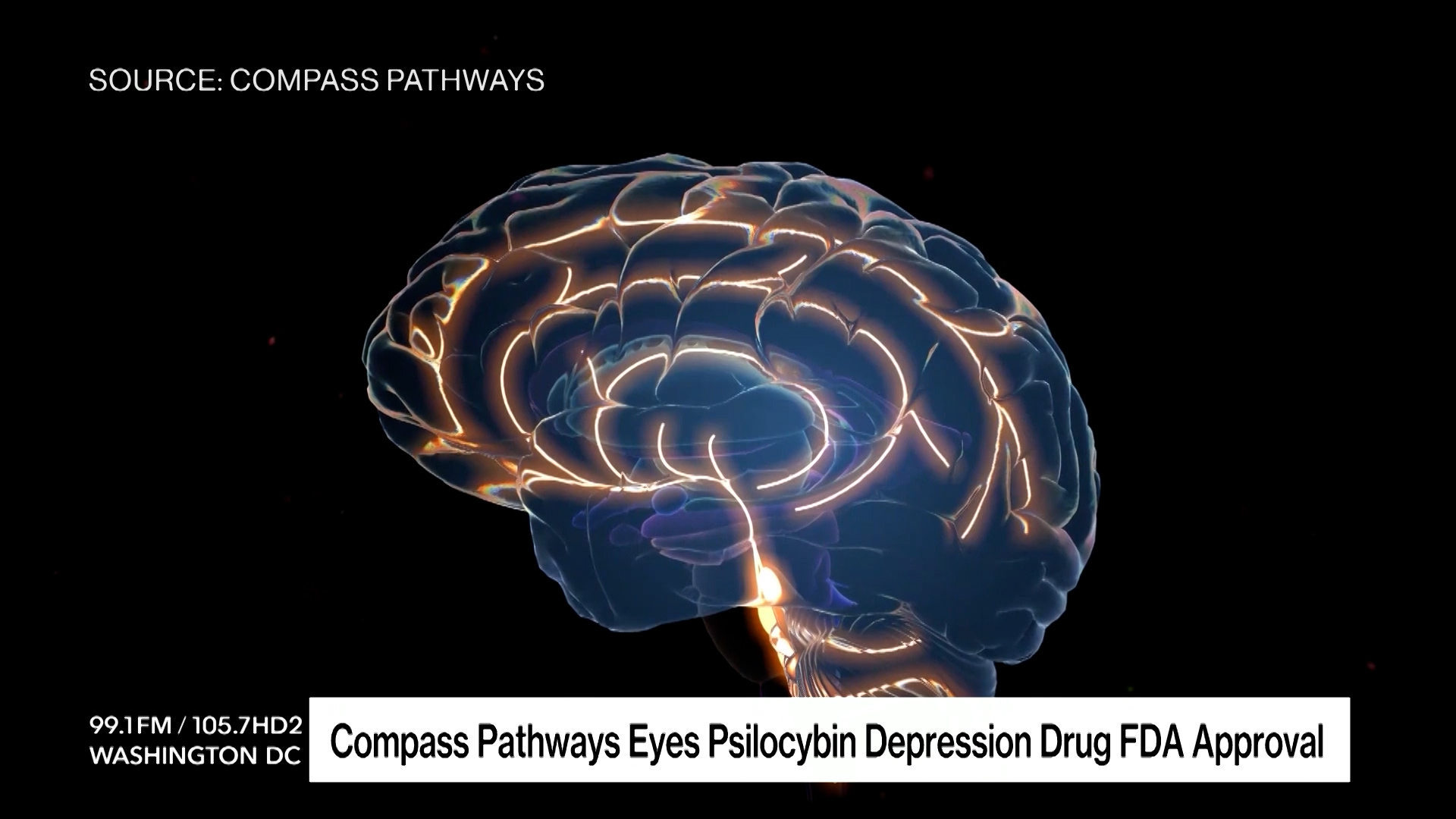
Compass Pathways reported completion of enrollment in its second pivotal Phase III study of synthetic psilocybin (COMP360) ahead of schedule and expects primary data in Q1 next year, enabling a potential accelerated FDA submission thereafter. Management says COMP360 is a fully synthetic formulation with patent protection through 2038, aims for a commercial launch readiness by end-2026, and is positioning the therapy for insurer coverage by demonstrating six-week durable responses from single-session administration in treatment-resistant depression (an addressable U.S. population cited at ~3 million).
Market structure: If CMPS achieves accelerated approval, Compass Pathways (CMPS) gains first-mover pricing power in a defined TRD (treatment‑resistant depression) niche of ~3 million U.S. patients, potentially commanding a premium per-session pricing versus chronic daily therapies (esketamine-like incumbents). Payers and providers will re-price utilization; hospital/inpatient ER volumes could fall (reducing short‑term revenue for crisis services) while outpatient supervised‑therapy providers and behavioral-health staffing demand will rise sharply. Global incumbents and small-cap competitors (ATAI, MNMD) face squeezing margins unless they differentiate on delivery models or label breadth (PTSD, addiction).
Risk assessment: Key tail risks include an FDA safety signal or refusal to accelerate (low probability, high impact) and operational constraints — inability to scale supervised administration (therapist shortage) that caps revenue even after approval. Short horizon (days/weeks): PR/FDA briefing effects; medium (months): Phase‑III primary data (Q1 next year) and potential BLA/NDA submission late next year; long (1–3 years): commercial launch execution and reimbursement rates. Hidden dependencies: durable response beyond 6 weeks, payer willingness to reimburse multiple annual sessions, and CMC/manufacturing scale for synthetic psilocybin (patent protection to 2038 mitigates generic risk but not service-delivery competition).
Trade implications: Tactical long CMPS exposure into the Q1 data is asymmetric but binary — consider controlled option exposure rather than outright equity; protect with 25–35% stop or hedges. Relative value: long CMPS / short ATAI (or MNMD) to isolate positive approval-risk for a lead psilocybin drug versus broader pipeline speculation. Sector rotation: overweight behavioral‑health services, outpatient specialty clinic operators, and selective staffing firms; underweight low-margin inpatient psychiatric service REITs if ER volumes fall.
Contrarian angles: Consensus underestimates bottlenecks — revenue may be capped by therapist capacity and payer restrictions even with approval, so early upside could be front‑loaded and fade as utilization limits bind. The market may overprice a straight path to rapid national reimbursement; a more conservative scenario prices in 20–40% penetration of target TRD cohort by year 3. Historical parallel: esketamine (SPRAVATO) saw initial strong uptake then payer pushback and delivery‑model constraints; expect similar dynamics unless Compass pre‑secures coverage deals.
AI-powered research, real-time alerts, and portfolio analytics for institutional investors.
Request DemoOverall Sentiment
moderately positive
Sentiment Score
0.50
Ticker Sentiment
