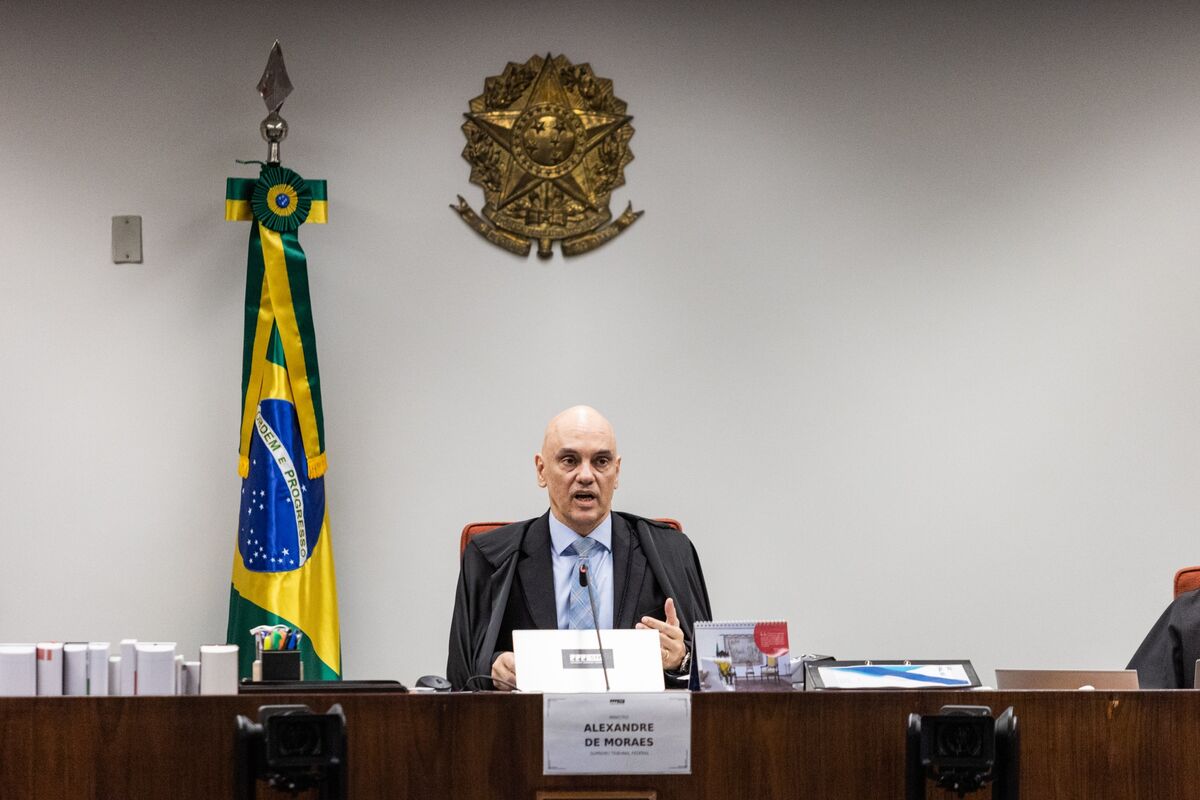
The US Treasury has sanctioned Viviane Barci de Moraes, wife of Brazilian Supreme Court Justice Alexandre de Moraes, and LEX – Instituto de Estudos Juridicos LTDA, a company she co-owns, under the Magnitsky Act. This action, following the prior sanctioning of Justice Moraes two months ago, represents an escalation of US measures targeting individuals associated with the Brazilian judiciary, potentially impacting their financial interests and signaling continued US scrutiny.
The U.S. Treasury's decision to sanction Viviane Barci de Moraes and the family-owned company, LEX – Instituto de Estudos Juridicos LTDA, under the Magnitsky Act marks a significant escalation in its policy towards Brazil's judiciary. This action, following the sanctioning of her husband, Supreme Court Justice Alexandre de Moraes, two months prior, demonstrates a sustained and deepening campaign targeting the Justice's inner circle and financial interests. By extending sanctions to a family member and a corporate entity, the U.S. is signaling a more aggressive stance, moving beyond the individual to impact their broader network. This development introduces a specific and heightened level of geopolitical risk for investors in Brazil, indicating that key figures within the country's institutions are subject to direct U.S. scrutiny and punitive measures, which could create uncertainty around the rule of law and political stability.
AI-powered research, real-time alerts, and portfolio analytics for institutional investors.
Request DemoOverall Sentiment
moderately negative
Sentiment Score
-0.50
