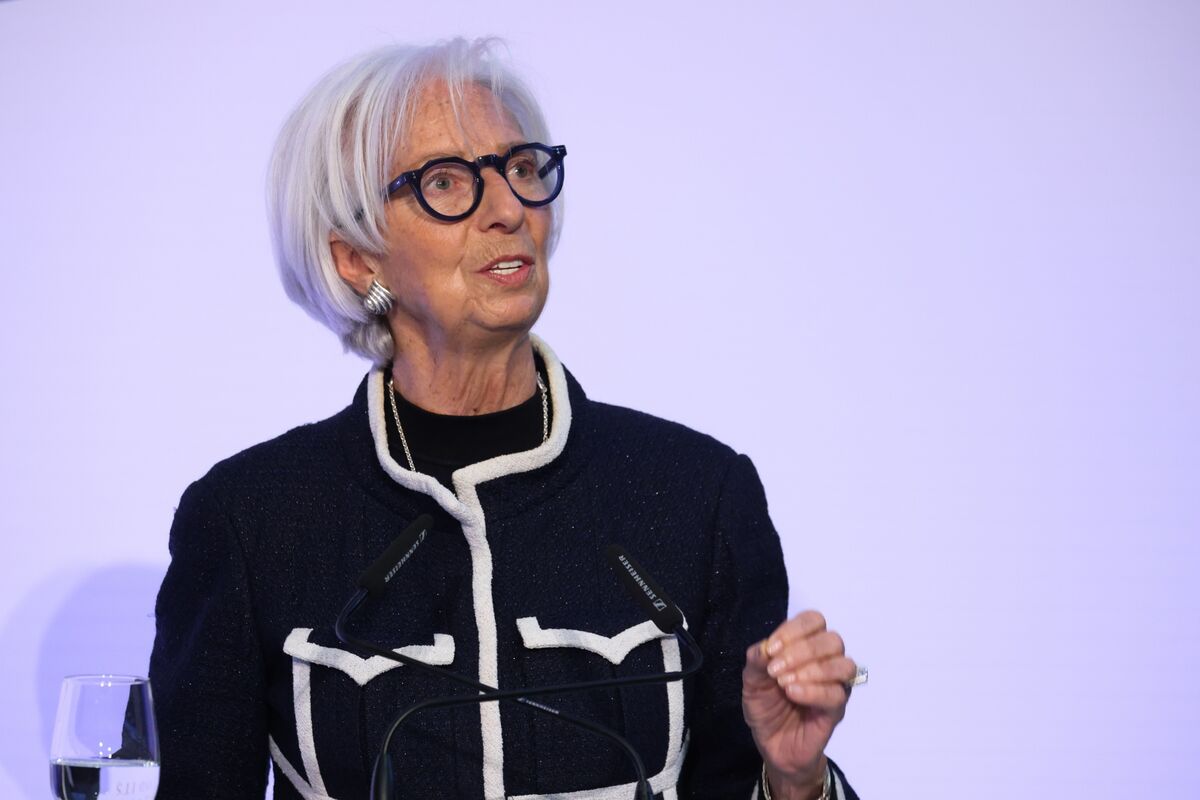
ECB President Christine Lagarde said the Iran war is creating a 'double uncertainty' for monetary policy, with the duration of disruption and spillover from energy prices into broader inflation still unclear. The remarks suggest the ECB needs more data before mapping a policy response, reinforcing a cautious near-term outlook for rates and inflation. The article is more a signal of policy uncertainty than a direct market catalyst.
The market implication is not that the ECB is suddenly dovish; it is that policy optionality is widening while realized inflation uncertainty stays elevated. That usually supports a higher term premium in European rates, because front-end cuts become harder to pre-commit to and the curve has to price a wider distribution of outcomes. The immediate beneficiary is less about any single equity sector and more about assets that thrive when policymakers stay reactive rather than decisive: energy, defense, and parts of quality-duration defensives that can absorb a slower disinflation path.
The second-order effect is on European cyclicals and rate-sensitive domestic demand. If energy shocks persist for even 6-10 weeks, the transmission channel is not just headline CPI; it is margin compression for transport, chemicals, and discretionary retail, with SMEs and lower-income consumers showing up first in PMIs and loan delinquency data. By contrast, firms with pricing power and low energy intensity should outperform, while banks face a more awkward mix of slower loan growth and a later-but-not-necessarily-lower rate path.
The key tail risk is that the ECB waits for data that arrives too late: a short-lived energy spike could still re-anchor inflation expectations if gasoline and electricity prices feed wages and services with a 1-2 quarter lag. The reverse trigger is a rapid de-escalation in the conflict or a meaningful drop in crude and European gas volatility, which would quickly pull inflation breakevens down and restore room for earlier easing. In the next 1-3 months, the trade is less about the level of inflation than about the variance of outcomes, which tends to favor owning convexity rather than outright directional duration.
Consensus may be underestimating how much uncertainty itself tightens financial conditions. Even if the ECB does nothing, higher volatility in rates and energy can slow credit creation and cap multiple expansion in Europe more than a modest change in policy rates would. That makes the current setup mildly bearish for broad euro-area equities, but selectively bullish for hedges against stale inflation and for beneficiaries of a delayed-cut regime.
AI-powered research, real-time alerts, and portfolio analytics for institutional investors.
Request DemoOverall Sentiment
mildly negative
Sentiment Score
-0.15
