
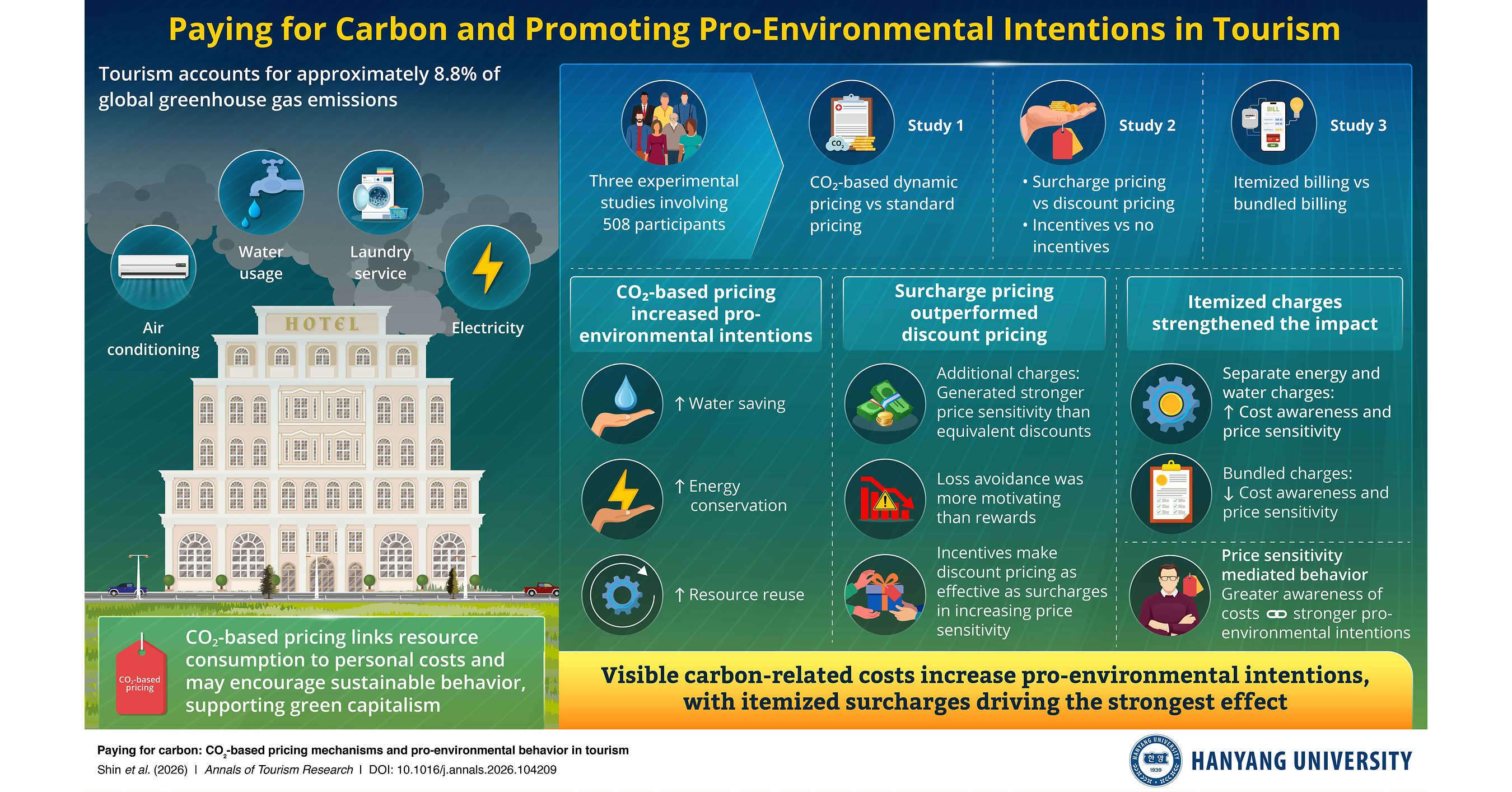
A Hanyang University study finds CO₂/carbon-based pricing in tourism boosts conservation intentions: carbon-linked surcharges for excessive electricity, water, heating/cooling, or linen changes increased pro-environmental behavior intent versus discount-style incentives. Effects were strongest when environmental costs were shown as separate, itemized charges and when higher consumption triggered an additional surcharge rather than an equivalent reward. The research uses three experimental, realistic booking scenarios (intentions, not observed behavior), implying potential for future lower-carbon tourism as tracking/smart technologies expand.
This is not a near-term earnings catalyst; it is a product-design signal. The only monetizable path is if booking platforms turn sustainability into a visible fee architecture, which would matter more for ABNB than BKNG because short-term rentals already sit closer to line-itemized ancillary charges and host-level utility pass-throughs. The second-order winner is the software layer behind pricing, metering, and energy management, not the travel demand layer itself.
The market should be skeptical of the demand benefit. Making environmental costs explicit can improve stated intent, but in real booking funnels it often raises checkout friction and creates another reason to abandon cart, especially in price-sensitive leisure travel. That is a bigger risk for ABNB’s fragmented supply base: hosts may resist adding complexity, while guests may see more fees rather than more value. BKNG is better insulated because hotels can standardize the policy at the property level and bury it in revenue management without as much host pushback.
Over 1-3 months, the main catalyst is not adoption but commentary: whether ABNB or major hotel chains mention carbon-linked pricing in product updates or partner tools. Over 6-18 months, if smart-metering and automated billing become common, this could modestly expand ancillary revenue capture for platforms that control the booking stack, but the magnitude is likely small versus core occupancy trends. The contrarian view is that this may actually reinforce the consumer backlash against opaque fees; the more visible the surcharge, the more likely regulators and travelers push back, especially if it feels like a new tax rather than a real behavior incentive.
AI-powered research, real-time alerts, and portfolio analytics for institutional investors.
Request TrialOverall Sentiment
mildly positive
Sentiment Score
0.25
Ticker Sentiment
Falsifiers: no evidence of improved conversion, no host adoption, or consumer survey/booking data showing higher abandonment once fees are itemized. If ABNB can show lower utility costs without hurting booking conversion, the thesis turns constructive; absent that, this remains a watch item rather than a conviction trade.
