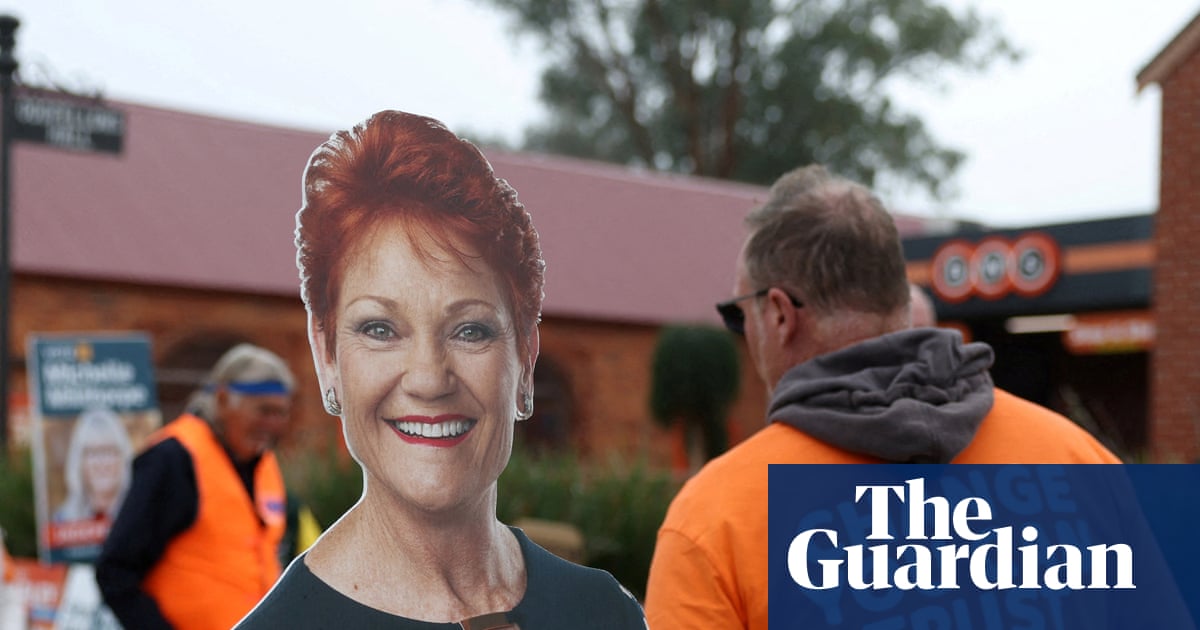
One Nation won its first ever lower-house seat in the rural NSW electorate of Farrer, breaking 76 years of National/Liberal representation. The result reflects voter anger over local service delivery, including hospital and healthcare issues, plus disputes around the Murray-Darling Basin Plan and water allocation. Market impact is limited, but the outcome could influence state and federal policy debates on regional infrastructure, healthcare, and water management.
The market read-through is less about one rural seat and more about a proof point that protest politics can now translate into executable parliamentary leverage. That matters for the Coalition first: it exposes a structural bleed of low-information, high-frustration voters that is unlikely to reverse quickly, and it raises the odds of more fragmented preference deals in marginal seats over the next 12-24 months. The second-order effect is that policy making on healthcare, water, and regional infrastructure becomes noisier, with more headline risk and less certainty around funding priorities.
For domestically exposed names, the key risk is not immediate legislative shock but a slower degradation in policy quality and capital allocation. Hospital operators, regional infrastructure contractors, and water-adjacent businesses could see more stop-start decision making if local grievances become a parliamentary bargaining chip. That tends to help incumbents with balance-sheet strength and national diversification, while hurting small caps and region-specific contractors that rely on government timing rather than outright policy direction.
The contrarian point is that this may be more of a sentiment event than an economic one. A single lower-house seat does not change federal numbers, so the investable impact is mostly through rhetoric, committee attention, and the probability of local spending wins rather than a regime shift. The bigger risk is underestimating the persistence of the protest vote: if One Nation can convert frustration into credible constituency service over the next two years, it could normalize a durable anti-establishment channel in regional Australia, which would keep volatility elevated in marginal-seat policy assumptions.
Near term, the best risk/reward is in a relative-value basket rather than outright macro positioning: long diversified healthcare/infrastructure primes versus short regionally concentrated contractors and water-exposed names. The catalyst window is the next 1-2 budget cycles, when regional pork-barrel spending and hospital commitments are repriced. Any sign that the new MP can deliver tangible local wins would validate the trade against the shorts; if not, the move likely fades as a one-off protest premium.
AI-powered research, real-time alerts, and portfolio analytics for institutional investors.
Request DemoOverall Sentiment
neutral
Sentiment Score
0.05
