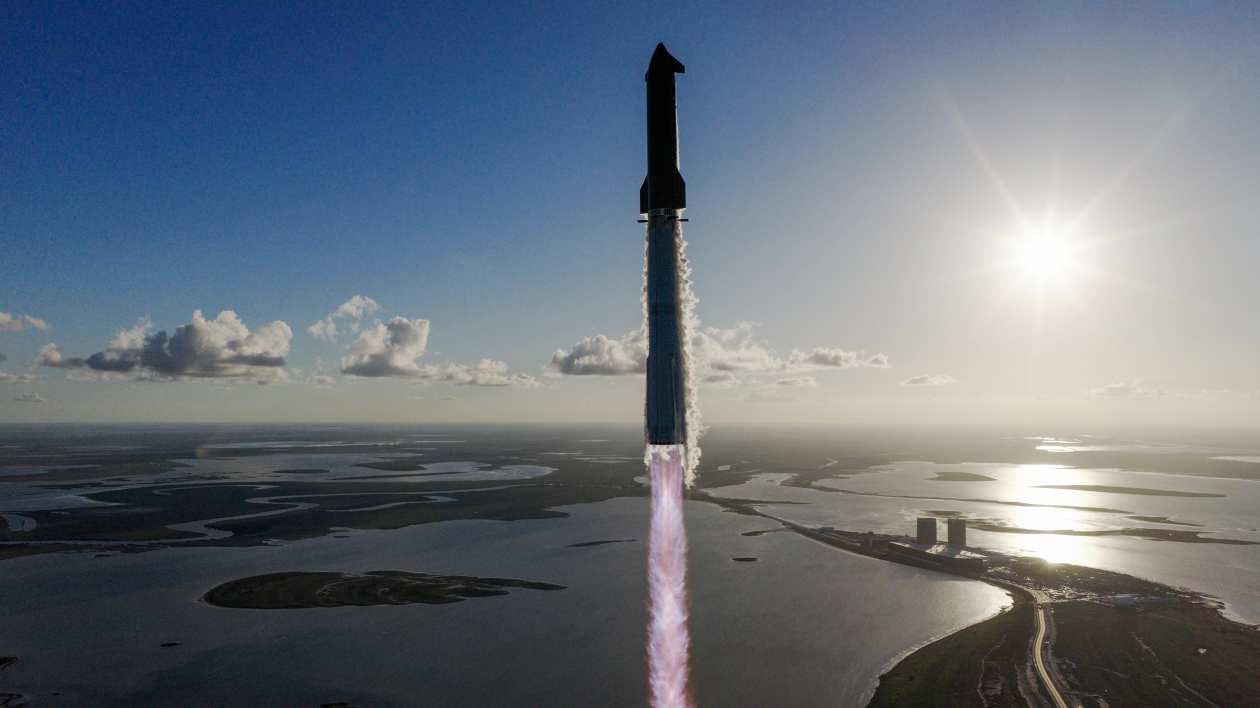
SpaceX has scheduled the 12th Starship test flight, which will debut the third-generation 407-foot rocket and upgraded Super Heavy booster and second stage. The launch is strategically important because Starship sits at the center of SpaceX’s long-term growth narrative and comes ahead of an anticipated IPO. The article is factual and forward-looking, with limited immediate market impact but meaningful strategic relevance.
This launch matters less as a single technical milestone than as a credibility checkpoint for the entire private-market valuation stack around frontier infrastructure. The market is implicitly underwriting a path from “capex-heavy experiment” to “repeatable industrial platform,” so even a clean flight likely helps compress perceived execution risk on adjacent space and defense suppliers, while a failure would have an outsized second-order effect on financing terms for late-stage space names and on the discount rate investors apply to moonshot narratives more broadly.
The key near-term winner is not just SpaceX’s own valuation, but the ecosystem that depends on a proof of cadence: propulsion, thermal materials, telemetry, launch-services, and AI-driven mission software. If the vehicle shows incremental reliability rather than a binary success/fail outcome, that is enough to re-rate suppliers tied to scale-up optionality; if it blows up, the damage propagates unevenly, hitting companies whose bull case depends on the thesis that orbital launch costs are on a steep glide path within 12-24 months.
The contrarian read is that the market may be overestimating how quickly symbolic progress translates into economic progress. For private markets, a successful launch can support the narrative around an eventual IPO, but it does not solve the harder problems: manufacturing yield, launch turnaround time, insurance economics, and capital intensity. The more actionable implication is that implied upside in “space beta” may be better expressed through public proxies with operating leverage to sustained launch volume, rather than chasing the headline asset itself.
Catalyst timing is asymmetric: over the next few days, the event can move sentiment and private comps; over the next 3-12 months, the determinant is whether follow-on launches create a visible step-up in cadence. If this is merely another isolated test, the enthusiasm fades quickly; if it establishes a repeatable upgrade cycle, the market starts pricing in a materially shorter path to monetization and a higher probability of a public listing window.
AI-powered research, real-time alerts, and portfolio analytics for institutional investors.
Request DemoOverall Sentiment
neutral
Sentiment Score
0.15
