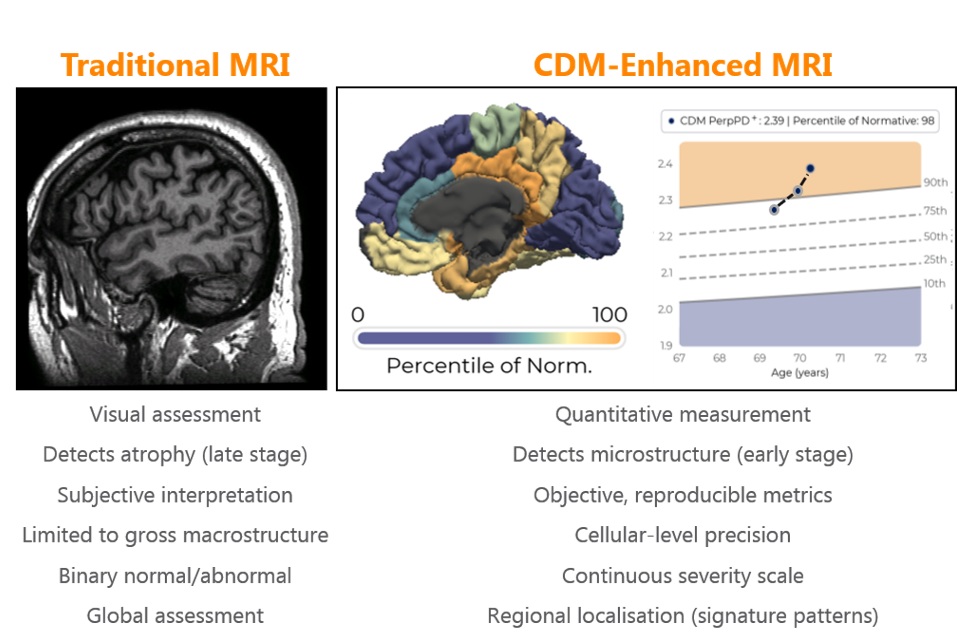
Oxford Brain Diagnostics (OBD) presented five new studies at AAIC 2026 supporting its Cortical Disarray Measurement (CDM) technology as a quantitative measure of neurodegenerative disease biology. The news reinforces the company’s clinical evidence base for Alzheimer’s-related measurement, which is incrementally positive but likely limited near-term price impact absent detailed efficacy/validation metrics.
This is more of a credibility-building event than a revenue event. For a private diagnostics company, conference data only matters if it shortens the path to reimbursement and clinical workflow adoption; otherwise it is just another step in a long validation cycle. The market should treat the news as a positive read-through for the durability of MRI-derived biomarkers, but not as evidence of near-term commercial inflection.
If the science keeps holding up, the second-order beneficiaries are MRI OEMs and software layers that can monetize higher utilization and quantitative workflows, not the biomarker company itself unless it secures distribution. That would be mildly constructive for GEHC, Siemens Healthineers, and Philips over a 6-18 month horizon if payers or neurologists start treating MRI-based measures as a screening or progression tool. The loser set is more likely to be PET-centric and invasive-testing approaches that compete for the same diagnostic dollars, but that substitution is still a years-out narrative.
The contrarian risk is that the market overestimates how quickly conference validation translates into practice. Alzheimer’s diagnostics has a history of promising biomarkers that look good in academic settings but stall at reimbursement, workflow friction, and inconsistent real-world reproducibility. The real catalysts over the next 1-3 months are publication quality, independent replication, and any commercial partnership or regulatory language; absent those, the move should fade. What would falsify the bullish read-through is a lack of follow-on studies or no indication of payer/clinical adoption by the next AAIC cycle.
AI-powered research, real-time alerts, and portfolio analytics for institutional investors.
Overall Sentiment
mildly positive
Sentiment Score
0.15
