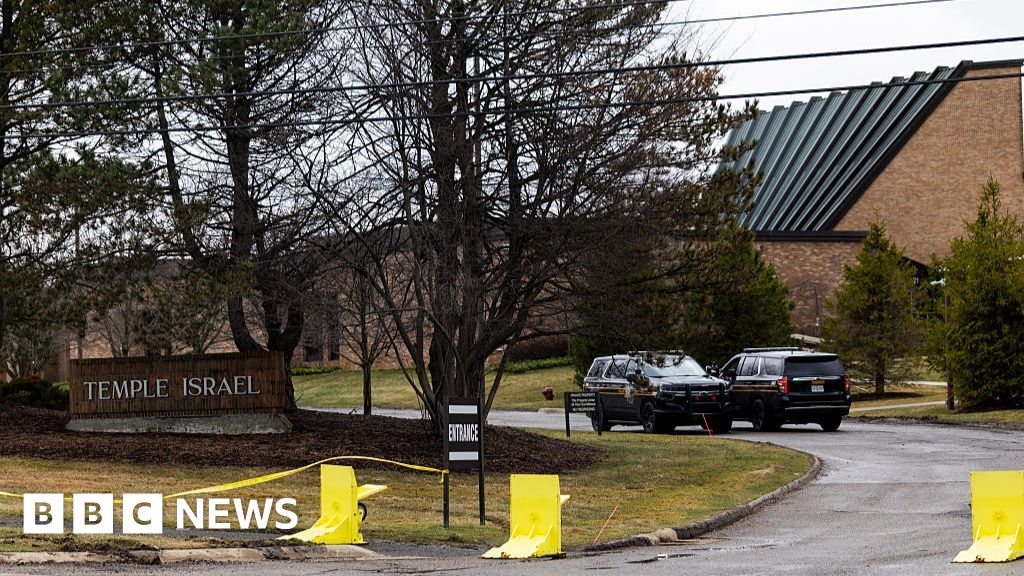
Ayman Mohamad Ghazali, 41, rammed a truck into Temple Israel in West Bloomfield after reportedly losing family members (two brothers, a niece and a nephew) in an Israeli airstrike; he died of a self-inflicted gunshot during a gunfight with police. More than 100 preschool children were evacuated; a security guard was injured and officers treated for smoke inhalation. The FBI is treating the incident as a targeted act against the Jewish community and is investigating motives; state officials labeled the attack antisemitic and called for reduced inflammatory rhetoric.
Expect a modest but persistent reallocation of spending toward physical security at houses of worship and affiliated schools over the next 3–12 months. Incremental budget line items (guards, cameras, monitoring) across thousands of congregations add up to low‑tens of millions of recurring revenue for specialist providers — enough to re-rate pure‑play security SaaS and contract‑guard vendors, but not to move large-cap defense names materially.
Election dynamics create a 6–18 month channel for federal/state grant flow into homeland security and hate‑crime prevention programs. The mechanism is predictable: appropriations and earmarked grants for training, surveillance, and threat‑detection programs; contractors with existing municipal footprints (systems integrators, monitoring providers) are best positioned to convert grant dollars to revenue quickly.
Tail risk is asymmetric and short‑dated: geopolitical escalation in the Middle East can trigger copycat domestic incidents and a temporary risk‑off across small caps and consumer‑facing local services (event cancellations, higher security costs). A rapid de‑escalation or bipartisan calming rhetoric would remove that bid; expect volatility windows measured in days to a few weeks around major foreign‑policy headlines.
Contrarian signal: the market’s reflex to bid large defense primes overlooks the faster revenue cadence and clearer ROI at smaller security tech and monitoring companies. Also price in regulatory/PR risk for surveillance vendors — a paired approach (pure security ops long / surveillance‑tech hedge short) captures upside while protecting against privacy‑driven reversals.
AI-powered research, real-time alerts, and portfolio analytics for institutional investors.
Request DemoOverall Sentiment
strongly negative
Sentiment Score
-0.70
