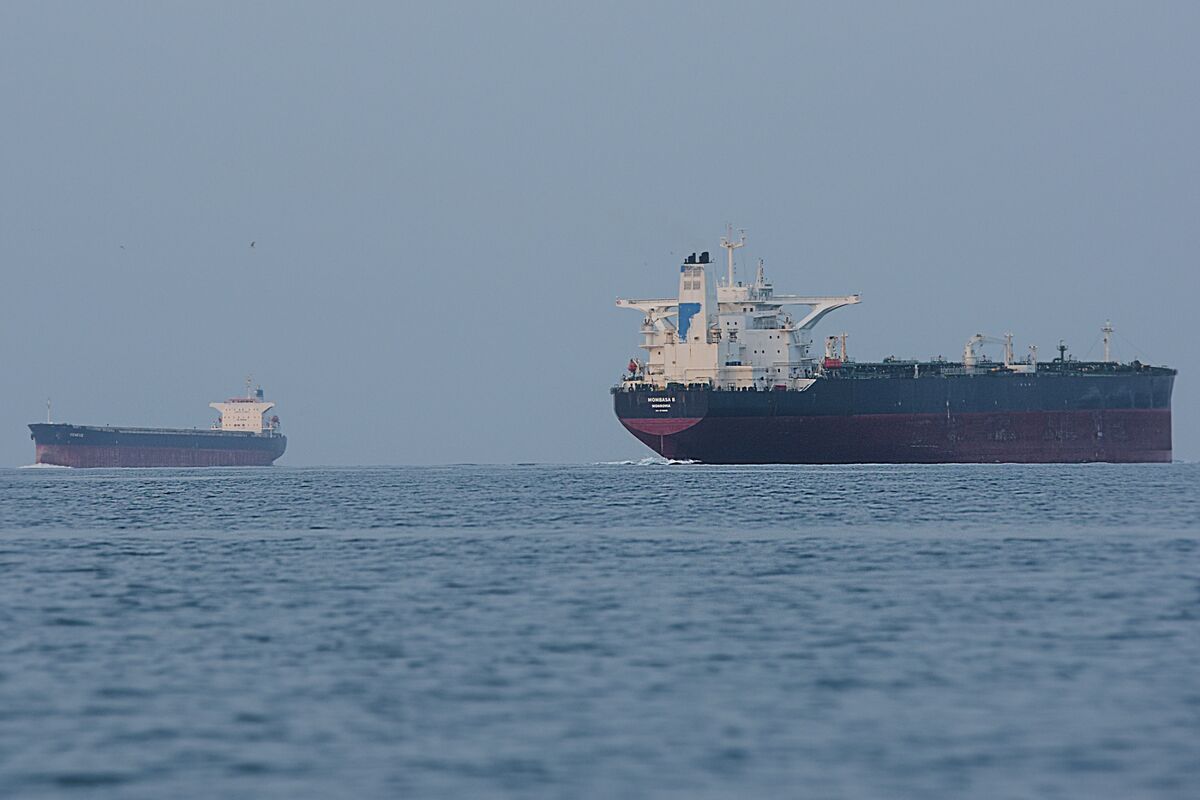
Big Oil warned that commercial stockpiles, strategic reserves and crude held in vessels are being drawn down as the Strait of Hormuz remains shut, implying the global supply buffer is running out. Exxon Mobil, Chevron and ConocoPhillips flagged tightening energy market conditions, with U.S. gasoline already about $1.40 per gallon higher on average. The situation points to further upside pressure on oil and fuel prices and broad market risk if the disruption persists.
The market is transitioning from a headline shock to a physical constraint trade: once transit disruption persists long enough, optionality disappears and price discovery becomes order-flow driven rather than fundamentals-driven. That shifts the winners away from upstream majors and toward the most exposed parts of the barrel stack—retail fuel, airlines, petrochemical users, and any importer with limited hedging coverage. The majors may still print near-term cash flow, but their equity reaction is likely capped if the market starts discounting future political intervention, SPR coordination, or an eventual reopening of flows.
Second-order damage is likely to show up first in margin compression, not in outright demand collapse. Asia and Europe are more vulnerable than the US because they have less policy flexibility and more import dependence, which means cracks in diesel, naphtha, and jet fuel can widen faster than crude itself. That creates a relative-value opportunity: refiners with complex configurations and access to cheaper domestic feedstock should outperform pure consumers of refined products, while logistics and tanker rates may spike if floating storage becomes more valuable than prompt delivery.
The key risk is timing. In the next 1-3 weeks, the market can continue to bid up energy risk premium even if physical shortages are not yet visible; over 1-3 months, however, demand destruction, diplomatic backchannels, or emergency releases can unwind a large portion of the move. The consensus may be underestimating how quickly policy can reverse the trade if gasoline approaches a politically sensitive threshold, but it may also be underpricing the persistence of elevated crack spreads if infrastructure damage makes reopening intermittent rather than binary.
Net: this is not just a crude-long; it is a dispersion setup across energy-sensitive sectors with the strongest edge in relative value and optionality, not outright directional beta. The best risk/reward likely comes from buying volatility where physical scarcity can still worsen, while fading the notion that all oil equities benefit equally from a supply shock.
AI-powered research, real-time alerts, and portfolio analytics for institutional investors.
Request DemoOverall Sentiment
strongly negative
Sentiment Score
-0.55
Ticker Sentiment
