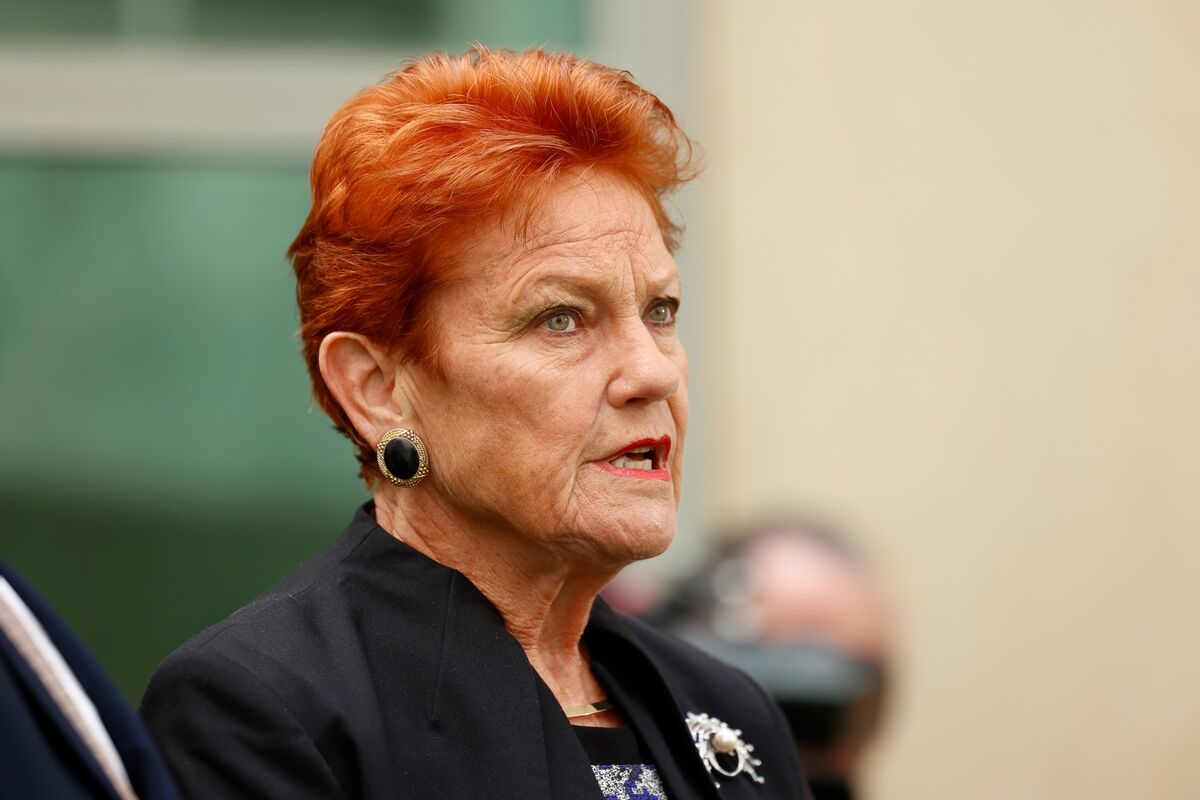
Australia’s One Nation party rose 4 percentage points to 31% in a national poll, overtaking Labor at 28% for the first time and underscoring voter backlash to last month’s budget. The Redbridge Group/Accent Research survey of 1,005 voters, conducted May 25-28 with a 3.4% margin of error, points to a more fractured domestic political backdrop rather than an immediate market shock.
The market read-through is less about the headline poll lead and more about what it says on fiscal credibility: a budget that fails to anchor household expectations tends to leak into higher risk premia in domestic cyclicals, housing-sensitive names, and the AUD. If this disappointment persists into the next few print cycles, the bigger second-order effect is not just policy drift but a higher probability of pre-election spending or tax concessions, which would steepen the local inflation path and keep the RBA boxed in longer than consensus expects.
The short horizon risk is positioning. A move like this can become self-reinforcing because investors underweight Australian political tail risk until the polling gap is large enough to matter for policy continuity; that creates a few weeks of headline-driven volatility in banks, retailers, and small caps with domestic revenue exposure. The more important medium-term catalyst is whether Labor responds with a credibility reset or whether the opposition fracture creates a fragmented parliament scenario, which would raise the odds of legislative gridlock and reduce the market’s confidence in medium-term budget repair.
The contrarian point is that populist momentum is not automatically equity-negative: if the market infers any incoming government will be constrained by debt and rates, fiscal follow-through may actually be more modest than campaign rhetoric suggests. In that case, the initial selloff in domestic beneficiaries could be overdone, especially in quality franchises with pricing power and low funding sensitivity. The cleaner signal is not who leads the poll, but whether the result changes expectations for real disposable income and the terminal RBA rate.
For now, the tradeable angle is to fade the most rate- and consumer-confidence-sensitive names on rallies rather than chase broad index beta; the event risk is better expressed through relative value than outright macro shorts.
AI-powered research, real-time alerts, and portfolio analytics for institutional investors.
Request TrialOverall Sentiment
mildly negative
Sentiment Score
-0.15
