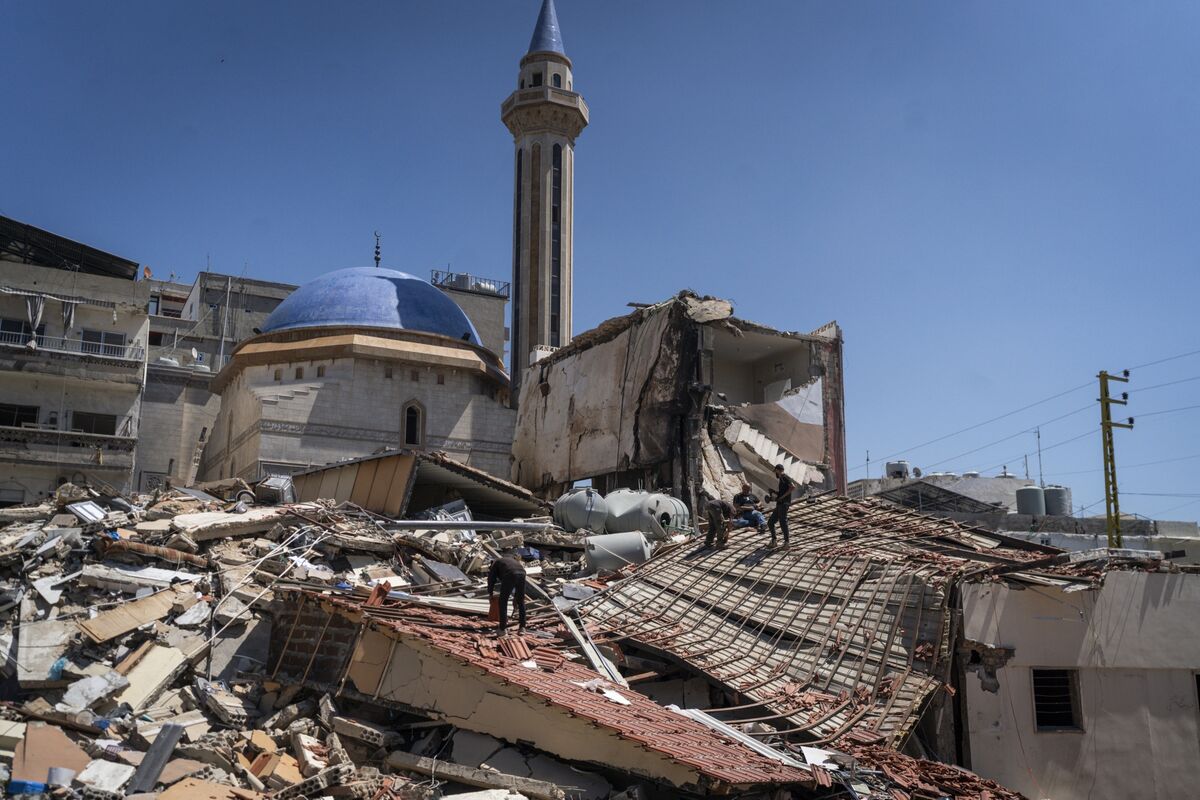
Israel and Lebanon will extend their ceasefire by three weeks, giving negotiators more time to pursue a longer-term agreement. The article also notes that US sanctions are complicating Iran’s willingness to reengage in peace talks, while a sanctioned supertanker carrying 2 million barrels of Iranian oil attempted to transit the Strait of Hormuz, which remains effectively shut. The developments raise geopolitical and energy-supply risk, with potential implications for oil flows and regional stability.
The immediate market read is not “peace premium” so much as “duration of friction.” A short ceasefire extension reduces near-term escalation tail risk, but it also lengthens the window in which shipping, insurance, and sanction-enforcement frictions can remain elevated without resolving into a clean restart of trade flows. That matters most for energy: even if headline conflict risk softens, any continued impairment around Hormuz keeps a risk premium embedded in crude and refined products, which supports midstream/logistics winners more than outright upstream beta.
The more interesting second-order effect is on compliance and substitution behavior. A high-profile attempted transit of sanctioned crude through a chokepoint is the kind of event that typically tightens enforcement optics, which can slow grey-market flows and widen discounts for sanctioned barrels relative to benchmarks. If that persists for weeks rather than days, it can redirect marginal barrels toward non-sanctioned regional suppliers and lift utilization for tankers, storage, and alternative routing names; the losers are refiners and importers most exposed to spot feedstock volatility.
For META and MSFT, the article’s value is indirect: geopolitics adds another layer of uncertainty to already-announced cost actions, but the broader implication is defensive capital allocation. In periods of elevated external risk, management teams tend to prioritize balance-sheet resilience and buybacks over aggressive hiring or capex, which can support free cash flow optics even as the labor market weakens. The market may underappreciate how quickly these firms can re-rate if cost discipline improves while the macro backdrop pushes investors toward large-cap liquidity and defensive earnings durability.
Contrarian view: the consensus may be too focused on the ceasefire extension as a de-escalation signal. If the underlying negotiating position remains unchanged, a three-week runway can simply concentrate the next catalyst and keep risk premia elevated rather than compressing them; the trade is less about direction and more about volatility. In that setup, owning convexity is preferable to naked directional exposure, because the next breach or enforcement action could reprice energy and defense assets in a matter of hours.
AI-powered research, real-time alerts, and portfolio analytics for institutional investors.
Request TrialOverall Sentiment
neutral
Sentiment Score
-0.10
Ticker Sentiment
