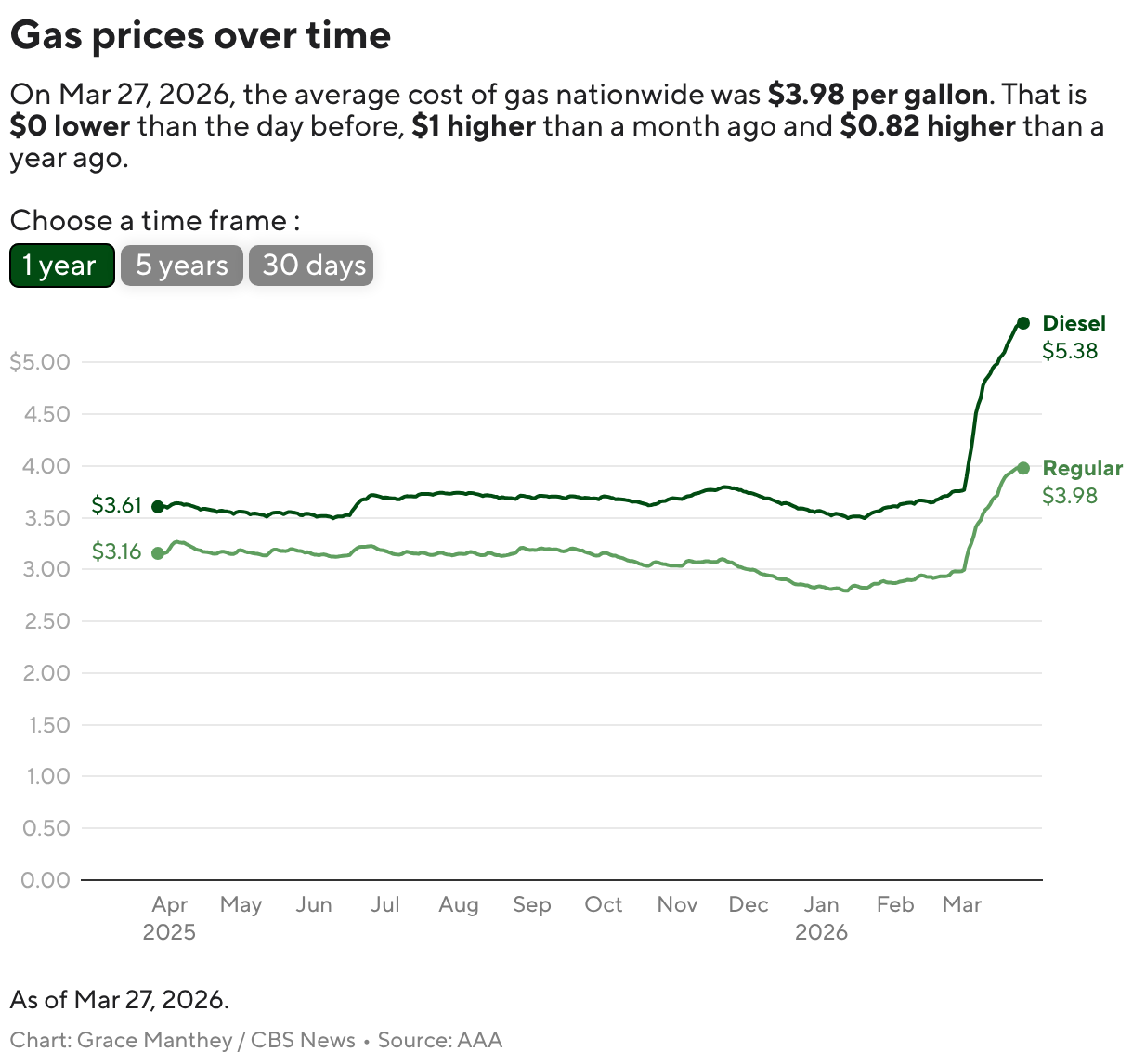
U.S. gasoline prices are forecast to average $4.80 per gallon from Memorial Day through Labor Day, up from $4.56 currently and potentially near the all-time high of $5.02 if the Strait of Hormuz remains closed. GasBuddy says summer blend requirements and stronger seasonal demand could add another 20-30 cents per gallon, while the Iran conflict is keeping global oil prices elevated. The outlook implies billions of dollars of extra fuel costs for consumers and a broad inflationary headwind this summer.
The immediate winner is upstream energy, but the more interesting trade is the spread between producers with short-cycle barrels and the rest of the market. A sustained gasoline shock tends to lift inflation expectations faster than it lifts recession odds in the first leg, which supports energy equities, refiners with captive feedstock, and inflation hedges, while pressuring consumer discretionary names with low pricing power. The second-order effect is margin compression for transport-intensive businesses that cannot fully pass through fuel surcharges in peak demand season, especially if consumers are already signaling budget stress.
The market may be underestimating how sticky retail fuel prices can become even if crude pulls back. Once summer blend requirements, distribution bottlenecks, and station-level pricing lag are in motion, pump prices can stay elevated for weeks after the initial shock fades, creating a higher-for-longer inflation impulse that complicates Fed easing narratives. That matters because gasoline is one of the few household categories that is both highly visible and immediately felt, so sentiment damage can spill into travel, restaurants, and general merchandise faster than headline CPI suggests.
The key tail risk is policy or supply normalization: a meaningful de-escalation in the Middle East or a rapid reopening of a major shipping lane would likely hit crude first and leave pump prices elevated only temporarily. In that case, downstream retail and consumer names could bounce before the broader inflation trade unwinds, so timing matters. The contrarian view is that the move may be somewhat over-owned at the commodity level, but under-owned in equities that benefit from wider crack spreads and from inflation persistence rather than outright oil direction.
AI-powered research, real-time alerts, and portfolio analytics for institutional investors.
Request DemoOverall Sentiment
moderately negative
Sentiment Score
-0.45
