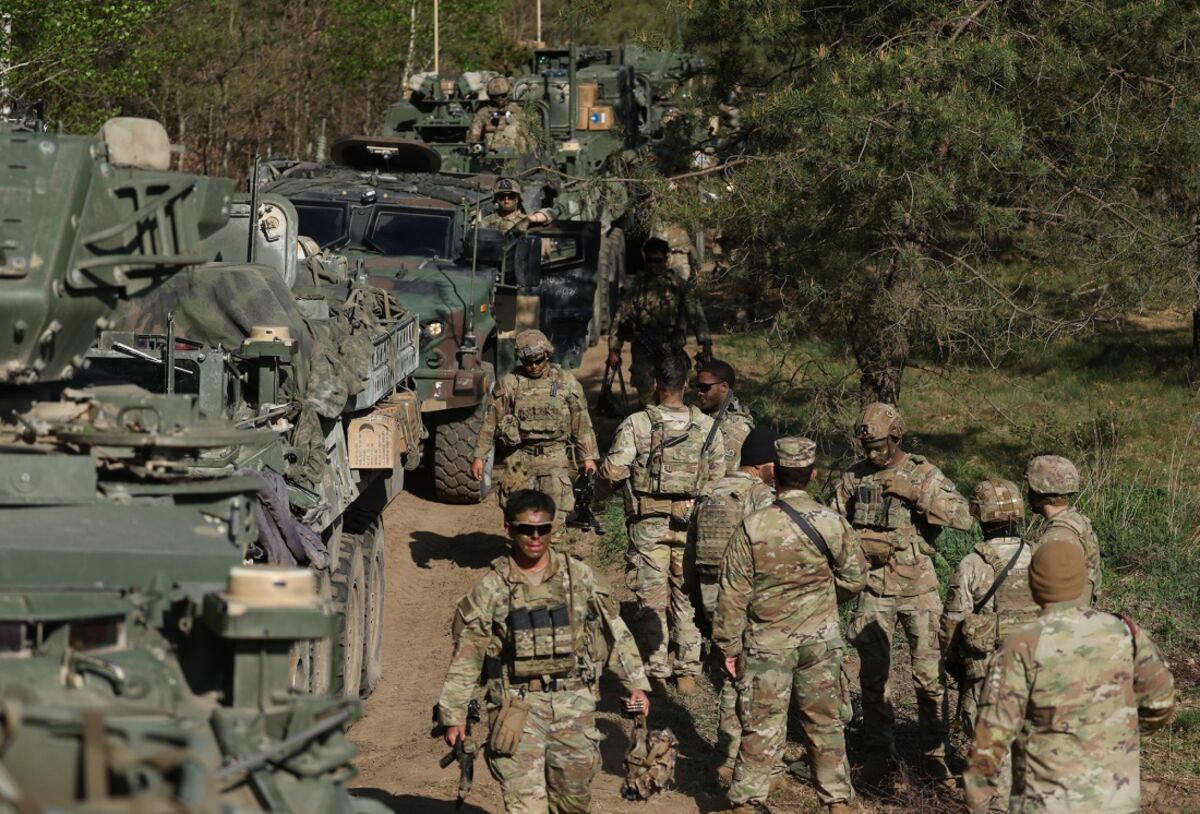
Trump said he will deploy an additional 5,000 US troops to Poland, reversing a planned reduction in the American military presence there. The move reinforces NATO posture in Eastern Europe and underscores the strategic importance of Poland under President Karol Nawrocki, whom Trump cited in announcing the decision. Markets are unlikely to see direct stock-specific impact, but the policy shift is relevant for defense and broader geopolitical risk pricing.
This is less a tactical troop-deployment story than a signal that security guarantees in Central/Eastern Europe are becoming more explicitly conditional on domestic politics in Washington. The immediate beneficiaries are not only US defense primes with European theater exposure, but also the broader European rearmament complex: when allies can no longer assume stable US force posture, procurement urgency rises and contracts shift toward air defense, munitions, ISR, and logistics rather than legacy platform replacement. The second-order effect is a modest but durable steepening in the defense spending curve across NATO’s eastern flank.
The bigger market implication is risk premia, not earnings. A visible US reinforcement reduces the probability of a near-term miscalculation around the Poland–Baltics corridor, which should suppress tail-risk hedges in European equities and FX, but it also reinforces the idea that troop levels can be used as bargaining chips. That makes the “policy reversal” channel the key catalyst: if this is framed as one-off political signaling, the impact fades in days; if it becomes a precedent for transactional force posture, the repricing lasts months and supports higher defense multiples.
The contrarian view is that markets may overread the move as bullish for security while underestimating the budgetary and logistical drag. Additional US presence does not automatically translate into higher readiness if sustainment, transport, and base-support bottlenecks limit effective deterrence. It also raises the risk of complacency in European capital allocation: governments may temporarily lean on US reassurance instead of accelerating indigenous capacity, which could delay the more durable capex cycle by 1-2 budget cycles.
From a positioning standpoint, the cleanest expression is to own the defense supply chain with the highest leverage to NATO rearmament rather than headline platform names. The trade should work better on dips than on immediate gap-up, because the earnings impact is slow-moving while the geopolitical signal is fast-moving and easily reverses on a single political headline.
AI-powered research, real-time alerts, and portfolio analytics for institutional investors.
Request DemoOverall Sentiment
neutral
Sentiment Score
0.05
