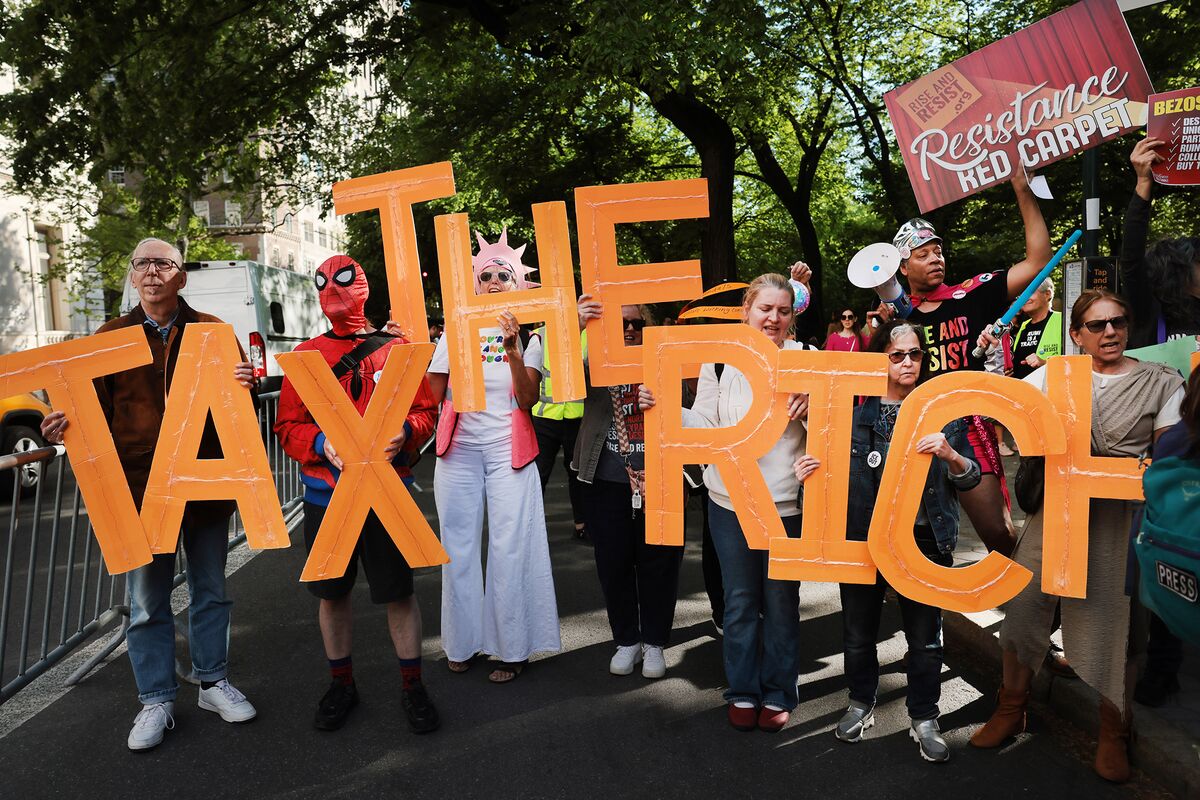
The article centers on rising anti-wealth tax pressure, with Ken Griffin criticizing a proposed second-home tax, Barry Sternlicht opposing broader levies on the rich, and Sergey Brin saying he is "very happy" after leaving California. The piece highlights a defensive posture among ultra-wealthy investors amid state-level tax debates in New York and California. Market impact is limited, but it underscores policy risk for high-net-worth individuals and housing/real estate-linked assets.
The immediate market read is not about any single donor or conference remark; it is about a creeping regime shift in the cost of capital for high-net-worth consumers and private capital allocators. If state and municipal tax pressure keeps rising, the first-order effect is less relocation of assets than a slower willingness to spend on discretionary real assets, which matters for luxury housing, trophy commercial property, private aviation, and high-end services. The losers are the asset classes that depend on ultra-rich confidence and geographic clustering; the beneficiaries are jurisdictions that can poach residents, plus advisors, family-office platforms, and tax-efficient vehicles that monetize complexity.
The second-order risk is that this turns into a feedback loop in coastal housing markets: higher effective taxes reduce marginal demand for second homes and expensive inventory, which pressures transaction volumes before it meaningfully hits headline prices. That usually shows up first in the top decile of coastal ZIP codes, then in adjacent high-income suburbs via reduced comp activity and slower turnover. The time horizon is months, not days; the near-term catalyst is election rhetoric and budget negotiations, while the reversal case is any moderation in tax proposals or a broader market rally that restores household wealth effects.
The contrarian view is that markets may be overestimating actual collection and underestimating mobility. Ultra-wealthy households can defer, restructure, or simply move faster than policymakers can legislate, so the economic damage may concentrate in intermediaries rather than the wealthy themselves. That argues for being cautious on broad-stroke anti-rich hedges and instead targeting the parts of the ecosystem where behavior changes fastest: luxury brokers, trophy asset transaction volume, and fee pools tied to wealthy-client inflows.
AI-powered research, real-time alerts, and portfolio analytics for institutional investors.
Request DemoOverall Sentiment
mildly negative
Sentiment Score
-0.15
