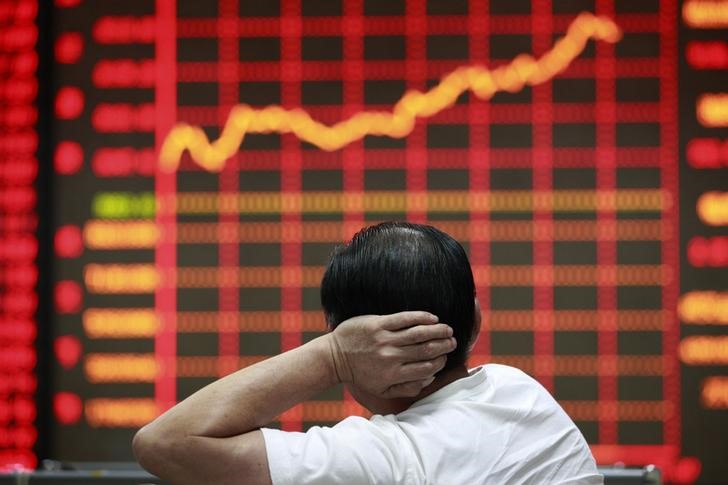
Asian equities rallied sharply, with South Korea’s KOSPI up 7.9% and Samsung Electronics rising nearly 8% after a tentative wage deal averted an 18-day strike. Nvidia’s stronger-than-expected results and upbeat AI spending outlook lifted chip and technology shares across the region, while easing Strait of Hormuz tensions added to risk appetite. Japan’s Nikkei gained 3.7%, Australia’s ASX 200 rose 1.6%, and weaker Australian jobs data increased expectations that the RBA could pause hikes.
The immediate winner is not just NVDA but the entire AI capex complex: hyperscaler budgets, advanced packaging, HBM memory, and networking all get a repricing boost when the leader prints cleanly. The second-order effect is that Samsung’s labor resolution reduces a supply-risk premium that had been creeping into memory names; that matters because AI memory tightness is now as much a constraint on shipment timing as wafer supply. In other words, the market is starting to price a smoother conversion of AI demand into actual units shipped, which is better for equipment, substrates, and memory ASP durability.
The move also tells you positioning was not fully cleansed despite the recent AI leadership. When a high-beta catalyst like Nvidia triggers a broad Asia risk-on response, it usually forces underowned cyclical tech and semiconductor suppliers to catch up over the next 1-3 sessions, especially where local earnings were not the direct catalyst. The more important question over the next 4-8 weeks is whether this becomes a multiple expansion trade or a fundamentals trade; if forward guidance from the ecosystem does not confirm, the rally likely narrows back to the highest-quality AI names.
The contrarian risk is that this is a valuation-rerating event masquerading as an earnings event. If supply chain relief and better sentiment pull forward too much money into semis, the market may ignore that downstream monetization from AI inference and enterprise adoption remains uneven, which caps the sustainability of the move. Geopolitics and rates are the main reversal vectors: a renewed energy shock or a hawkish central bank tilt would hit broad tech multiples faster than it would hit revenue expectations.
AI-powered research, real-time alerts, and portfolio analytics for institutional investors.
Overall Sentiment
moderately positive
Sentiment Score
0.65
Ticker Sentiment
