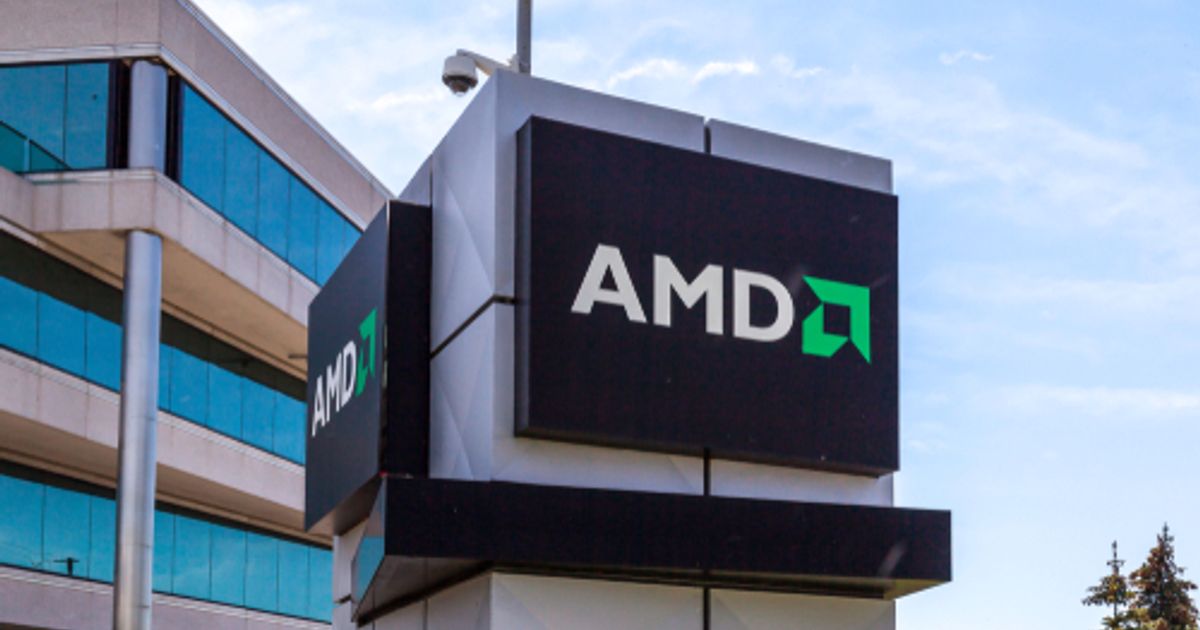
Wedbush maintains an Outperform on AMD with a $290 12‑month price target ahead of Q4 results, citing strength in CPU (PC and server) and services businesses; shares were up ~5% at $249. Street consensus for Q4 is $9.67 billion revenue (vs. $7.66 billion year‑ago) and $1.32 EPS (vs. $1.09), and Wedbush expects AMD to modestly exceed estimates driven by tight PC/server demand, potential double‑digit server CPU pricing, and better product‑mix optimization. Analysts note AI accelerator opportunity adds upside variability but could materially boost gross margins and profits through 2026, with possible incremental demand if China green‑lights additional AI‑related shipments.
Market structure: A modest Q4 beat driven by PC and server CPU strength implies AMD (AMD) is recapturing pricing power in x86/EPYC segments and will directly benefit OEMs, TSMC (foundry capacity) and high-margin accelerator SKUs; losers include incumbent Intel for server share and smaller GPU-only peers who lack AMD’s CPU+accelerator stack. Tightness in PC/server demand + “double-digit” server CPU price inflation points to upside to AMD gross margin by 200–400bps into 2026 if mix is optimized; this also tightens semiconductor equipment demand (AMAT/LRCX) and raises implied volatility in options around earnings. Cross-asset: a clear beat should tighten credit spreads for semiconductor issuers, modestly depress the 2–5yr Treasury as equity risk appetite rises, and support USD/CNY if China demand ramps — watch memory/metals cyclicals indirectly (DRAM/NAND pricing impacts OEM costs).
Risk assessment: Tail risks include renewed US/China export controls that freeze incremental China demand, a major EPYC supply hiccup at TSMC, or a competitive repricing response from NVDA/Intel — each could erase 20–40% of the implied 2026 upside. Timeframes: expect intraday moves of ±8–15% on the print, short-term (1–3 months) sensitivity to Q1 guide and AI-accelerator shipment cadence, and medium-term (3–18 months) outcomes driven by server pricing and AI win rates. Hidden dependencies: channel inventory, enterprise deal cadence, and foundry slot timing — a beat with weak guidance is a danger sign. Key catalysts: Q4 beat/guide, China export signal in next 30–60 days, NVDA data-center pricing/partner moves.
Trade implications: Direct long exposure to AMD is high-conviction if you want CPU + AI upside but should be size-constrained and delta-hedged; prefer defined-risk option structures to owning outright into earnings. Relative value: long AMD vs short NVDA expresses thesis that third‑party accelerators + EPYC share gains reprice relative leadership; use notional ratios to neutralize market beta. Sector rotation: overweight datacenter semis (AMD, AMAT, LRCX) and underweight legacy CPU exposure to Intel until competitive responses are clear. Execution: use call spreads pre-earnings and harvest premium post-print if IV compresses.
Contrarian angles: Consensus assumes AMD execution but underweights execution variability in AI accelerators and foundry timing — a conservative scenario where AMD misses AI traction would rapidly compress multiples; conversely, market underappreciates China incremental demand: if Beijing green-lights shipments, incremental FY2026 revenue could be 3–6% of sales, a non-trivial uplift. Historical parallel: AMD’s 2019–21 CPU resurgence required multiple back-to-back quarters of execution — one beat isn’t enough for sustained re-rating. Unintended consequence: margin expansion from high-end accelerators could invite aggressive pricing or bundling from NVDA/Intel, capping long-term upside.
AI-powered research, real-time alerts, and portfolio analytics for institutional investors.
Request DemoOverall Sentiment
moderately positive
Sentiment Score
0.45
Ticker Sentiment
