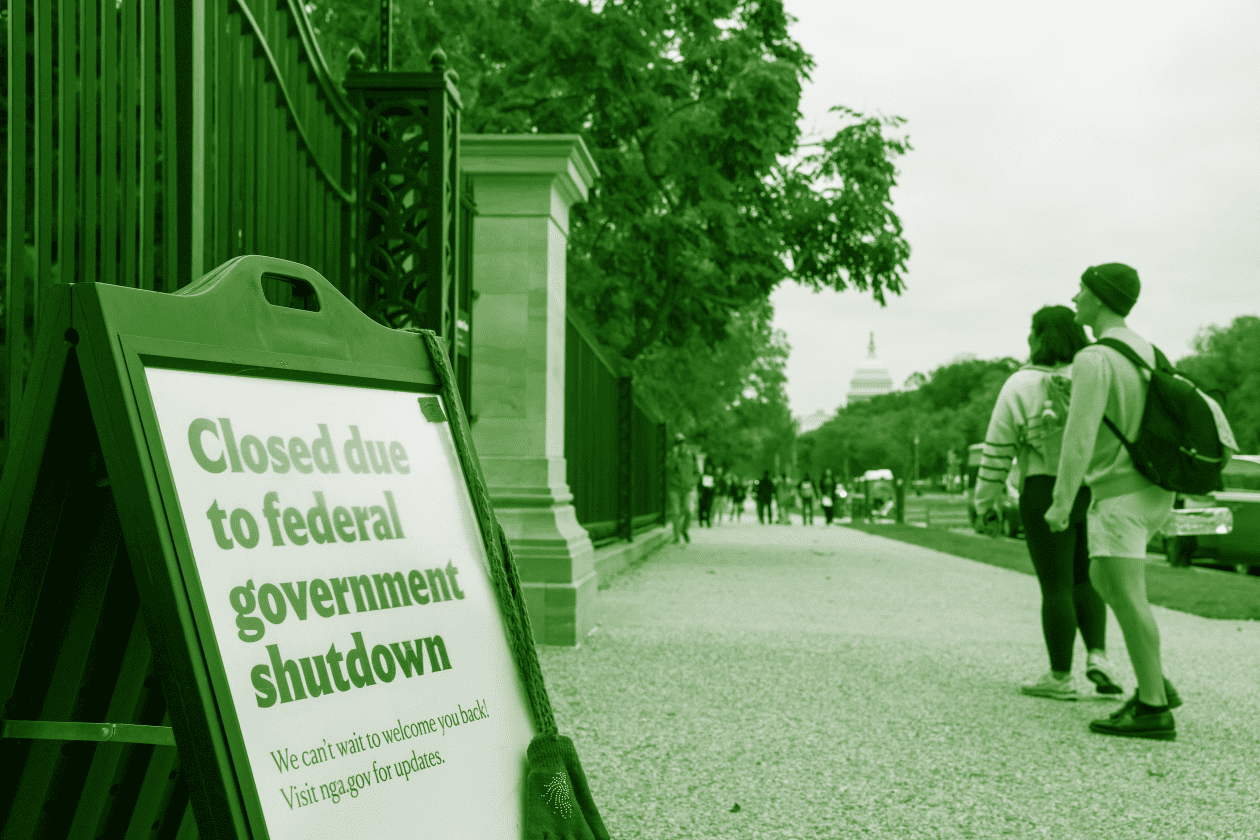
The ongoing government shutdown is increasingly projected by analysts and prediction markets to become the longest in U.S. history, potentially extending until Thanksgiving amid a persistent stalemate over Obamacare subsidies. Economists estimate a weekly 0.1%-0.2% drag on U.S. GDP, with concerns heightened by potential mass government worker layoffs, though some analysts remain optimistic about limited long-term economic impact if payments are eventually retroactively settled. Key pressure points for resolution include escalating airport disruptions and the Nov. 1 Obamacare open enrollment, which could highlight rising premium costs.
The ongoing government shutdown is increasingly projected to become the longest in U.S. history, with prediction markets like Kalshi estimating a 41-day duration, significantly exceeding the 35-day record. Analysts at Beacon Policy Advisors and TD Cowen anticipate the stalemate, primarily over Obamacare subsidies, could extend until Thanksgiving, reflecting a lack of engagement from either side.
Economically, the shutdown is estimated to subtract 0.1% to 0.2% from U.S. GDP per week, a concern echoed by 47% of MarketWatch poll respondents. The White House's threat of over 10,000 government worker layoffs, despite a temporary restraining order, poses a significant additional risk to economic activity and consumer confidence.
Potential "off-ramps" include escalating airport disruptions due to staffing shortages and the Nov. 1 Obamacare open enrollment, which will highlight rising premium costs. While Wolfe Research remains optimistic about limited long-term impacts if payments are retroactive, independent economist Ethan Harris warns of more lasting effects on an already vulnerable economy.
AI-powered research, real-time alerts, and portfolio analytics for institutional investors.
Overall Sentiment
moderately negative
Sentiment Score
-0.50
Ticker Sentiment
