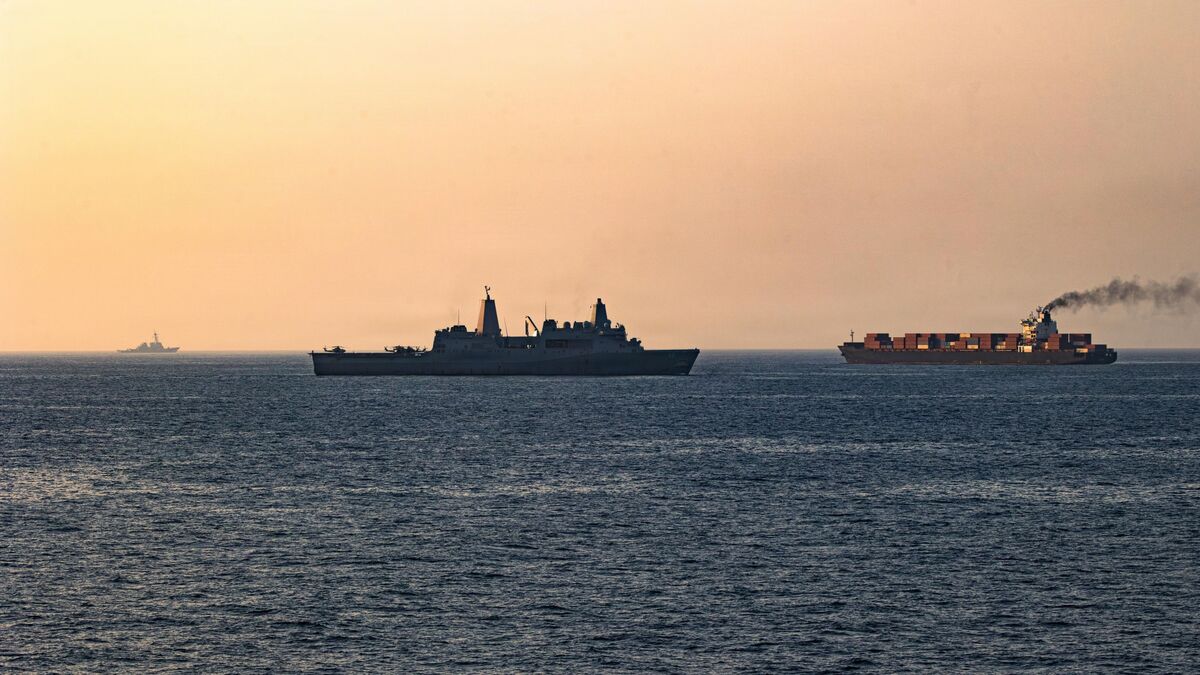
Tensions are escalating around the Strait of Hormuz as the Iran war enters a brinkmanship phase, with a ceasefire extended after the sides failed to advance peace talks. The situation raises the risk of disruption to a critical global energy chokepoint and could pressure oil and broader risk assets. Market focus will be on any signs of closure, shipping disruption, or further military escalation.
The market’s first-order read is higher oil and a generic risk-off bid, but the more important second-order effect is a forced repricing of delivery reliability. Even a short-lived disruption threat in the Strait of Hormuz can widen the gap between headline crude and realized refinery economics, because freight, insurance, and inventory hedging costs can move faster than spot barrels. That tends to benefit upstream producers with low lifting costs and penalize refiners, airlines, chemicals, and any supply chain with just-in-time import dependence.
The asymmetry is in timing: energy equities can re-rate in days, while downstream inflation and margin compression show up over weeks to months. If shipping insurers and tanker operators begin to demand war-risk premiums, the bottleneck becomes logistics rather than absolute supply, which is why equities tied to transport routes can underperform even if crude fails to sustain a large breakout. Defense and infrastructure names are a cleaner medium-term hedge than broad commodity exposure because they monetize persistent budget response rather than one-off price spikes.
The key tail risk is not a permanent shutdown; it is a sequence of escalatory headlines that keeps the market in a volatility regime without forcing a durable supply interruption. That scenario is bearish for cyclicals and high-beta consumer names, but it can also cap energy upside if diplomatic signaling quickly restores transit confidence. The contrarian view is that the market may be overestimating the chance of a true physical choke point while underestimating how much option premium and hedge demand can be harvested from the volatility itself.
On balance, this favors tactical convexity over outright beta: own exposures that benefit from either higher energy prices or higher defense spending, while fading the most oil-sensitive demand segments. The best trade setup is to express the risk through relative value rather than a naked macro bet, since a de-escalation headline could unwind spot moves quickly even if the strategic risk premium remains elevated.
AI-powered research, real-time alerts, and portfolio analytics for institutional investors.
Request TrialOverall Sentiment
strongly negative
Sentiment Score
-0.60
