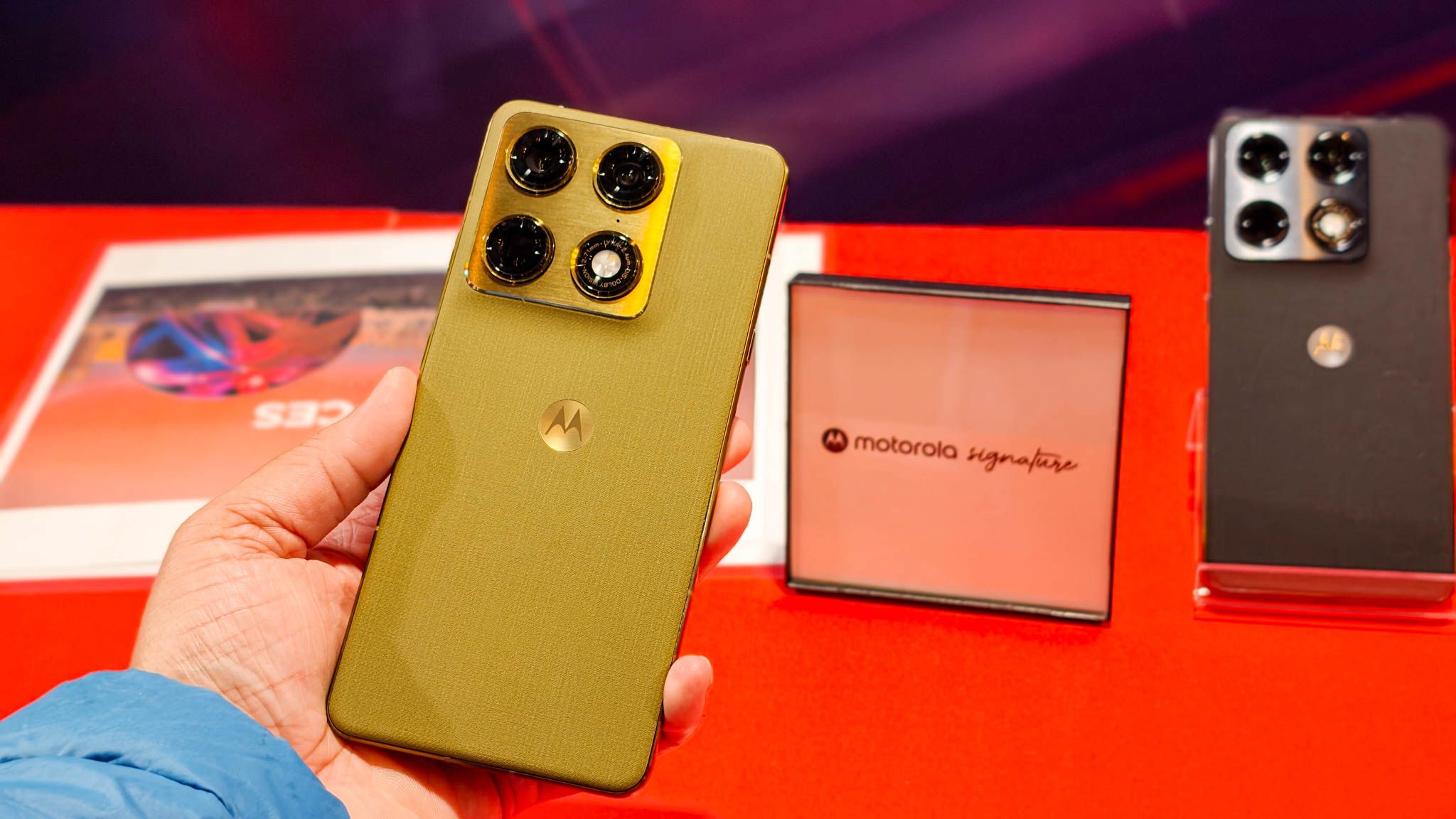
Motorola unveiled the Signature series at CES 2026, a high-end phone starting at €999 with flagship-grade photography (three 50MP Sony LYT sensors with OIS), a 6.8" AMOLED, Snapdragon 8 Gen 5, 12GB/256GB base (up to 16GB/1TB), 5,200mAh battery with 90W charging and UWB. The device is notable for seven guaranteed Android OS updates and premium build (IP68/69), positioning it to compete with OnePlus 15 and Samsung’s S25 in markets where it will sell (Latin America, India and other regions), but Motorola will not launch the Signature in the U.S., limiting its competitive impact on the U.S. high-end market.
Market structure: Sony (SONY) is a clear beneficiary — Motorola’s switch to Sony LYT-828/600 sensors increases near-term sensor ASP and volume exposure in India/Latin America where Motorola will sell the Signature; expect a detectable revenue tailwind for Sony’s Image Sensor segment over the next 2–4 quarters (estimate +1–3% incremental sensor revenue in FY26 if adoption scales). Motorola/Lenovo (motorola brand within LNVGY) gains ASP lift in EM but cedes U.S. premium share to Samsung and Apple, capping upside in consolidated margins if US remains absent. Risk assessment: Tail risks include rapid sensor-capacity reallocation (Sony supply shortages or Samsung ramping capacity) and regulatory distribution shifts (US market exclusion or carrier policy) that could swing share by ±5–10% in 6–12 months. Hidden dependency: Motorola’s promise of seven Android OS updates lengthens device lifetime, likely reducing replacement cadence and unit demand over multiple years (a secular headwind for volume-driven OEMs) — monitor replacement-rate metrics over 4–12 quarters. Trade implications: Favor suppliers of premium camera modules and modems; shorter-term (3–9 months) trades should target SONY and Qualcomm (QCOM) exposure via call-spreads to capture product-driven revenue beats while capping premium. Use relative-value: long SONY vs short Samsung Electronics (005930.KS) to isolate sensor share gains; allocate small tactical exposure to Lenovo (LNVGY) for EM upside with stop-loss if Motorola announces a US launch that shifts mix assumptions. Contrarian angles: Consensus focuses on handset design/usability; it underestimates structural effects of extended OS support — longer device lifespans may compress smartphone TAM by 3–7% over 3 years, benefiting component suppliers with higher ASPs but hurting volume-reliant OEMs. The market may be underpricing Sony’s pricing power if sensor supply tightens; conversely, Motorola’s US absence is an opportunity for Samsung to expand ASPs domestically, so be cautious about unilateral long-LOB bets on OEMs.
AI-powered research, real-time alerts, and portfolio analytics for institutional investors.
Request DemoOverall Sentiment
mildly positive
Sentiment Score
0.35
Ticker Sentiment
