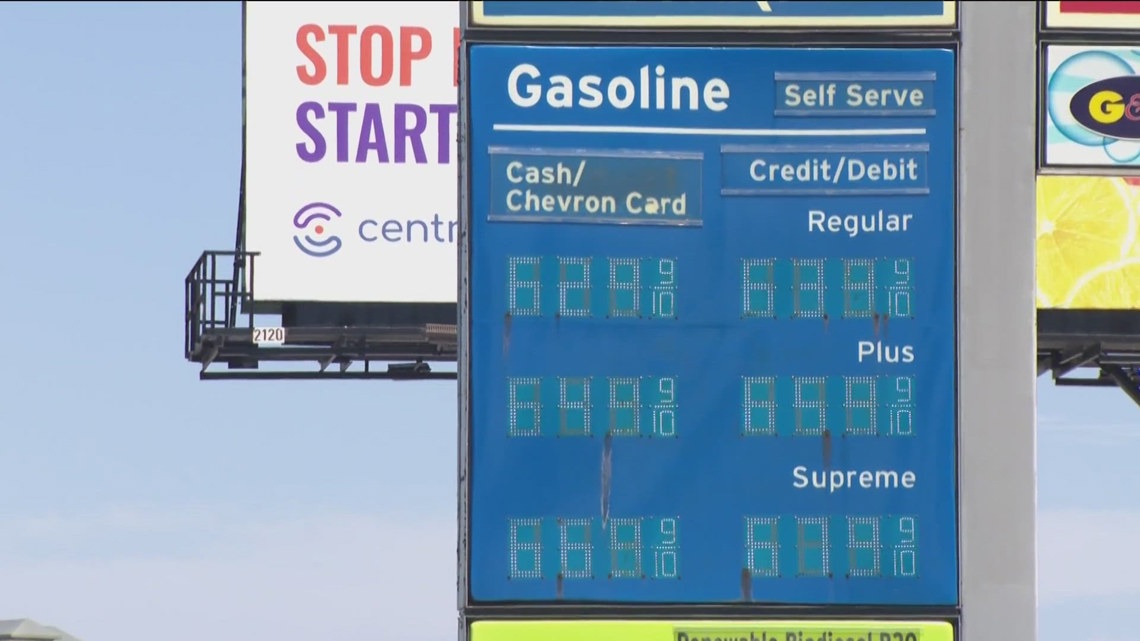
Gas prices are under fresh upward pressure as renewed turmoil in the Strait of Hormuz threatens oil shipments, with the last Middle East tanker just docking in Long Beach carrying 2 million barrels of crude. AAA says the U.S. national average is $4.48 per gallon, up 30 cents in one week, while California averages $6.13 and San Diego gas has risen 16 cents in a week and $1.44 in a year. If Strait disruptions persist, supply delays and higher shipping costs could quickly push global oil and retail fuel prices higher.
This is less an oil-equity story than a logistics-duration shock: the market is being asked to price a higher probability of multi-week friction in Middle East crude flows, which matters more to refiners and transport-sensitive sectors than to upstream names that already trade on an elevated geopolitical risk premium. The first-order move is crude up, but the second-order move is wider product spreads and higher delivered-cost volatility on the West Coast, where replacement barrels are more constrained and inventory replenishment cycles are longer. That tends to hit refiners and gasoline-exposed consumers faster than it helps broad energy equities, because downstream margin pressure often lags the headline rally in crude by days to weeks.
The bigger mispricing is in timing. If disruptions persist only a few days, the move is mostly a sentiment spike; if vessel queuing and insurance costs persist for several weeks, then tanker availability, freight rates, and product import economics become the binding constraint, which can keep West Coast pump prices elevated even after crude retraces. That creates a nonlinear inflation impulse: gasoline acts as a tax on discretionary spend, so the negative read-through shows up first in travel, restaurants, auto parts, and lower-income retail rather than in broad CPI immediately.
Consensus may be overestimating how cleanly higher oil benefits the energy complex. Integrateds are the cleaner expression only if refining margins hold; otherwise, the better relative trade is upstream versus transport, consumer, and refiners. The key contrarian risk is de-escalation: if shipping resumes quickly, the market can unwind a geopolitical premium fast, but retail gasoline prices usually fall with a lag, so consumer-demand pressure can remain even after crude softens. That creates a window where energy beta decays faster than the inflation pain fades.
AI-powered research, real-time alerts, and portfolio analytics for institutional investors.
Request DemoOverall Sentiment
moderately negative
Sentiment Score
-0.45
