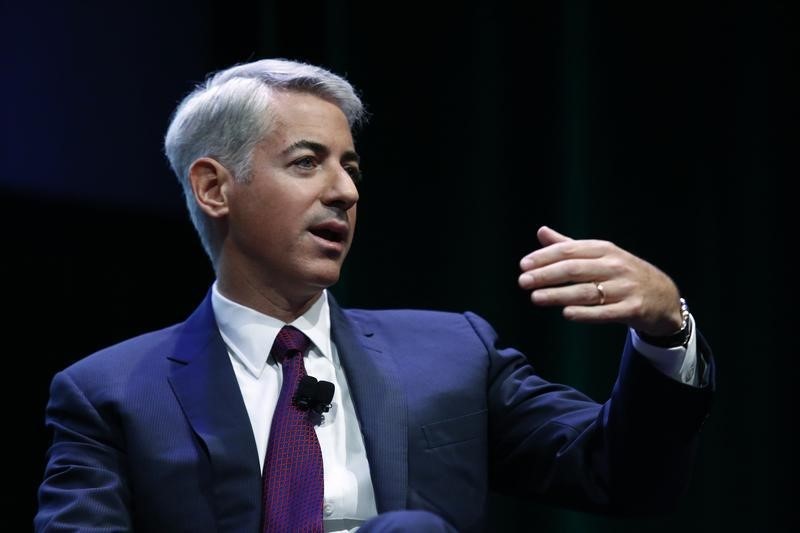
Pershing Square fully exited its Alphabet Class A stake and redeployed the proceeds into a new $2.4 billion Microsoft position, with Bill Ackman saying the move was driven by portfolio rebalancing rather than a negative view on Google. The fund added over 5.6 million Microsoft shares while cutting roughly 95% of Alphabet in Q1, then finished the liquidation shortly after. The shift reinforces Pershing Square’s concentration in large-cap AI and software names, but the article is primarily a disclosure of portfolio reallocation rather than a fundamental business update.
The important signal here is not the headline rotation itself, but that a large, visible allocator is effectively endorsing Microsoft as the preferred AI beta inside mega-cap tech while trimming a competing platform exposure. That can matter at the margin for passive and quasi-active flows: when a high-profile fund explicitly frames one name as the funding source for another, it tends to reinforce relative-strength chasing in the recipient and creates a subtle overhang on the source even if the stated view remains constructive.
The second-order effect is positioning fragility. Microsoft now sits closer to the market's default "AI winner" consensus, which makes it more vulnerable to any disappointment in capex-to-revenue conversion, Azure AI monetization, or OpenAI economics over the next 2-3 quarters. Alphabet, by contrast, may benefit from the fact that the sale was not thesis-driven; that reduces the risk of a fundamental narrative break, so any dip tied to this event should be treated more as flow noise than a lasting derating unless ad/search evidence softens.
From a risk standpoint, the main asymmetry is that Microsoft needs the market to keep rewarding forward AI investment before visible payback arrives, while Alphabet needs only to avoid a broader multiple de-rate. That makes MSFT more exposed to a near-term "good news is priced in" trade and GOOGL more interesting as a lagging quality compounder if the market eventually re-ranks cash flow versus spend intensity. The event window is short for flow effects, but the valuation debate can persist for months.
The contrarian read is that this may be less bullish for Microsoft than consensus thinks: once a mega-cap becomes the obvious crowded AI vehicle, incremental upside can shrink even if fundamentals remain solid. The better trade may be to own the balance-sheet-strong, lower-expectation name that was sold for mechanical reasons and use the recipient as the crowded leg.
AI-powered research, real-time alerts, and portfolio analytics for institutional investors.
Request DemoOverall Sentiment
neutral
Sentiment Score
0.12
Ticker Sentiment
