


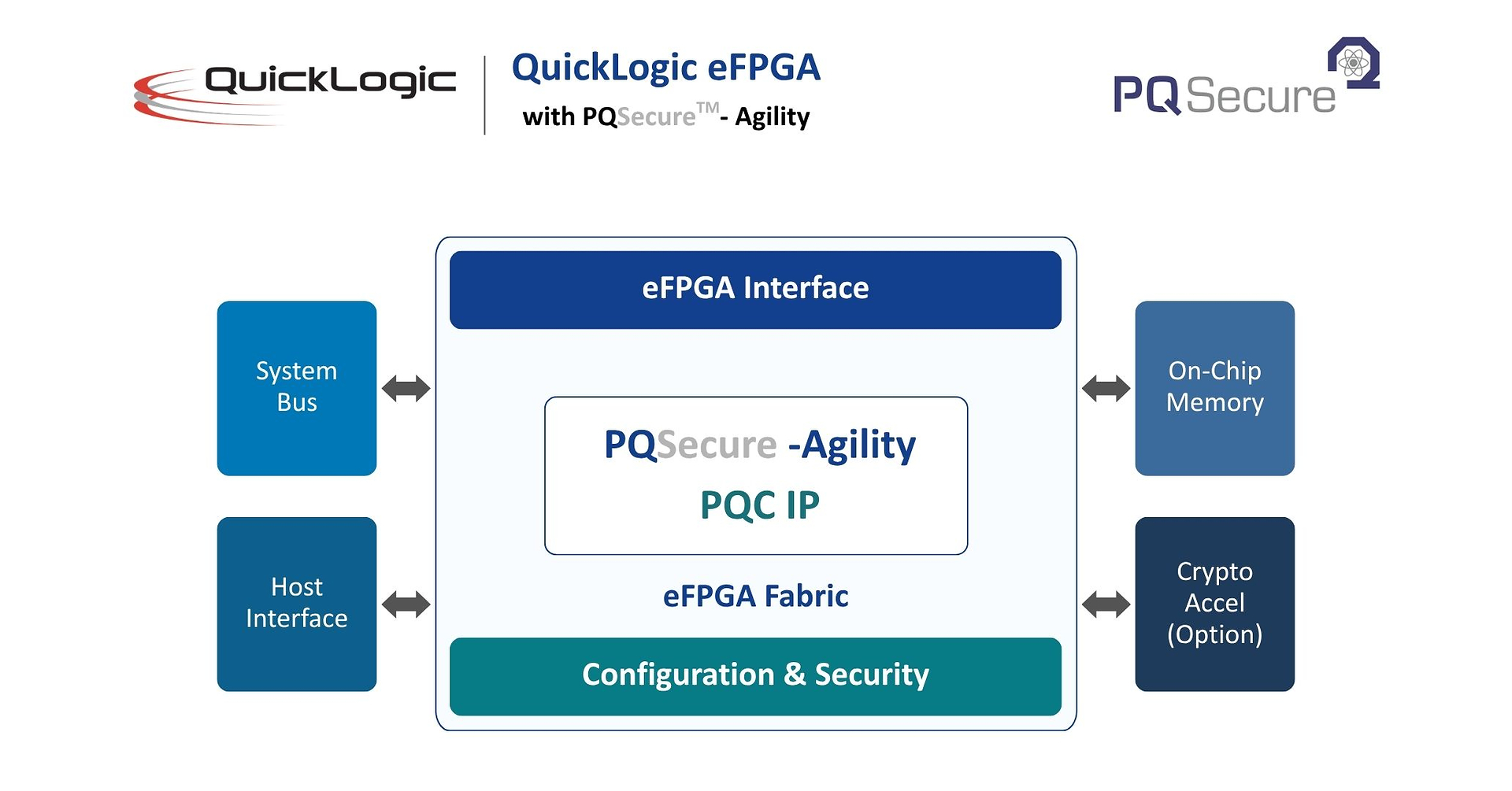
QuickLogic reported a technical trade study showing PQSecure’s CRYSTAL-1000C post-quantum cryptographic IP core can be efficiently implemented as a reprogrammable function in QuickLogic’s eFPGA Hard IP fabric (built for Intel 18A). The work targeted NIST-finalized standards FIPS 203 (ML-KEM) and FIPS 204 (ML-DSA) with “sufficient performance” and “substantial capacity headroom,” enabling field bitstream updates to support crypto-agility during the 2030–2035 PQ migration window. The collaboration positions eFPGA-based security as a way to avoid costly fixed-silicon re-tapes, supporting a projected PQC market growth from $420M (2025) to over $2.8B (2030).
This is less about PQC demand today than about validating eFPGA as insurance against specification drift. If customers believe security logic can be updated after tape-out, QuickLogic gains pricing power on the architecture decision, not just the block sale; that shifts the conversation from area/power overhead to avoided re-spin risk. The main losers are fixed-function crypto engines and soft-IP approaches that cannot be patched when standards, side-channel requirements, or customer threat models change.
Near term, the equity reaction can outrun fundamentals because this is a small-cap proof-point story, but the monetization path is still binary: demo credibility does not equal bookings. Over 1-3 months, the key catalyst is whether management translates this into design activity, eval traction, or named customers tied to NIST-driven refresh cycles; absent that, the move is mostly promotional. Over 6-18 months, the real upside is modest but real: higher attach rates for the toolchain/IP generator and a broader funnel into defense, industrial, and long-life ASIC programs.
The consensus may be underweighting how early compliance budgets get pulled forward once customers fear “harvest-now, decrypt-later” exposure. The market may also be overestimating total addressable adoption, because many high-volume SoCs will choose native hard blocks in the next spin rather than pay the eFPGA tax. This thesis fails if QuickLogic cannot show backlog conversion within two quarters or if larger programmable-logic vendors start winning the same security-led design slots.
AI-powered research, real-time alerts, and portfolio analytics for institutional investors.
Request TrialOverall Sentiment
mildly positive
Sentiment Score
0.25
Ticker Sentiment
