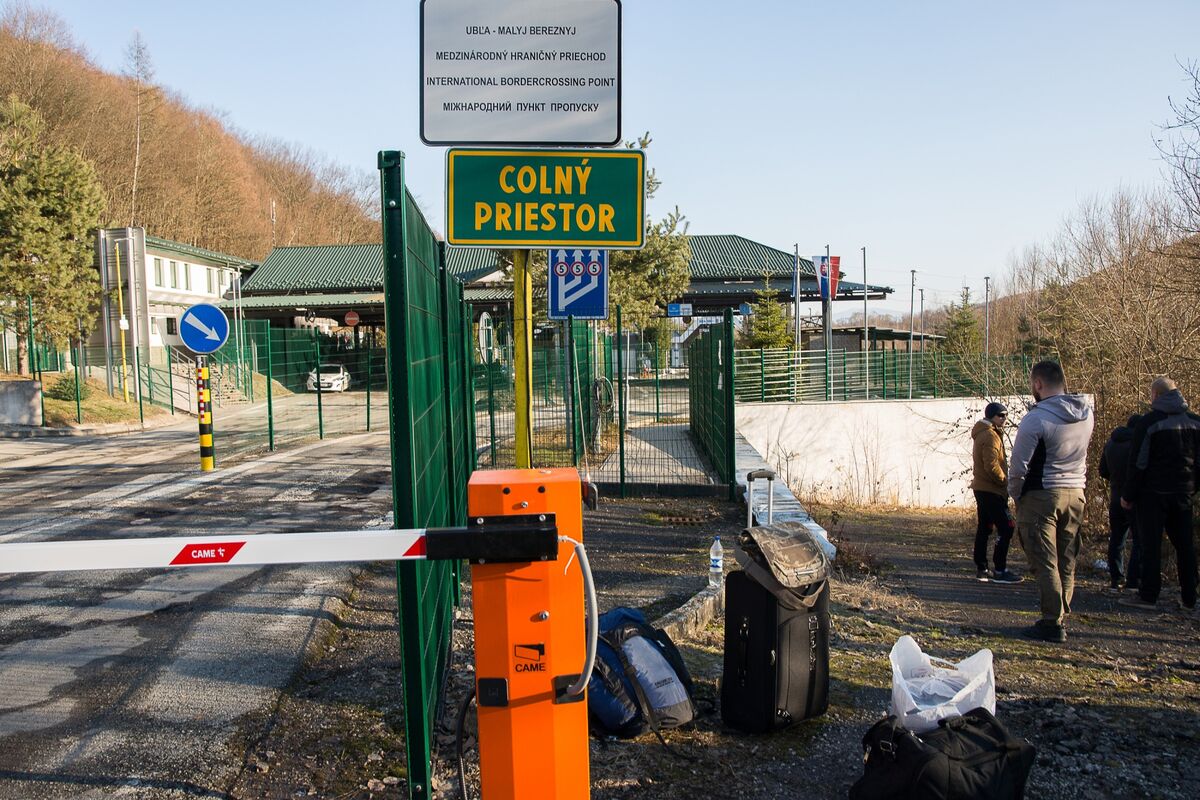
Ukraine faced one of the longest Russian drone attacks, with strikes hitting regions near NATO borders in western and southwestern Ukraine. Slovakia briefly closed all border crossings with Ukraine for security reasons, and Hungary summoned the Russian envoy after the attack. The escalation raises geopolitical risk near NATO territory and could support risk-off sentiment across European markets.
This is less about the immediate battlefield and more about the market repricing the probability of spillover into NATO-adjacent logistics and civil infrastructure. The first-order losers are Ukrainian utilities, transport, and insurance-linked assets, but the second-order effect is a broader widening of the geopolitical risk premium across Central European assets that rely on uninterrupted cross-border movement. Even if the kinetic damage is contained, repeated strikes near the border force governments to harden checkpoints, reroute freight, and build redundant capacity, which is a slow-burn tax on regional growth and margins.
The biggest underappreciated winner is the defense-industrial complex in Europe, especially air defense, counter-drone, EW, and border surveillance suppliers. The market often buys the obvious munitions names on headline escalations, but the more durable spend cycle comes from layered homeland defense and critical infrastructure protection, which tends to run for years and survives ceasefire headlines. Expect procurement urgency to shift away from legacy heavy platforms toward faster-delivery systems, sensors, and interceptors with short replenishment cycles.
The key risk catalyst is whether any strike causes a cross-border incident or casualty in a NATO state, which would compress the policy reaction time from weeks to hours. That tail risk is low probability but high convexity: it would hit European risk assets, local currencies, and transport names immediately, while benefiting defense, energy-security, and cyber names. If the attacks stay confined geographically, the move can partially mean-revert over days; if they persist and intensify, the risk premium can re-rate over months as border states spend more on security and businesses reprice supply-chain redundancy.
The contrarian view is that the market may overestimate the immediate macro impact because Europe has already been living with war premium for an extended period. The real alpha is not in betting on one more headline spike, but in identifying which procurement budgets get pulled forward and which industries quietly absorb higher operating costs. That argues for selective longs in defense and security enablers rather than a blanket short of Central Europe, where valuations may already reflect substantial geopolitical discounting.
AI-powered research, real-time alerts, and portfolio analytics for institutional investors.
Request DemoOverall Sentiment
strongly negative
Sentiment Score
-0.75
