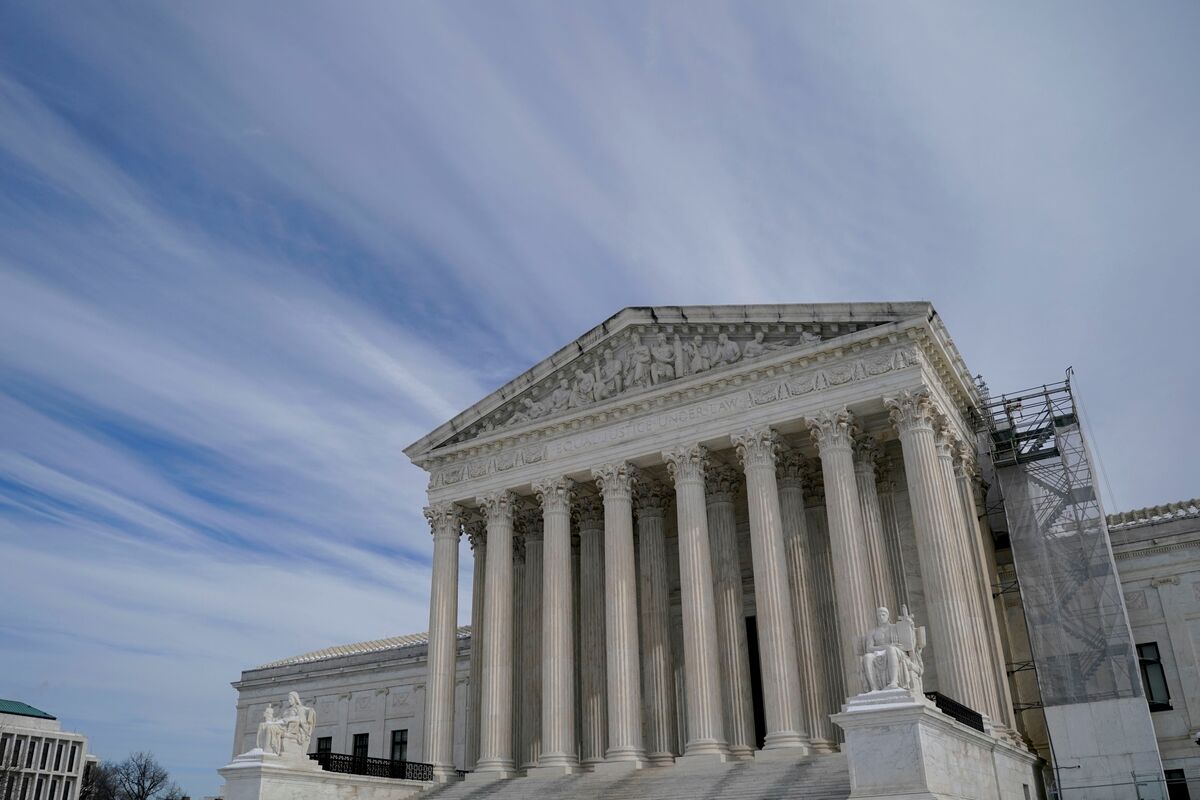
Tensions are rising at the US Supreme Court, with public sniping between Justices Ketanji Brown Jackson and Samuel Alito adding to concerns about polarization at the court. The article is largely political and institutional in nature, with no direct financial or corporate developments. Market impact appears minimal.
The immediate market impact is not in a direct asset re-pricing, but in the probability distribution around regulation, antitrust, and election-related legal risk. A more openly fractured Court raises the odds of sharper, less predictable rulings and more frequent dissents that can embolden lower-court challenges, extending legal uncertainty over policy-sensitive sectors for the next 6-18 months. That tends to widen the discount rate on assets exposed to federal rulemaking: healthcare, energy, banks, and platforms with heavy compliance or speech/regulatory exposure.
Second-order, the bigger winner is the legal-services ecosystem rather than any single listed company: litigation finance, appellate boutiques, and firms with political-law practices benefit from longer case runways and more motions-driven billing. The loser set is capital formation in contested policy areas; management teams facing ambiguous doctrine will delay capex, hiring, and M&A until they see whether the Court’s ideological split hardens into narrower majority opinions or broad tests. That creates a subtle drag on deal velocity and valuation multiples for companies whose thesis depends on stable administrative law.
The tail risk is a headline-driven selloff in names tied to Supreme Court outcomes if a near-term opinion surprises on abortion, administrative authority, or election law. But the consensus may be overpricing permanence: the Court’s internal conflict can also increase the odds of narrow opinions and procedural punts, which would reduce policy whiplash rather than intensify it. The key catalyst window is opinion season over the next several weeks; a string of 6-3 or 5-4 rulings with sharp dissents would likely keep legal-risk premia elevated into the summer, while narrower outcomes could reverse the premium quickly.
AI-powered research, real-time alerts, and portfolio analytics for institutional investors.
Request DemoOverall Sentiment
neutral
Sentiment Score
-0.05
