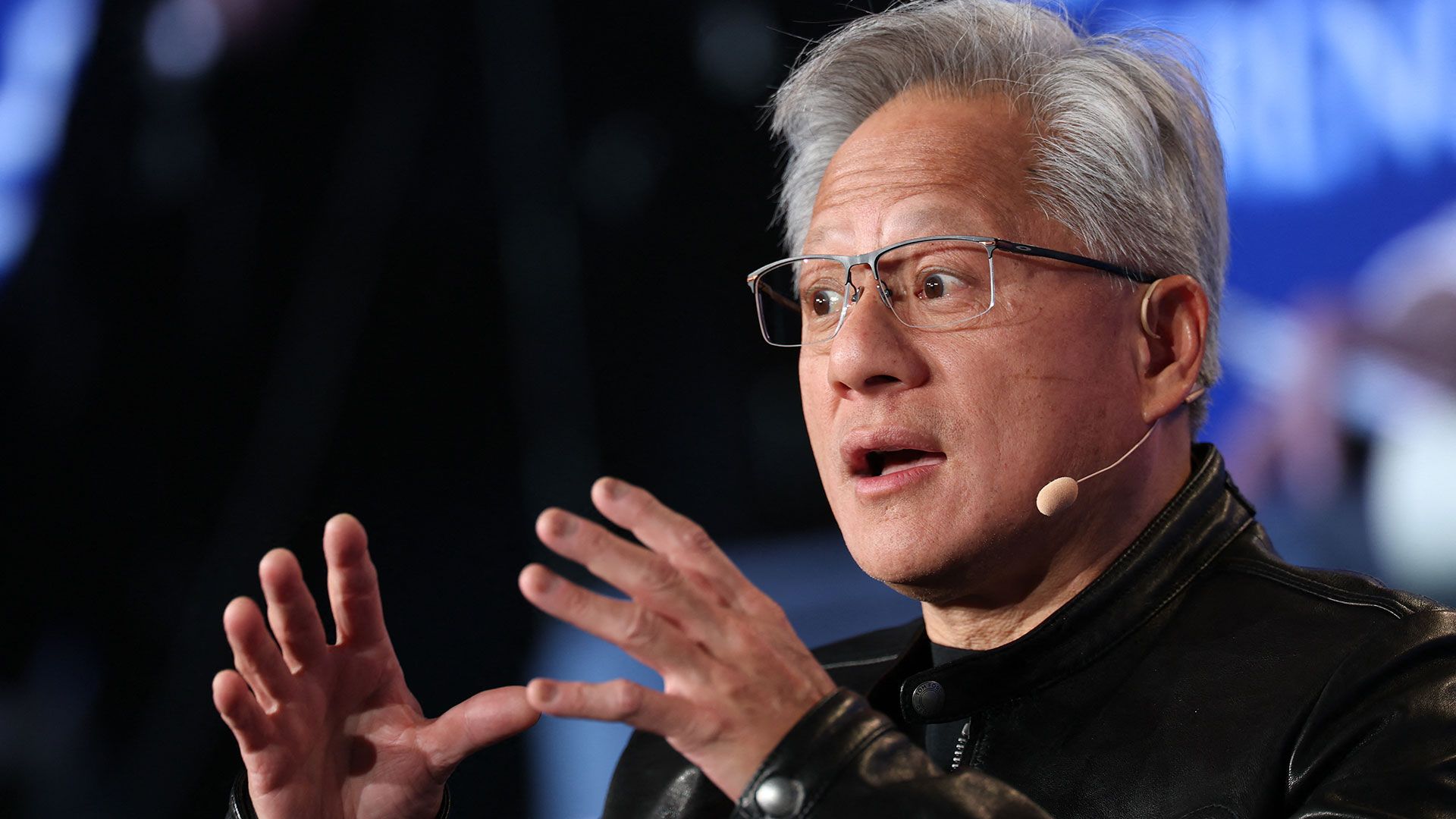
Nvidia CEO Jensen Huang urged Supermicro to strengthen export compliance after U.S. prosecutors charged a scheme to smuggle about $2.5 billion of Nvidia-equipped servers to China through Southeast Asia shell companies. Taiwan has also launched its first formal crackdown on illicit AI hardware exports, including cases involving Supermicro servers shipped with Nvidia chips to China, Hong Kong, and Macau. Huang also confirmed China remains part of Nvidia's projected $200 billion Vera CPU addressable market, though no H200 chips have yet been delivered to Chinese customers.
The key read-through is that export-control enforcement is shifting from an abstract policy risk to an operational bottleneck for the AI supply chain. That is negative for SMCI because its product mix and customer concentration make it the most exposed choke point in the channel; even without direct indictment risk, tighter KYC, shipping documentation, and end-user verification will slow order conversion, raise compliance cost, and likely compress gross margin as resellers and integrators demand more screening.
For NVDA, the near-term economic impact is more nuanced: enforcement is bearish for unit volume into China, but bullish for pricing discipline and mix outside China. The bigger second-order effect is that compliant supply becomes more valuable, which should advantage the largest OEMs and cloud buyers with clean traceability, while smaller gray-market intermediaries lose leverage. If export scrutiny persists for 1-2 quarters, some China-bound demand may be displaced to inference deployments in the U.S., Middle East, and sovereign AI projects, partially offsetting headline weakness.
The market may be underestimating the governance overhang for the entire rack-scale ecosystem, not just one server vendor. Any probe that increases audit burden on Taiwanese assembly, freight forwarders, or component brokers can create temporary shipment delays across the partner network, which is a modest near-term headwind for AI-capex cadence. The contrarian point: this is not necessarily a demand collapse for Nvidia chips; it may simply accelerate a bifurcation where sanctioned compliance becomes a moat, and the share gains accrue to the best-controlled distribution channels rather than the cheapest ones.
AI-powered research, real-time alerts, and portfolio analytics for institutional investors.
Request DemoOverall Sentiment
mildly negative
Sentiment Score
-0.15
Ticker Sentiment
